Custom Aluminum Die Casting for OEM Parts
Custom aluminum die casting for OEM parts from drawings, including DFM, tooling, HPDC, CNC machining, finishing, inspection, and export packaging.
Production Capabilities
Process visuals for custom aluminum die casting
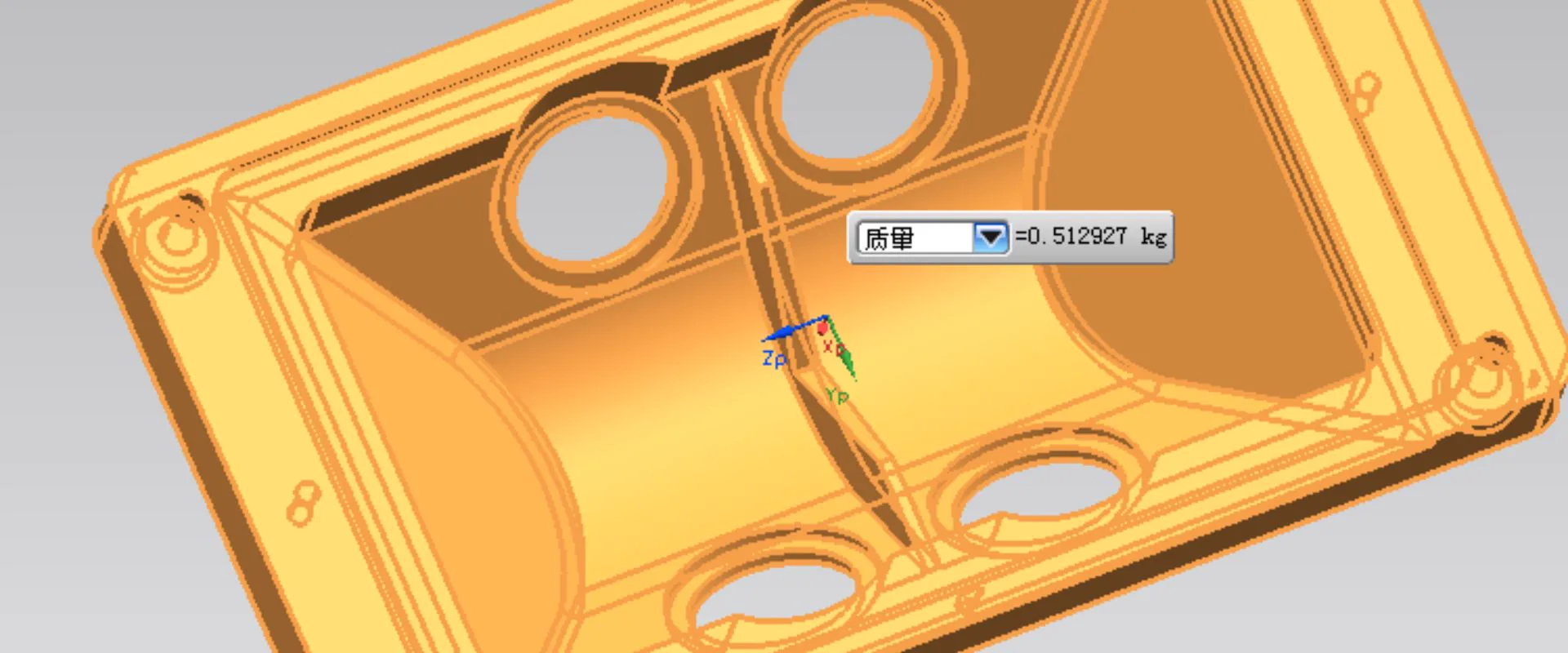
Process Overview
Core die casting processes, component types, and production setups for commercial manufacturing programs.
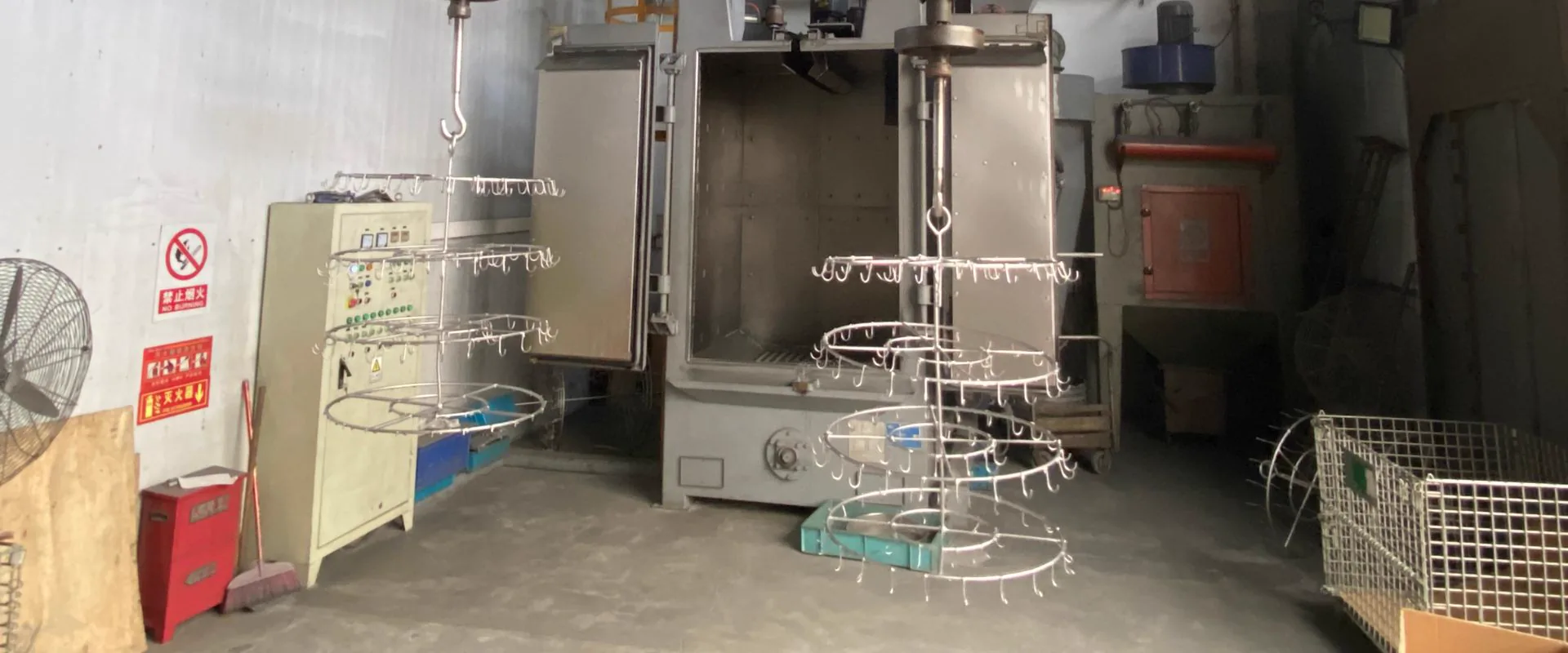
Technical Proof
Close-up and inspection images demonstrating dimensional accuracy, surface quality, and process control in production.
Custom aluminum die casting is used when a buyer needs repeatable, near-net-shape metal parts with better production economics than machining from billet. KastMfg produces custom aluminum die cast components from customer drawings, 3D models, and application requirements, at our Nanjing facility with 16 cold-chamber machines (160T-1,600T) plus hot-chamber zinc cells (80T-400T), a documented quality system maintained with reference to ISO 9001, and IATF 16949-aligned processes — no certified scope is claimed.
This page covers what an OEM buyer holding a part drawing needs to evaluate a Chinese die casting supplier: how to select the alloy, what happens at each stage from drawing to production and how long each stage takes, what tolerances to expect as-cast versus after machining, and how MOQ and tooling ownership work.
Good Fits for Custom Aluminum Die Casting
| Part Requirement | Why Aluminum HPDC Fits |
|---|---|
| Medium to high volume | Tooling cost is amortized over repeat production |
| Complex housing geometry | Ribs, bosses, covers, and walls can be cast near-net-shape |
| Machined interfaces | Casting provides the blank; CNC finishes datums, bores, and threads |
| Thermal management | Aluminum supports heat sink and electronics housing applications |
| Lower weight than zinc or steel | Useful for mobility, electronics, and handheld equipment |
Thin walls, mounting bosses, threaded holes, bearing seats, O-ring grooves, heat sink fins, and cosmetic exterior surfaces are all routine in custom programs. Features with tight tolerance requirements are cast with machining allowance and finished on CNC. For the full picture of our aluminum capability — machines, alloys, secondary operations — see aluminum die casting.
Alloy Selection Quick-Guide
Alloy choice should be settled before tooling is designed, because the alloy affects die design, gating, machining, and inspection planning. The alloys below cover the majority of custom aluminum die cast parts:
| Alloy | Tensile Strength | Best For | Watch-Outs |
|---|---|---|---|
| A380 | 317 MPa | General-purpose housings, brackets, covers; the default when no alloy is specified | Baseline pressure tightness — not the first choice for leak-critical parts |
| ADC12 | 310 MPa | Japanese OEM programs (JIS H5302); complex thin-wall automotive geometry | Certified to JIS, not ASTM — state the designation and standard on the drawing |
| A413 | 290 MPa | Pressure-tight and thin-wall parts: pump bodies, valve housings, sealed covers | Roughly 3-5% material cost premium; slightly lower strength |
| A360 | 317 MPa | Outdoor, marine, and corrosion-exposed parts | Less common; confirm availability at RFQ |
Decision rules:
- No pressure requirement, general engineering part: start with A380. It is the most widely cast aluminum die casting alloy, with the broadest global supplier base and the lowest sourcing risk.
- Drawing calls out JIS H5302, or the program sits in a Japanese OEM supply chain: specify ADC12 and require JIS-format material certification. ADC12 is the near-equivalent of A383 under ASTM B85. Details: ADC12 aluminum.
- Leak test, rated pressure, or very thin walls with long flow paths: review A413. Its near-eutectic composition gives the best fluidity and pressure-tightness potential of the common die casting alloys. Details: A413 vs A380.
- Service in corrosive or outdoor environments: review A360 for its superior corrosion resistance and thermal conductivity.
KastMfg casts A380, ADC12, A413, A360, and A390 and recommends an alloy during the free DFM review, based on mechanical, thermal, corrosion, machining, and cost requirements.
From Drawing to Production: Step by Step
A custom aluminum die casting program moves through six stages. Lead times below are typical ranges for new production tooling; KastMfg confirms program-specific timing in the quotation.
| # | Stage | What Happens | Typical Lead Time |
|---|---|---|---|
| 1 | Drawing review & DFM | Draft angles, wall thickness, undercuts, tolerance feasibility, gating options; written DFM report | Within 48 hours of receiving the drawing |
| 2 | Quotation | Itemized tooling, sampling, and production pricing with steel grade and cavity count | 2-5 working days |
| 3 | Tooling design & build | H13 die design, machining, heat treatment; trials scheduled on our presses | Prototype die (P20): 3-5 weeks. Production die (H13): 5-8 weeks. Complex multi-slide tools: 7-10 weeks |
| 4 | T1 samples & trial rounds | T1 shots establish fill and process parameters; corrections through T2/T3 | T1 samples about 1 week after die completion; most programs need 2-4 trial rounds over 2-6 weeks |
| 5 | FAI / PPAP | Full dimensional layout; PPAP Level 3 with PSW for automotive programs | PPAP preparation typically 2-4 weeks after sample approval |
| 6 | Production release | SPC on critical dimensions, OES chemistry certificates, shot data with every shipment | First lot scheduled at approval; ramp quoted per project |
From DFM approval to PPAP approval, a new production program typically runs 12-16 weeks. Tooling can be expedited (2-4 weeks at a 25-40% premium), but skipping trial rounds or capability studies to save schedule usually costs more in rework than it saves.
Tooling is normally the largest upfront investment in a casting program. Indicative ranges: simple prototype dies $3,000-8,000; production H13 dies $10,000-20,000 for a simple single-cavity part, and $30,000-80,000 for complex multi-slide tooling. What drives these numbers — slides, cavities, steel grade, cooling — is broken down in die casting tooling cost.
For automotive programs, the approval gate is PPAP. KastMfg's Level 3 scope covers all 18 elements, including process flow, PFMEA, control plan, MSA, 100-piece dimensional results, and Cpk of 1.67 or higher on special characteristics. See PPAP for die casting explained.
As-Cast vs Machined Tolerances
The most common misunderstanding in custom aluminum die casting is expecting machining-grade tolerances from a cast part. The right model is simple: cast the geometry, machine the interfaces.
As-cast: KastMfg's standard dimensional tolerance is CT4-CT6 per ISO 8062. On most linear dimensions, CT5 works out to roughly ±0.1-0.3 mm depending on nominal size — wider for larger dimensions. For reference, the NADCA standard linear tolerance for aluminum is ±0.002 in/in (±0.05 mm per 25 mm) with a minimum of ±0.005 in (~±0.13 mm). Parting-line and draft-related allowances are additional.
Machined: After CNC machining, critical features hold ±0.02-0.05 mm, precision bores (bearing seats, shaft bores) can be finished to H6/H7, and sealing faces can be milled flat to 0.01 mm.
| Feature | As-Cast | After CNC |
|---|---|---|
| General linear dimensions | ±0.1-0.3 mm (CT4-CT6) | ±0.02-0.05 mm on critical features |
| Bearing bores / shaft holes | Cast with allowance only | H6/H7 |
| Sealing faces | Near-net-shape + allowance | Milled flat to 0.01 mm |
| Threads | Cast bosses with machining allowance | Drilled, tapped, or thread-milled to M30 |
| Datum relationships | Approximate from the cavity | Machined from a single setup |
Practical guidance for your drawing: hold tight tolerances (±0.05 mm or better) only on features that genuinely need them — datums, bores, sealing faces, threads — and relax everything else to CT5-CT6. Every unnecessarily tight as-cast tolerance adds inspection cost and scrap risk without improving the part.
MOQ and Tooling Ownership
MOQ. There is no formal minimum order quantity. Prototype quantities run 50-500 pieces on prototype tooling, and production minimums are typically 500-2,000 pieces per run depending on part complexity. Annual programs from 10,000 to 1,000,000+ pieces are routine within our 12,000+ tonne annual capacity.
Tooling ownership. The customer owns the tooling. Every KastMfg purchase order documents customer tooling ownership, and full tool drawings and maintenance logs are delivered with the program. If you ever need to transfer the tool to another supplier, we coordinate the transfer with complete documentation.
Tooling steel. Production aluminum dies are built in H13 (44-48 HRC cavity hardness, with nitrided gates and cores); P20 is reserved for short-run prototype dies. Steel grade, heat treatment, and hardness are written into each tooling quotation, so there is no ambiguity about what is being purchased.
What to Send for Your RFQ
A quotable RFQ package needs four items:
- 2D drawing (PDF) — including material, tolerances, and critical or special characteristics
- 3D model (STEP) — used for fill review and tooling design
- Annual volume and program length — drives cavity count and steel selection
- Finish and test requirements — powder coating, anodizing, leak test, PPAP level, IMDS, or other customer-specific requirements
Send the package to casting@kastdiecast.com. You will receive a written DFM report with the quotation, including identified casting risks and any design changes worth making before tooling is cut.
Frequently Asked Questions
Can I specify ADC12 on a drawing originally written for A380?
Yes, with a documentation change. ADC12 and A380 are close enough in composition and performance for most industrial uses, but certification differs: ADC12 is certified to JIS H5302, A380 to ASTM B85. State the designation and standard you want on the material certificate, and KastMfg will cast and certify to that specification.
How long from purchase order to first production parts?
For a new production tool, plan on 12-16 weeks from DFM approval to PPAP approval: 5-8 weeks of tooling, about 1 week to T1 samples, 2-6 weeks of trial rounds and corrections, and 2-4 weeks of PPAP preparation. Programs that reuse existing tooling skip the tooling stage entirely.
What if my part needs plating or anodizing?
CNC machining, inspection, and export packaging are handled in-house at KastMfg. Plating and anodizing are coordinated through qualified finishing partners, with finishing requirements reviewed during DFM so that coatings, masking, and dimensional allowances are planned before tooling is built.
Custom aluminum die casting inquiry: casting@kastdiecast.com | +86 138 1403 4409 | No.6, Rungu Road, Nanjing, China
Related
- Aluminum die casting — machines, alloys, and capabilities
- Die casting tooling cost — what drives tooling price
- PPAP for die casting explained — the production approval gate
Related Resources
Next steps for custom aluminum die casting
OEM Die Casting Parts Manufacturer
custom OEM die casting parts from drawings, including tooling, HPDC, CNC machining, finishing, inspection, and export packaging.
Commercial GuideAluminum Die Casting Manufacturer in China
Aluminum die casting manufacturer in China: cold-chamber HPDC from 80T to 1,600T, in-house tooling, CNC machining, finishing, and inspection for OEM export programs.
Buyer GuideDie Casting In China
Compare landed-risk factors, communication expectations, and supplier screening criteria.
CapabilityQuality Control
Review inspection workflow, traceability support, and process control standards before launch.
Process GuideDie Casting Process
See how casting, trimming, machining, finishing, and inspection fit together in production.
Next StepRequest a Quote
Send your drawing package and target volume to get an engineering-backed quotation.
Need a Quote for Your Project?
Our engineering team is ready to review your requirements and provide competitive pricing with fast turnaround.
Request a Quote