Medical Device Die Casting: Non-Implant Component Guide
Medical die casting for imaging device housings and surgical instrument bodies - full material traceability, precision, and consistent production.
Production Capabilities
Supporting visuals for medical die casting
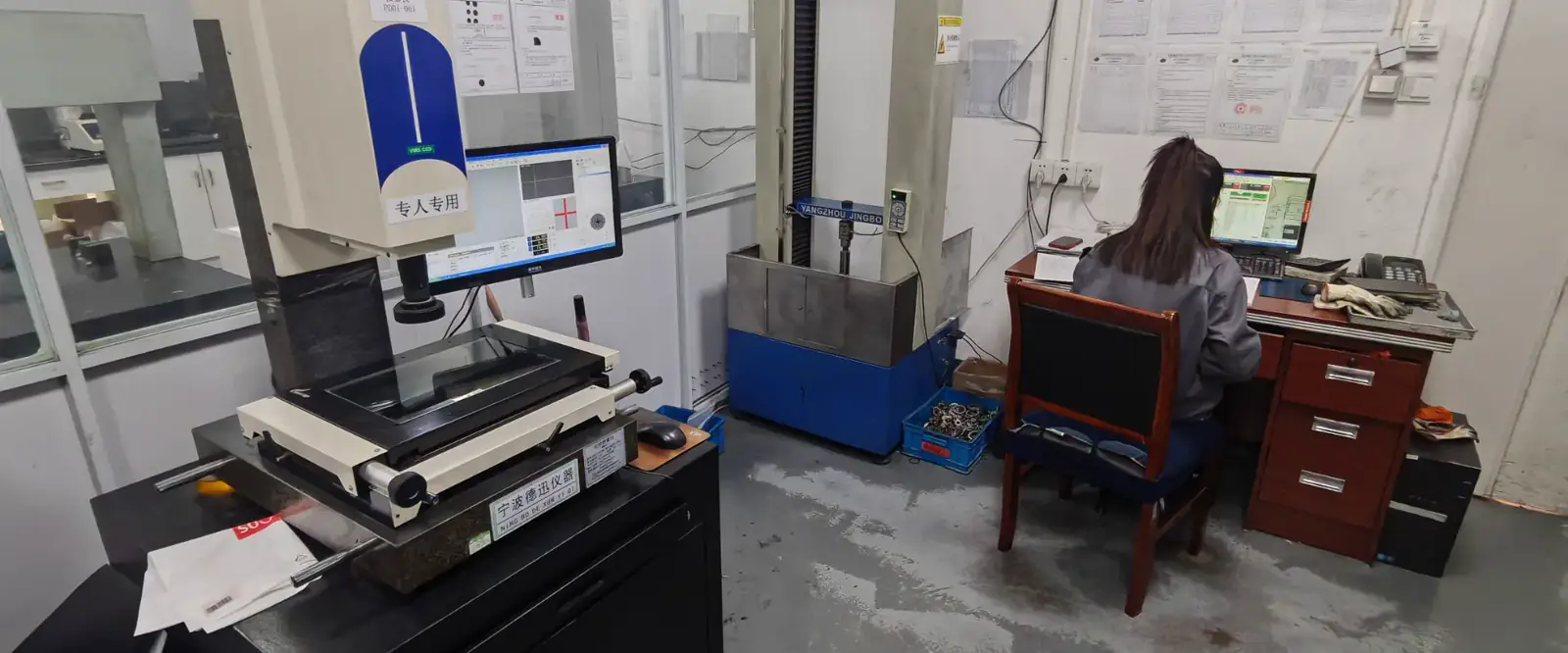
Manufacturing Operations
Die casting production, tooling fabrication, CNC machining, and quality inspection at our Nanjing facility.

Component Detail
Close-up views of cast components showing surface finish, dimensional features, and application-ready quality.
Yes - die castings serve the medical equipment world, as non-implant components. Typical examples include equipment housings and chassis parts, imaging equipment structures, pump components, and surgical tool parts. Implants are a separate universe - titanium and cobalt-chromium alloys produced by other processes - and die casting does not touch them.
This page maps where castings sit in medical equipment, says the quality-system language carefully (including what ISO 13485 does and does not mean in a supplier conversation), lists what medical buyers ask about before a first order, and covers the audit points that matter when a casting program reshores or dual-sources.
Where Die Castings Sit in Medical Equipment
The parts are equipment-level, not body-level. Typical examples include - without being limited to - enclosures and structural housings for diagnostic, monitoring and treatment equipment; chassis and mounting structures inside imaging systems; pump housings and internal pump components; handles, housings and internal parts of surgical and examination tools; and thermal management structures in powered equipment, a specialty of the aluminum die casting heat sink geometry.
Alloy logic follows the equipment's physics. Aluminum is the default for housings and structures - the alloy landscape is covered in aluminum for die casting, the process background in aluminum die casting, and the designation trade in the ADC12 vs A380 comparison. Zinc takes the small, fine-detail precision end - see zinc die casting. Magnesium serves portable, weight-critical equipment - see magnesium die casting.
The exclusion is as clear as the inclusion. Implants - joint replacement, spinal, trauma and dental components - are titanium and cobalt-chromium territory, produced by forging, machining and other established processes. Die casting does not serve implant applications, full stop. The implant alloys sit outside die casting for the same temperature reasons that keep steel out of the process entirely - see can steel be die cast for that account.
Why the process fits the equipment side at all: a die casting consolidates what would otherwise be a sheet-metal or machined assembly into one net-shape part, repeats that geometry shot after shot, and moves piece price down as program volumes rise - the same economics that made it the default in automotive and industrial equipment, here applied under a stricter documentation regime. The equipment-level, non-implant scope is where those economics and that regime meet.
Thermally Conductive Plastics vs Die Cast Aluminum Housings
Powered medical equipment generates heat, and housings often participate in removing it - which puts two material routes on the table: thermally conductive plastics (polymer compounds loaded with conductive filler) and die cast aluminum. An engineering-forum thread from a medical thermal-module program running roughly 500 pieces per year captures the cost surprise buyers hit: the thermally conductive plastic route quoted a mold at a higher price than the die casting tool, and at that volume the filled compound's material-cost premium never amortized away. One program's quotes, but the structure behind them repeats.
Thermal performance. Filled thermally conductive plastics typically land in the low single digits to around 20 W/m·K depending on filler type and loading - several-fold to orders of magnitude below common die casting aluminum alloys at roughly 96-100+ W/m·K. For a housing that only sheds low heat flux passively, that gap may not matter; where heat concentrates at specific components, it usually does.
When plastic is the right answer. Passive cooling with modest heat loads, a genuine requirement for electrical insulation (the housing sits over live circuitry with no added barrier), complex consolidated geometry that molds cheaply, and programs where thermal performance is simply not the housing's job.
When the physics points to metal - and the EMI argument. Higher heat flux and hot spots need the conductivity, and thermal cycling over equipment life favors the metal's stability. The argument specific to die cast aluminum is EMI shielding: an aluminum housing is inherently a Faraday enclosure at no added process cost, where a conductive plastic needs filled compounds or coatings that add cost and can degrade over life. For powered medical equipment that must meet emission and immunity requirements, a casting that provides structure, thermal path, and shielding in one part is a consolidation plastics cannot fully match.
At low volumes the cost question runs against intuition: die casting tooling for housings is competitive, the casting itself is fast, and the plastic route's mold and filled-material premiums land on a small denominator. Run both quotes at your real volume before deciding by material datasheet.
The Quality-System Language, Said Carefully
Three sentences carry the whole topic, and each is easy to mis-say.
ISO 13485 is the expectation, IATF 16949 is the automotive counterpart. ISO 13485 is the quality management standard the medical industry typically expects of suppliers in a medical chain, and it is commonly a qualification requirement when a casting supplier enters one. IATF 16949 is the automotive world's equivalent discipline: process control, traceability and documented change, built for high-volume production.
The regulated party is the device maker. In the United States, the FDA regulates medical device manufacturers - it does not "certify" foundries or casting suppliers. Regulators oversee the device and its maker; the supplier's obligations then depend on the role each party plays - a raw material supplier, a component manufacturer and a contract manufacturer carry different responsibilities, and the quality agreement between device maker and supplier is where those get written down.
What KastMfg is, stated plainly. KastMfg's quality system is maintained with reference to ISO 9001:2015 and aligned with the IATF 16949 automotive quality standard; no certified scope is claimed. We support medical equipment (non-implant) programs with automotive-grade process control and documentation. In practice, automotive-grade process control means the habits a medical equipment audit looks for - control plans, first-article approvals, lot traceability, documented change - applied to non-implant equipment programs. The standards detail sits on the quality practices page.
What Medical Buyers Ask About Before the First Order
The questions below are standard medical-supplier territory. They are also where automotive-grade discipline translates most directly:
| Concern | What it means in practice |
|---|---|
| Traceability | Material certificates and lot genealogy - which incoming lot became which shipped parts, retrievable on demand |
| Batch records | Documented process data per production lot, assembled so an audit can reconstruct what happened and when |
| Change control | Tooling, process or material-source changes notified and approved before they reach production parts - no silent changes |
| Cleanliness | Control of residual lubricants and particulate on parts that live near fluid paths, optics or electronics |
| Documentation package | First-article inspection, dimensional reporting and material certs assembled the way the quality agreement spells out |
Two adjacent topics come up often enough to name. Where a component seals pressure or fluid, porosity discipline is the technical backbone - see die casting porosity testing. And where an enclosure carries cosmetic faces, the as-cast surface and cross-batch appearance controls become part of the qualification - see as-cast surface finish.
Reshoring a Medical Equipment Casting Program: What to Audit
The reshoring pattern is live on the medical equipment side: European programs - Italy among the active examples in recent procurement discussions - are moving or duplicating cast component supply and re-running supplier qualification as they go. The casting supplier who answers the quality-system questions above cleanly is the one who survives that requalification.
The audit itself, for a non-implant equipment program, comes down to six checks:
- Quality-system evidence. The manual is one thing; how deviations, nonconformances and corrective actions actually flow is another. Ask to see a real one.
- Traceability on real lots. Not described, demonstrated: pick a shipped lot and walk it back to incoming material records.
- Change-control terms in the contract. Who is notified, what gets approved before production, and what happens to stock in transit when a change lands.
- Competence records. The people running the process are trained for it, and the training is current.
- Appearance and texture masters. Cosmetic criteria locked to retained samples, so batch six is judged against the same standard as batch one.
- Sub-supplier control. Finishing and coating subcontractors held to the same discipline, because the device maker's audit trail does not stop at the casting plant gate.
The practical sequence that works: define roles and obligations in a quality agreement first, run a documentation review before anyone travels, then the on-site or third-party audit, then a pilot lot carrying the full documentation package before volume ramps. The standing walk-through of what to check inside a die casting plant - floor-level, not paperwork-level - is in the China die casting supplier audit guide.
Frequently Asked Questions
Can die castings be used in medical devices?
Yes - as non-implant components of medical equipment. Typical examples include equipment housings, imaging equipment parts, pump components and surgical tool parts. Implants use titanium and cobalt-chromium alloys and other processes; die casting does not serve them.
Does a die casting supplier need ISO 13485?
It is what medical customers typically expect of suppliers in a medical chain, and it is commonly a qualification requirement - but obligations depend on each party's role, and the regulatory responsibility sits with the device manufacturer: the FDA regulates device makers and does not "certify" foundries. KastMfg's quality system is maintained with reference to ISO 9001:2015 and aligned with IATF 16949; no certified scope is claimed. We support non-implant medical equipment programs with automotive-grade process control and documentation.
What should we audit when reshoring medical equipment castings?
Quality-system evidence on a real deviation, traceability demonstrated on a shipped lot, change-control terms, competence records, appearance masters and sub-supplier control - then a fully documented pilot lot before volume. The plant-level version is in the supplier audit guide.
Related
- china die casting supplier audit - the plant-level walk-through
- die casting porosity testing - sealed-part discipline
- aluminum die casting heat sink - thermal structures in powered equipment
- aluminum die casting - the default equipment alloy route
- zinc die casting - small precision components
- request a quote
Moving or starting a non-implant medical equipment casting program? Send your package through the request a quote page or email casting@kastdiecast.com:
- CAD or PDF drawing and target alloy family
- The component's role and confirmation it is a non-implant application
- Documentation you require - material certs, first-article, lot traceability
- Change-control terms to write into the quality agreement
- Cosmetic surface and cleanliness requirements
- Annual volume and expected program life
- Destination country and delivery term
KastMfg Manufacturing Co., Ltd. Email: casting@kastdiecast.com | Phone: +86 138 1403 4409 No.6, Rungu Road, Nanjing, China
Related Resources
Next steps for medical die casting
Die Casting for Electronics, Telecom & 5G Housings
Die casting for electronics and telecommunications: heat sinks, EMI-shielded enclosures, 5G housings, and server chassis with flatness and IP67 sealing.
IndustryIndustrial Die Casting - Hydraulics to Automation
Industrial die casting for hydraulic manifolds, valve bodies, motor housings, gearbox covers, and compressor crankcases, machined and leak tested in-house.
Industry HubAll Industries
Browse automotive, electronics, lighting, and industrial die casting applications.
Case StudyCase Studies
See how similar programs were delivered across materials, tolerances, and export requirements.
CapabilityQuality Control
Review inspection workflow, traceability support, and process control standards before launch.
Process GuideDie Casting Process
See how casting, trimming, machining, finishing, and inspection fit together in production.
Need a Quote for Your Project?
Our engineering team is ready to review your requirements and provide competitive pricing with fast turnaround.
Request a Quote