Automotive Die Casting for Powertrain Components | IATF 16949
Automotive die casting for powertrain components: transmission housings, engine brackets, turbocharger housings, structural parts. IATF 16949 structured QMS with PPAP Levels 1-5 and APQP support.
Production Capabilities
Supporting visuals for automotive die casting
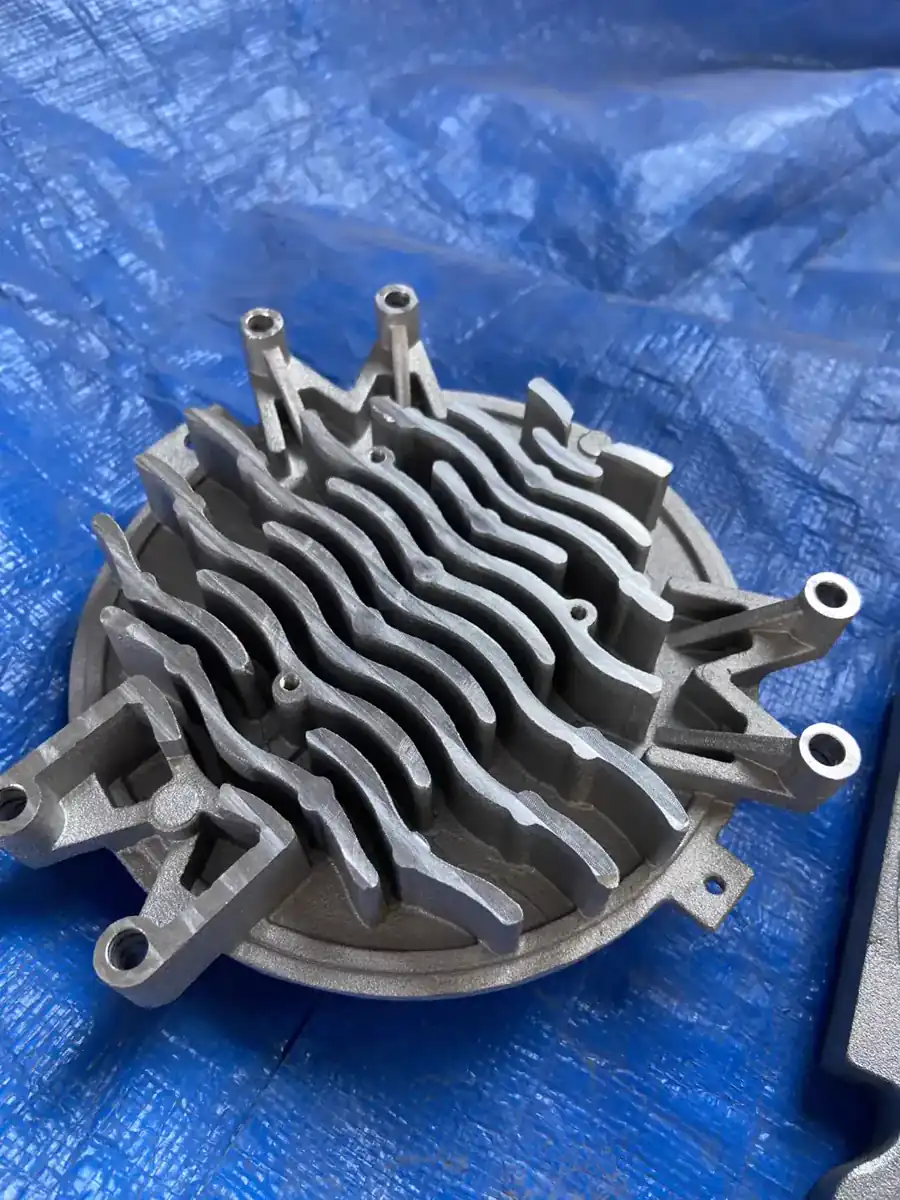
Manufacturing Operations
Die casting production, tooling fabrication, CNC machining, and quality inspection at our Nanjing facility.
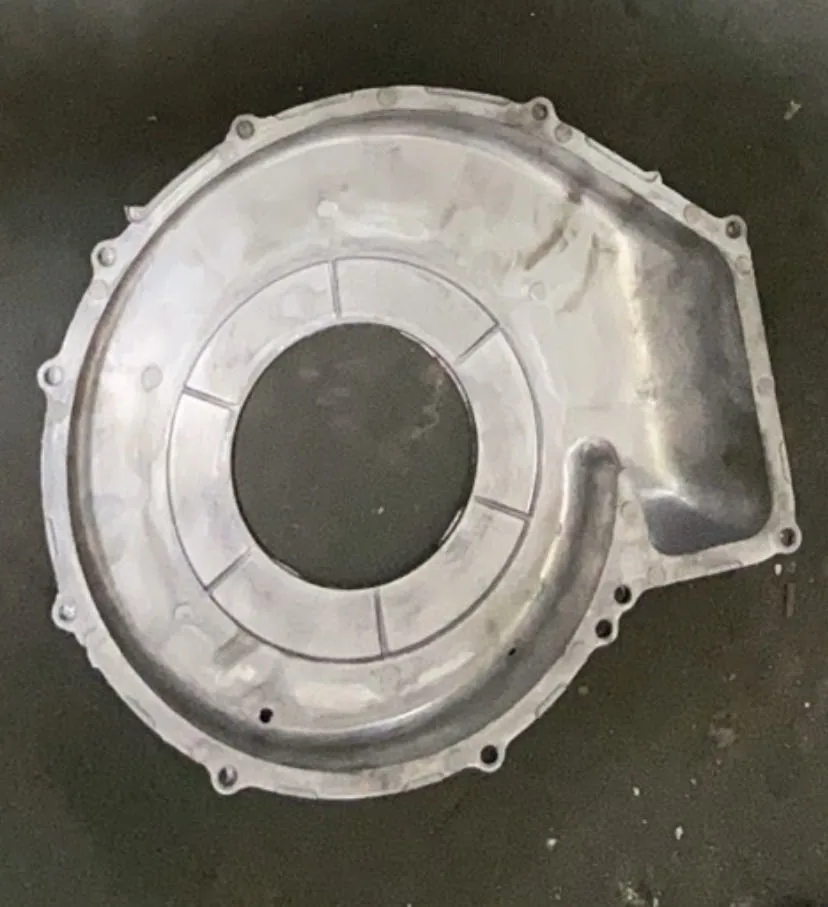
Component Detail
Close-up views of cast components showing surface finish, dimensional features, and application-ready quality.
The automotive industry consumes more die casting than any other sector. A modern passenger vehicle contains 40-80 kg of aluminum die cast components, and that figure is rising rapidly as OEMs pursue aggressive mass reduction targets across both ICE and electrified platforms.
KastMfg has supplied automotive Tier 1 and Tier 2 customers for over 15 years. Our quality management system is aligned with IATF 16949:2016 requirements (no certified scope is claimed), our PPAP capability covers Levels 1 through 5, and our engineering team has deep experience with the APQP process that governs program launch from concept through production approval. Battery-electric programs have their own part families - motor housings, inverter enclosures, battery tray structures - covered in depth in our EV die casting guide.
Electric Vehicle Programs
Electrification has not simply swapped an engine for a motor - it has created new families of pressure-tight, thermally loaded, and structurally critical castings: motor housings, inverter and power electronics enclosures, onboard charger (OBC) and DC-DC converter housings, battery tray structural members, and a thermal management system of cooling jackets, cold plates, and manifolds. The full requirements, alloy selection, and process routes for these parts are covered in our dedicated EV die casting industry guide; the table below gives the short version for buyers comparing suppliers.
EV Casting Part Families and Requirements
| Part Family | Typical Requirements | Typical Alloy/Process Route |
|---|---|---|
| Motor housings | Thermal management, dimensional stability for bearing alignment, cooling-jacket leak tightness | A380/ADC12 for general duty; Al-Si-Mg-type alloys with vacuum HPDC where T6 properties are required |
| Inverter / power electronics enclosures | IP67 or IP69K sealing, EMI shielding, flat machined flanges | A380/ADC12; vacuum-assisted HPDC where sealing flanges are critical |
| Battery tray structural members | Crash strength, heat treatability to T6 | Al-Si-Mg-type alloys with vacuum HPDC; structural trays favor ductile Al-Si-Mg over A380 |
| Onboard charger and DC-DC housings | Pressure-tight enclosures, high-voltage connector integration | A413 or A380, with vacuum HPDC when coolant circuits are present |
| Thermal management castings: cooling jackets, cold plates, manifolds | Leak tightness under coolant pressure | A413 with vacuum HPDC |
Most EV programs still buy conventional-size structural and thermal castings - and that conventional-size segment is where the volume is. It is also the segment this factory serves: KastMfg's 1,000T and 1,600T cold-chamber machines produce structural members up to 20 kg within our machine envelope, covering the battery tray members, housings, and thermal management castings that make up the bulk of EV demand. Very large single-piece underbody castings sit outside this envelope; see giga casting for that market's economics.
Why Automotive Die Casting Is Different
Automotive die casting programs are distinguished from general industrial programs by four requirements that apply consistently across every OEM and every program:
IATF 16949 quality management. The automotive industry's quality standard requires not just a documented quality system, but specific tools: APQP (Advanced Product Quality Planning), PFMEA (Process Failure Mode and Effects Analysis), Control Plans, MSA (Measurement System Analysis), and SPC (Statistical Process Control) on all critical characteristics. KastMfg operates these tools as standard practice on all automotive programs, not as optional add-ons.
PPAP submission. Production Part Approval Process is the formal gate between development and production. Before any automotive casting goes into production, the supplier must demonstrate that the production process is capable of producing conforming parts. KastMfg's standard PPAP package covers all Level 3 elements; Level 4/5 packages are prepared for safety-critical components.
Zero-defect expectation. Automotive customers operate just-in-time supply chains. A defective batch that reaches the assembly line causes line stoppages that cost thousands of dollars per minute. KastMfg's quality system is designed around preventing defects at source - not finding them at outgoing inspection.
Long program life. An automotive program lasts 5-7 years. The tooling, process parameters, and supplier relationships established at launch must remain stable through the entire production life. KastMfg's program management processes are designed for this long-term consistency.
Automotive Parts We Manufacture
Powertrain - ICE and Hybrid
| Component | Alloy | Key Requirements |
|---|---|---|
| Gearbox and transmission housings | A380, ADC12 | Bearing bore alignment, oil sealing, parting face flatness |
| Engine brackets and covers | A380, ADC12 | Dimensional stability, NVH (vibration isolation) |
| Oil pump bodies | A413 | Pressure tightness, bore precision |
| Water pump housings | A360 | Corrosion resistance, thermal management |
| Turbocharger housings | A380 + T5 | Elevated temperature strength |
| Timing covers and cam covers | A380, ADC12 | Oil sealing, dimensional stability |
| Throttle body housings | ADC12 | Bore precision, lightweight |
EV and Hybrid Drivetrain
The electric powertrain has introduced new categories of die casting requirements that did not exist in ICE vehicles:
Electric motor housings: The motor housing in a BEV must conduct heat from the windings and stator to the coolant jacket (thermal), maintain bearing alignment over the motor's life (dimensional), seal the cooling circuit (pressure tightness), and provide EMI shielding for the stator (electromagnetic). A380/ADC12 covers general-duty housings; structural or heat-treated housings increasingly use ductile Al-Si-Mg-type alloys (the AlSi10MnMg family) with vacuum die casting. Vacuum-assisted HPDC is the standard route for housings with integral cooling circuits.
Inverter and power electronics housings: The inverter housing must seal the power module assembly (IP67 or IP69K), provide thermal management for the IGBT modules, and integrate high-voltage connector provisions. Wall thickness uniformity and void-free integrity at sealing flanges are critical.
Battery tray structural members: Structural castings within our machine envelope - up to 20 kg on KastMfg's 1,000T and 1,600T cold-chamber machines. These components must meet crash safety requirements while minimizing mass, so material yield strength and consistency are primary requirements. For structural tray duty, Al-Si-Mg-type alloys with vacuum HPDC are increasingly specified over conventional A380, because crash-relevant members need T6-level strength with ductility.
Onboard charger (OBC) and DC-DC converter housings: Pressure-tight aluminum enclosures with internal cooling circuits and high-voltage connector integration. A413 or A380 with VADC depending on pressure requirements.
Chassis and Suspension
Die casting's dimensional precision and ability to produce complex thin-wall geometry make it increasingly common in chassis structural applications:
- Subframe nodes and brackets - structural castings at frame junction points
- Control arm brackets - suspension attachment points requiring tight bore and face tolerances
- Knuckle carriers - precision bore for wheel bearing, complex 3D geometry
- Damper towers - structural castings at strut mount locations
These parts require T6 heat treatment in most cases (for maximum yield strength) - only achievable with vacuum-assisted HPDC or low-pressure casting. KastMfg's VADC capability supports T6 requirements on suspension structural castings.
Interior and Body Structure
Instrument panel cross-car beams (CCB): Among the largest single die castings on most vehicles, spanning the full vehicle width (1,200-1,400 mm). KastMfg produces these in A380 on its 1,600T machine. CCBs require precise mounting hole patterns for steering column, HVAC, and airbag module attachment.
Seat frame components: Structural seat back frames and seat pan components where magnesium (AM60B for crash requirements) or aluminum (A380) replaces pressed steel.
Door structural components: Inner door panel structural frames, window regulator mounting brackets, door check arm housings.
Quality System for Automotive Programs
IATF 16949 Alignment
KastMfg's quality management system is aligned with IATF 16949:2016 requirements; no certified scope is claimed. Our automotive-specific quality processes:
APQP (Advanced Product Quality Planning): Every new automotive program follows a structured launch process with defined milestones from customer drawing receipt through PPAP approval. Each milestone has documented deliverables - DFM review report, tooling design review, FAI plan, control plan, and PPAP submission package.
PFMEA (Process Failure Mode and Effects Analysis): A systematic analysis of every process step - alloy preparation, injection, cooling, ejection, trimming, machining, inspection - identifying potential failure modes, their causes, and the detection and prevention controls. PFMEA is a living document updated when process changes occur or new failure modes are identified.
Control Plan: Documents every process control parameter and inspection checkpoint, with measurement frequency, sample size, and response plan for out-of-control conditions.
MSA (Measurement System Analysis / Gage R&R): Verifies that measurement equipment and operators can reliably measure critical features. KastMfg performs Gage R&R studies on all measurement systems used for critical automotive dimensions before production start.
PPAP Capability
KastMfg supports PPAP Levels 1 through 5. Our standard Level 3 package:
| PPAP Element | KastMfg Deliverable |
|---|---|
| Design documentation | Customer drawing with revision level |
| PFMEA | Process-specific PFMEA for the casting operation |
| Process flow diagram | Complete flow from ingot receipt to shipping |
| Control plan | All control characteristics with measurement specs |
| MSA / Gage R&R | Studies on all critical gauges |
| Dimensional results | 100-piece measurement study, all drawing dimensions |
| Material performance | OES chemistry report; mechanical properties if required |
| Initial process capability | Cpk >=1.67 on all Special Characteristics |
| Qualified laboratory documentation | Calibration certificates for all measurement equipment |
| Part submission warrant (PSW) | Signed by KastMfg quality manager |
For safety-critical components (brake, suspension, steering), additional elements including fatigue test results and pressure test qualification data are included.
Inspection and Testing for Automotive Castings
CMM inspection: Every automotive first article receives a 100% dimensional layout using Hexagon or Zeiss CMM equipment. Production SPC monitors critical dimensions throughout the run.
X-ray inspection: Porosity screening on castings with internal pressure integrity or structural requirements. Acceptance per ASTM E505 or customer reference radiographs.
Pressure and leak testing: 100% pressure test on all hydraulic and coolant circuit components. Test pressure, hold time, and decay limit per customer specification. Records archived by part serial number.
Mechanical property testing: Tensile and hardness testing on witness specimens cast with production batches for programs with mechanical property specification.
IMDS submission: KastMfg prepares and submits IMDS (International Material Data System) data for all alloys and surface treatments used in automotive programs.
EV-Specific Capabilities
Battery electric vehicles have introduced requirements that did not exist in ICE automotive die casting. KastMfg's capability for EV programs includes:
Large structural castings: 1,000T and 1,600T cold-chamber machines produce battery tray structural members and chassis nodes up to 20 kg. These programs require robust process control to maintain consistent wall thickness and dimensional stability across large projected areas.
Vacuum-assisted HPDC for T6 structures: BEV structural components increasingly specify T6 heat treatment for maximum yield strength - essential for crash performance targets. VADC reduces porosity to levels that allow T6 without blistering.
Leak testing to automotive sealing standards: Cooling circuit housings for EV powertrains require IP67/IP69K sealing integrity. KastMfg's pressure testing capability covers helium leak testing for the most demanding sealing requirements.
EMI-shielded enclosures: Inverter housings, BMS enclosures, and onboard charger bodies must provide EMI shielding to protect vehicle electronics. Supplier data typically shows die cast aluminum enclosures achieving above 50 dB attenuation, but achieved shielding depends on the seams, gaskets, and apertures of the assembled unit. KastMfg's machined mating surfaces and tight flange flatness (0.01-0.02 mm) preserve shield continuity after assembly.
Automotive Program Timeline
| Phase | Duration | Deliverables |
|---|---|---|
| RFQ and DFM review | 2-3 days | Quotation, DFM report |
| Tooling design review | 1 week | Die design review with customer |
| Tooling fabrication | 5-8 weeks | Progress reports at 50% and 90% |
| T1 trial and FAI | 2 weeks | First article inspection report |
| PPAP submission | 1-2 weeks | Full PPAP package per agreed level |
| PPAP approval by customer | Variable | Customer-controlled |
| Production launch | Per customer schedule | SPC-controlled production |
Frequently Asked Questions
Can KastMfg hold IATF 16949 requirements for direct Tier 1 supply?
Yes. Our quality management system is aligned with IATF 16949:2016 requirements for die casting production (no certified scope is claimed), including APQP, PPAP, PFMEA, control plans, SPC, and MSA. We supply directly to Tier 1 automotive customers in Europe, North America, and Asia.
What is the largest automotive casting KastMfg can produce?
Our 1,600T cold-chamber machine accommodates aluminum castings up to 30 kg shot weight and approximately 2,000 cm2 projected area. This covers most BEV battery tray components, chassis structural nodes, and interior cross-car structures. For parts beyond this range, we can discuss supply chain options.
Do you have experience with BEV / electric vehicle programs?
Yes. KastMfg has supplied motor housings, inverter enclosures, battery tray members, and OBC housings to BEV programs. Our vacuum-assisted HPDC capability supports the T6 heat treatment and pressure tightness requirements of EV structural and thermal management components.
How long does automotive tooling qualification take?
Tooling fabrication is typically 5-8 weeks depending on complexity. First article inspection, PPAP preparation, and customer approval typically add 4-6 weeks beyond tooling completion. Total time from PO to PPAP approval is typically 12-18 weeks for a standard single-cavity automotive program.
What electric vehicle castings does KastMfg produce?
The main electric vehicle castings: motor housings, inverter and power electronics enclosures, battery tray structural members, onboard charger (OBC) and DC-DC converter housings, and thermal management castings such as cooling jackets, cold plates, and manifolds. Structural members up to 20 kg run on our 1,000T and 1,600T cold-chamber machines, with vacuum-assisted HPDC where cooling circuit or T6 requirements call for it.
Can you produce EV motor housings with integral water cooling jackets?
Yes. Motor housings with integral water cooling jackets are produced by vacuum-assisted HPDC, which limits gas porosity so the jacket remains leak-tight through machining and assembly. Cooling circuits are 100% leak tested per customer specification, and sealing faces are machined to preserve gasket and O-ring sealing after assembly.
Related
- die casting industries
- agricultural die casting
- structural die casting - high-integrity load-bearing automotive parts
- EV die casting - motor housings and battery tray components
Automotive inquiry: casting@kastdiecast.com | +86 138 1403 4409 | No.6, Rungu Road, Nanjing, China
Related Resources
Next steps for automotive die casting
Structural Die Casting: High-Integrity Parts for Load-Bearing Use
Structural die casting explained: high-integrity processes that produce load-bearing, heat-treatable parts - vacuum casting, alloys, T6 treatment, and automotive and EV structural applications.
IndustryAerospace Die Casting: Alloys, Standards & Applications
Aerospace die casting explained: typical aircraft parts, A356/A357 aluminum and AZ91D magnesium alloys, AS9100 and NADCAP requirements, structural vs non-critical housings, and why high-integrity vacuum casting matters.
Industry HubAll Industries
Browse automotive, electronics, lighting, and industrial die casting applications.
Case StudyCase Studies
See how similar programs were delivered across materials, tolerances, and export requirements.
CapabilityQuality Control
Review inspection workflow, traceability support, and process control standards before launch.
Process GuideDie Casting Process
See how casting, trimming, machining, finishing, and inspection fit together in production.
Need a Quote for Your Project?
Our engineering team is ready to review your requirements and provide competitive pricing with fast turnaround.
Request a Quote