Magnesium Die Casting Manufacturer - AZ91D & AM60B Alloys
Magnesium die casting from a dedicated Mg facility: AZ91D, AM60B, AM50A, AS41B alloys, cold-chamber cells from 160T to 250T, SF6/CO2 melt protection, machined and finished parts for export.
Production Capabilities
Supporting visuals for magnesium die casting
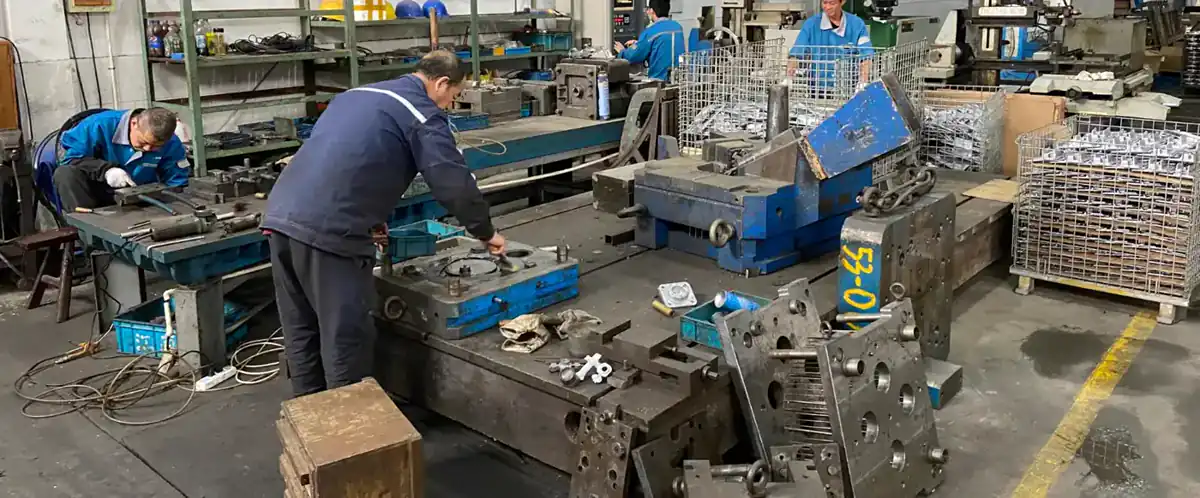
Manufacturing Operations
Die casting production, tooling fabrication, CNC machining, and quality inspection at our Nanjing facility.
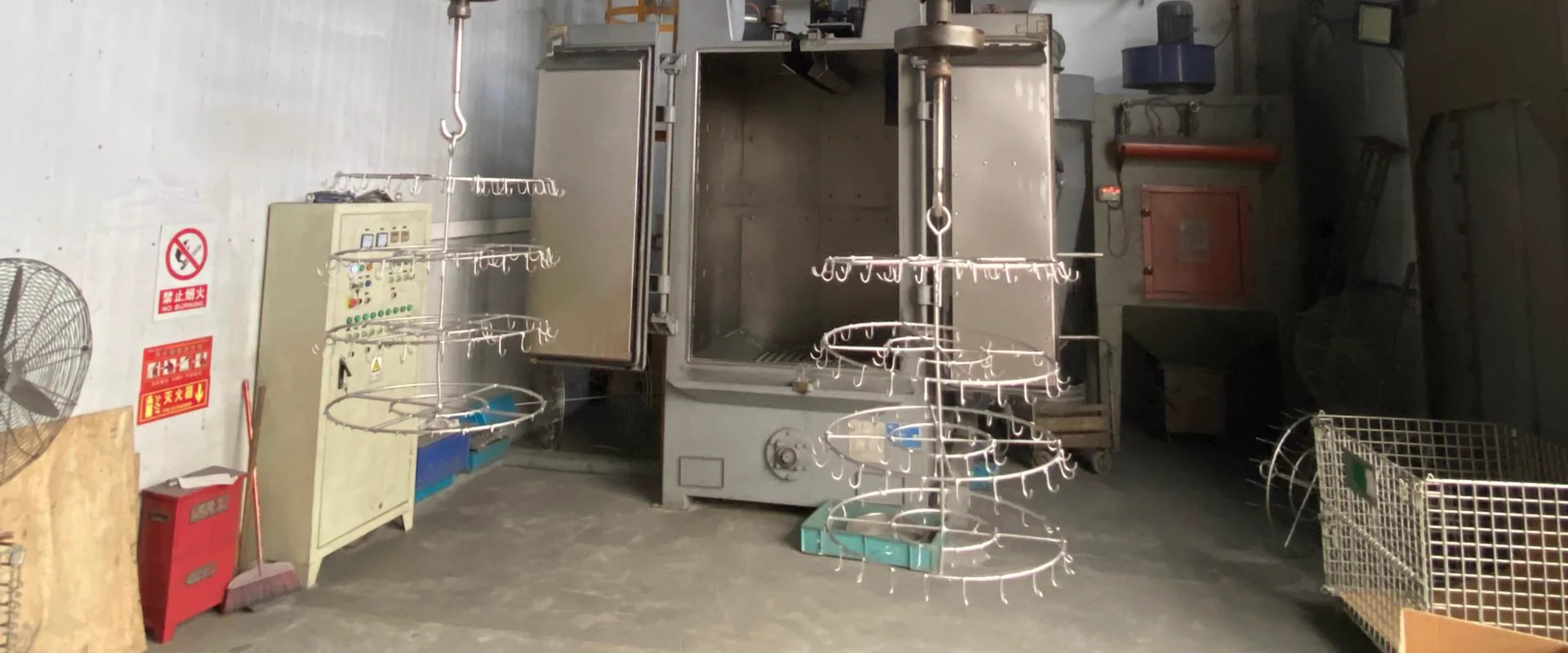
Component Detail
Close-up views of cast components showing surface finish, dimensional features, and application-ready quality.
Magnesium is the lightest structural metal used in die casting at just 1.74 g/cm3 -35% lighter than aluminum and 78% lighter than zinc. This exceptional weight advantage, combined with excellent machinability, inherent EMI/RFI shielding properties, and good dimensional stability, makes magnesium die casting the preferred choice for applications where mass reduction directly translates to performance improvement.
KastMfg operates dedicated cold-chamber magnesium casting cells with strict fire-prevention protocols including SF6/CO2 protective gas cover over the melt, dry sand fire suppression, and trained operators. Our magnesium capability covers AZ91D, AM60B, AM50A, and AS41B alloys across machine tonnages from 160T to 250T. Buyers evaluating magnesium die casting suppliers can use this page as a qualification reference — the alloy data, process controls, and sourcing expectations below cover what a magnesium die casting manufacturer should be able to demonstrate.
Magnesium Alloys We Cast
| Alloy | Composition | Tensile (MPa) | Key Properties | Best Applications |
|---|---|---|---|---|
| AZ91D | Mg-9% Al-1% Zn | 230 MPa | Highest strength, best corrosion resistance | General housings, structural covers |
| AM60B | Mg-6% Al-0.3% Mn | 220 MPa | Excellent ductility and impact resistance | Automotive safety-critical structures |
| AM50A | Mg-5% Al | 210 MPa | Improved elongation vs AM60B | Steering wheels, seat frames |
| AS41B | Mg-4% Al-1% Si | 215 MPa | Elevated temperature performance | Powertrain, engine-adjacent components |
Technical Capabilities
| Parameter | Specification |
|---|---|
| Process | Cold-chamber HPDC |
| Machine tonnage | 160T-250T |
| Density | 1.74 g/cm3 (35% lighter than A380 aluminum) |
| Min wall thickness | 0.8 mm |
| Dimensional tolerance | CT4-CT6 (ISO 8062) |
| Surface finish (as-cast) | Ra 1.6-3.2 μm |
| EMI attenuation | 60-100 dB at 1 GHz (inherent, no coating required) |
| Weight range | 0.05-8 kg |
Why Magnesium Die Casting?
Lightest structural die casting metal. AZ91D is 35% lighter than equivalent A380 aluminum parts. For automotive and electronics programs where every gram matters — EV range, hand-held device ergonomics, portable equipment fatigue — this weight advantage is significant.
Inherent EMI/RFI shielding. Magnesium alloys naturally attenuate electromagnetic interference at levels of 60-100 dB across 1 GHz frequencies. This shielding is structural — built into the housing itself, requiring no additional metallic coating or gasket. For 5G telecommunications equipment and automotive electronics enclosures, this is a decisive advantage.
Excellent machinability. Magnesium cuts more easily than aluminum, with lower cutting forces, better surface finish, and longer tool life. For programs requiring extensive post-cast CNC machining, magnesium reduces machining cost compared to equivalent aluminum programs.
Dimensional stability. AZ91D has low linear shrinkage (approximately 1.2%) and good dimensional repeatability, maintaining tight tolerances across production volumes.
Recyclability. Magnesium alloys are fully recyclable. Casting gates, runners, and scrap are remelted and reused, contributing to material efficiency and circular economy commitments.
Magnesium vs Aluminum — When to Choose Magnesium
| Decision Factor | Choose Magnesium | Choose Aluminum |
|---|---|---|
| Weight | Primary priority | Secondary to cost or performance |
| EMI shielding | Required inherently | Can be coated |
| Operating temperature | Below 150°C | Up to 200°C |
| Corrosion environment | Protected (coating required) | Moderate environments bare |
| Part size | Small to medium (<8 kg) | Up to 25 kg |
| Thermal conductivity | Less critical | Important (heat sinks, motors) |
Automotive Applications
Magnesium is well established in automotive interiors and body structure:
- Instrument panel cross-car beams — replacing steel with magnesium saves 3-6 kg per vehicle
- Seat frames and back panels — AZ91D or AM60B for structural integrity with minimum mass
- Steering wheel armatures — AM50A for ductility during airbag deployment
- Door inner panels — weight reduction in body structure
- Transfer case housings — where operating temperatures and loads are within magnesium's range
Electronics and Telecommunications
Magnesium's EMI shielding is increasingly specified in:
- Laptop and tablet chassis (ultra-thin, rigid, electromagnetically shielded)
- 5G small cell enclosures and antenna housings
- Router and network equipment chassis
- Camera bodies and handheld device frames
- Drone frames requiring minimum weight and EMI containment
Safety and Process Compliance
Magnesium in molten form presents fire risk that aluminum does not. KastMfg's magnesium casting operations comply with international safety standards:
- SF6/CO2 protective gas cover over all open melt surfaces
- Dedicated dry-sand and D-class fire suppression in magnesium areas
- Trained operators with annual safety certification
- No water or CO2 extinguishers in the magnesium zone
- Segregated melt handling and waste disposal
Sourcing Magnesium Die Castings from KastMfg
Magnesium sourcing rewards suppliers that run the process every day, in dedicated cells rather than occasional campaigns. KastMfg's magnesium operation is built around exactly that: dedicated cold-chamber cells with strict fire-prevention protocols — an SF6/CO2 protective gas cover over all open melt surfaces, dry sand fire suppression in the magnesium zone, segregated melt handling, and trained operators.
Machining and finishing are performed in the same facility as the casting. Magnesium's excellent machinability — lower cutting forces and longer tool life than aluminum — keeps secondary-operation cost down, and critical features such as bores are machined in-house. Before powder coat, liquid paint, or e-coat, every part receives a chemical conversion coating under alloy-specific pre-treatment protocols. Surface preparation is more critical for magnesium than for aluminum, and skipping or generalizing it is the most common cause of finishing defects on Mg parts.
The practical result is one supplier from cast blank to machined, finished part. Export packaging, documentation, and overseas shipment coordination are handled as part of the program rather than left to the buyer to assemble from multiple vendors.
What to Specify When RFQ-ing a Magnesium Casting
A complete RFQ lets our engineers confirm the process route before die design starts. Specify:
- Alloy. AZ91D for highest strength and corrosion resistance; AM60B where ductility and impact resistance drive the design. AM50A and AS41B cover elongation- and elevated-temperature cases.
- Tolerances. CT4-CT6 as-cast per ISO 8062. Identify critical bores and machined features on the drawing so the machining sequence is planned alongside the die, not after first articles.
- Minimum wall. 0.8 mm is standard; 0.6 mm is achievable in limited areas with optimized gating and injection parameters. Flag thin-wall regions explicitly.
- Surface treatment. Bare magnesium needs protection in humid or outdoor service: chromate conversion coating, e-coat, or powder coating. State the service environment, not just the color.
- Chip and scrap handling. Define flammability and safety-handling expectations for machining chips and for return or recycling of runners and scrap.
Submit drawings through the RFQ page and our engineers will confirm alloy and process route.
Frequently Asked Questions
Is magnesium corrosion resistant?
Bare magnesium alloys have moderate corrosion resistance, lower than aluminum. For outdoor or humid environments, chromate conversion coating, e-coating, or powder coating is standard. AZ91D has the best corrosion resistance among common magnesium die casting alloys.
Can magnesium parts be painted or powder coated?
Yes. After appropriate surface preparation (chemical conversion coating), magnesium die castings accept powder coat, liquid paint, and e-coat. Surface preparation is more critical than for aluminum — KastMfg's finishing team follows alloy-specific pre-treatment protocols.
What is the minimum wall thickness for magnesium die casting?
KastMfg reliably achieves 0.8 mm walls in AZ91D magnesium die casting. With optimized gating and injection parameters, 0.6 mm is achievable in limited areas of a part.
Does KastMfg machine magnesium castings in-house?
Yes. Casting, CNC machining, and finishing are performed in one facility, so tolerance stack-up between the as-cast part and machined features stays under a single engineering team's control. Before any powder coat, paint, or e-coat, parts pass through a chemical conversion coating step using alloy-specific pre-treatment protocols.
Is magnesium die casting safe for high-volume production?
Yes. Molten magnesium is managed with a protective SF6/CO2 gas cover over the melt, dry sand fire suppression, segregated melt handling, and trained operators. These controls are standard industrial practice at magnesium die casting facilities worldwide and are applied on every production run, regardless of volume.
Can I tell magnesium from aluminum on a received part?
Do not rely on home chemistry or flame tests — they are unreliable and, with magnesium, genuinely dangerous. Practical non-destructive checks: magnesium is noticeably lighter for the same volume (roughly two-thirds the density of aluminum), and many die castings carry the alloy designation embossed or laser-marked on the part, though marking is a supplier convention, not a guarantee. For a confirmed answer on a production part, an XRF analysis at any scrap yard or test lab identifies the alloy quickly and cheaply — that is the professional way to settle a dispute about what arrived.
Magnesium program inquiry: casting@kastdiecast.com | +86 138 1403 4409 | No.6, Rungu Road, Nanjing, China
Magnesium Die Casting Cluster
Related Resources
Next steps for magnesium die casting
High Pressure Die Casting - Hot & Cold Chamber
High pressure die casting for aluminum, zinc, and magnesium on 16 cold-chamber machines (160T-1,600T) plus hot-chamber zinc cells (80T-400T), with vacuum-assisted HPDC and CT4-CT6 tolerances.
ServicePrecision Die Casting Manufacturer in China
16 cold-chamber machines from 160T to 1,600T, in-house tooling in 3-5 weeks, 12,000 tonnes a year in Nanjing. Aluminum, zinc and magnesium die castings for OEM buyers.
ToolingDie Casting Tooling
Understand tool build timing, cavity strategy, and how tooling decisions affect unit cost.
CapabilityQuality Control
Review inspection workflow, traceability support, and process control standards before launch.
Process GuideDie Casting Process
See how casting, trimming, machining, finishing, and inspection fit together in production.
Next StepRequest a Quote
Send your drawing package and target volume to get an engineering-backed quotation.
Need a Quote for Your Project?
Our engineering team is ready to review your requirements and provide competitive pricing with fast turnaround.
Request a Quote