Zinc Die Casting Manufacturer - Zamak 3, 5, ZA-8
Zinc die casting in Zamak 3, Zamak 5, and ZA-8 with ultra-thin walls to 0.4 mm, superior as-cast surface finish, and decorative plating capability.
Production Capabilities
Supporting visuals for zinc die casting
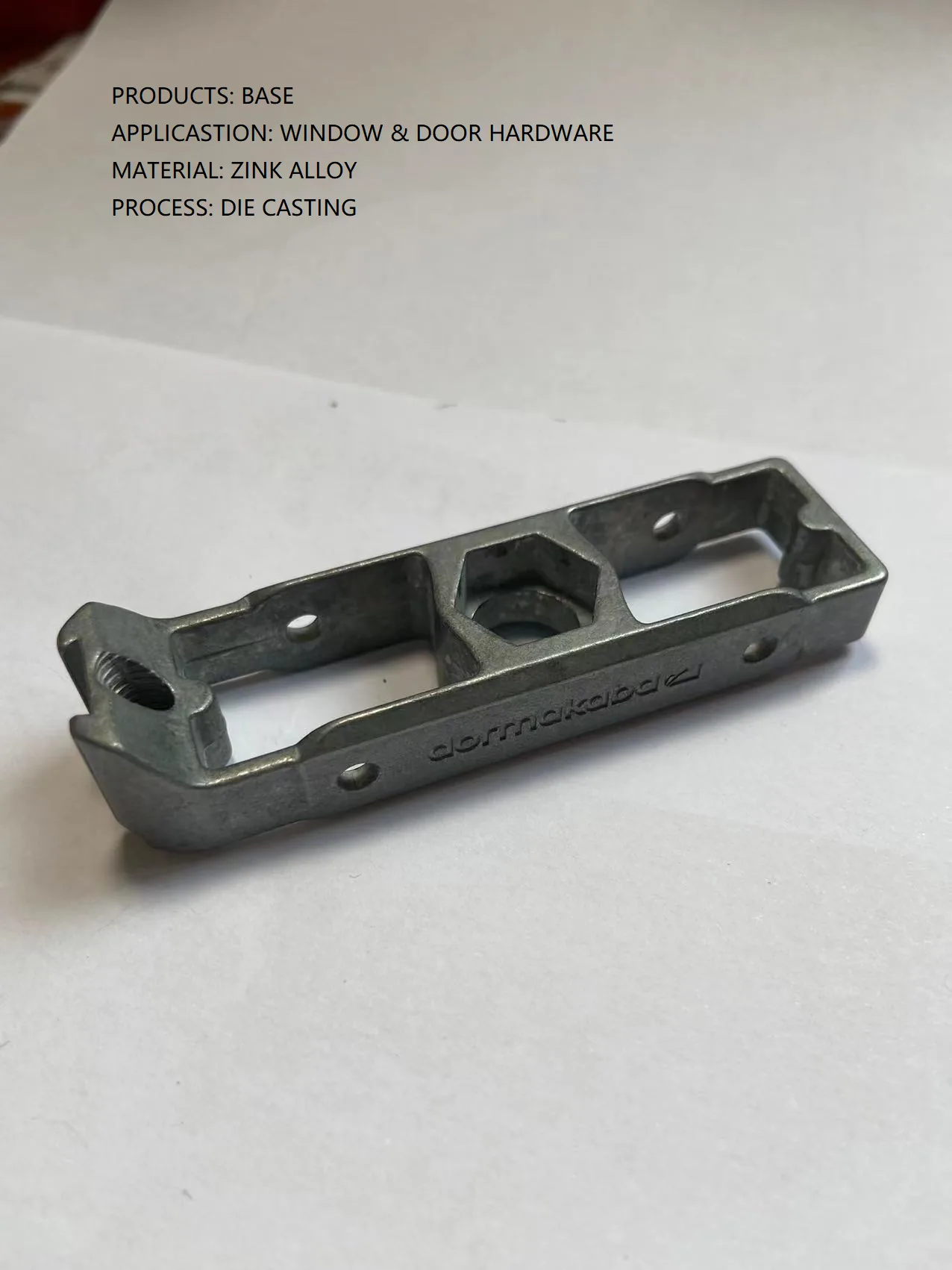
Manufacturing Operations
Die casting production, tooling fabrication, CNC machining, and quality inspection at our Nanjing facility.
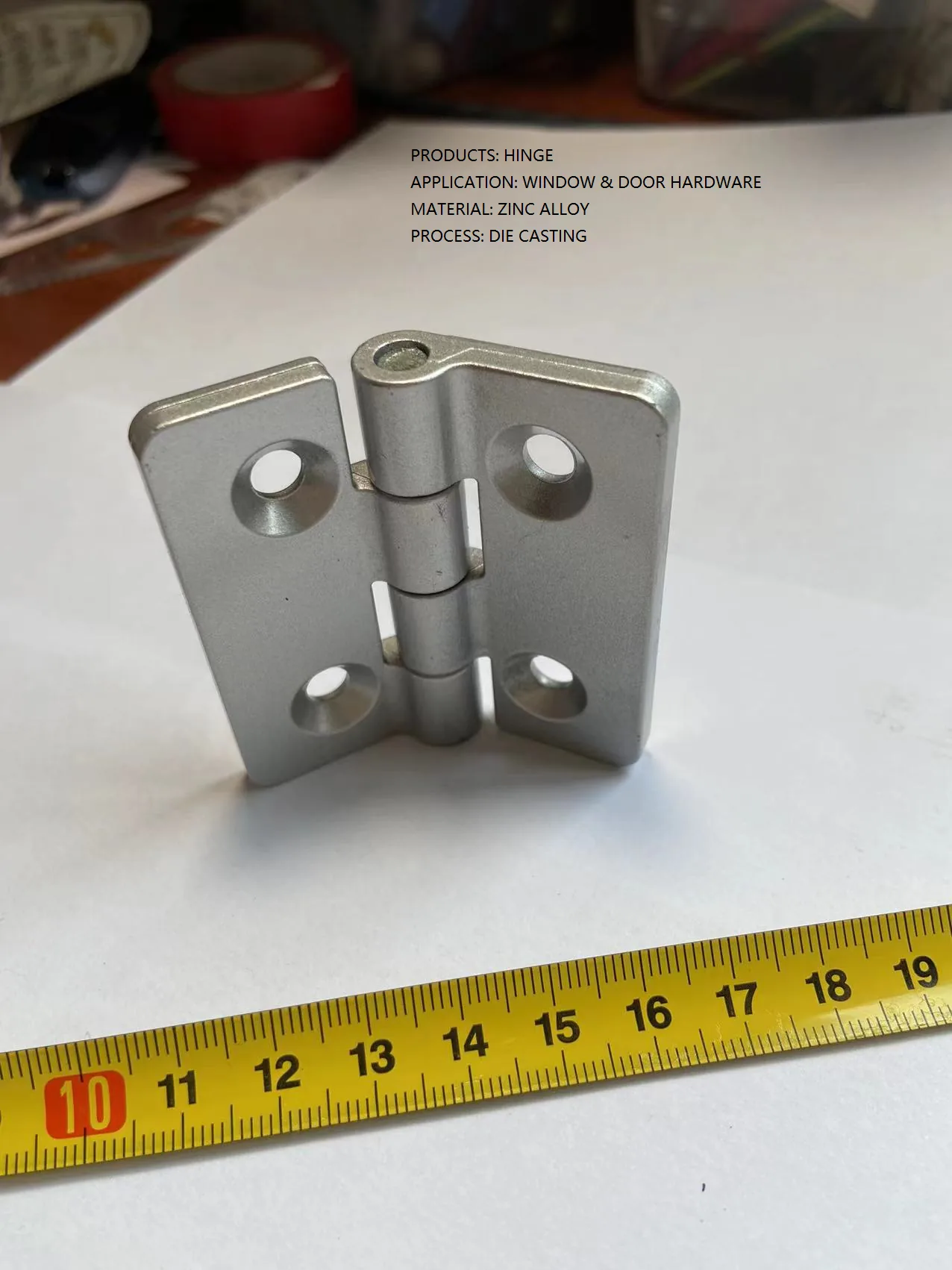
Component Detail
Close-up views of cast components showing surface finish, dimensional features, and application-ready quality.
Who is the zinc die casting manufacturer?
KastMfg runs hot-chamber die casting from 80T to 400T in Zamak 3, Zamak 5 and ZA-8, on a 28,000 m² plant in Nanjing, China that produces about 12,000 tonnes a year under ISO 9001:2015. Casting, trimming, machining and inspection happen in-house; plating and coating are coordinated with qualified partners. If you are comparing zinc suppliers, the questions that separate them are alloy control, die life and plating rejection — the three sections below answer them with numbers.
Zinc die casting at KastMfg uses hot-chamber high-pressure machines to produce complex, tight-tolerance components in Zamak 3, Zamak 5, ZA-8, and other zinc alloys. Zinc's low melting point (385-390°C) enables fast cycle times of 15-25 seconds, extended die life of 300,000 to over 1,000,000 shots, and the thinnest achievable walls of any die casting metal — reliably to 0.4 mm.
The result is a process well suited to high-volume, dimensionally precise, cosmetically demanding components where the smooth as-cast surface, fine detail reproduction, and decorative finishing capability of zinc are decisive advantages.
Zinc Alloys Available
| Alloy | Key Composition | Tensile (MPa) | Yield (MPa) | Elongation | Best Use |
|---|---|---|---|---|---|
| Zamak 3 (Alloy 3) | Zn-4% Al-0.04% Mg | 283 | 200 | 10% | Most widely used — balanced properties, excellent castability |
| Zamak 5 (Alloy 5) | Zn-4% Al-1% Cu | 331 | 228 | 7% | Higher strength and hardness — preferred where load-bearing |
| Zamak 2 (Alloy 2) | Zn-4% Al-3% Cu | 359 | 283 | 7% | Maximum strength Zamak alloy — tool-like applications |
| ZA-8 | Zn-8% Al-1% Cu | 374 | 290 | 8% | Highest zinc alloy strength — gravity or hot-chamber casting |
| ZA-12 | Zn-12% Al | 404 | - | 4% | Bearing applications, high hardness |
Technical Capabilities
| Parameter | KastMfg Specification |
|---|---|
| Casting process | Hot-chamber HPDC |
| Machine tonnage | 80T-400T |
| Minimum wall thickness | 0.4 mm (standard), 0.3 mm achievable with optimization |
| Dimensional tolerance | CT3-CT5 (ISO 8062) — tighter than aluminum |
| Surface finish (as-cast) | Ra 0.8-1.6 μm — smoother than aluminum |
| Weight range | 0.005-5 kg |
| Die life | 300,000 -1,000,000+ shots |
| Typical cycle time | 15-25 seconds |
| Shot monitoring | Injection velocity, pressure, and temperature logged every shot |
Why Zinc Die Casting?
Thinnest achievable walls. At 0.4 mm minimum wall thickness, zinc die casting produces thinner walls than any other die casting metal. This enables miniaturization, complex internal geometry, and ultra-lightweight small components that aluminum cannot form.
Best surface finish as-cast. Zinc's low viscosity and fast-filling characteristic produce as-cast surfaces of Ra 0.8-1.6 μm — smoother than aluminum (1.6-3.2 μm). This smooth base minimizes pre-plating preparation, making zinc the preferred substrate for decorative chrome, nickel, and gold electroplating.
Tightest dimensional accuracy. CT3-CT5 tolerances as-cast (compared to CT4-CT6 for aluminum) mean zinc parts often require no post-cast machining for dimensional features. This reduces secondary operation cost and simplifies the supply chain.
Longest die life. Zinc's low casting temperature (385-390°C vs 650°C for aluminum) is far less thermally aggressive on the H13 die steel. Properly maintained zinc dies routinely exceed 500,000 shots; exceptional cases exceed 1,000,000. This dramatically reduces the tooling cost per unit over a program lifetime.
Fast cycle times. Shorter solidification time means 15-25 second cycles — faster than equivalent aluminum parts. At high volume, this directly reduces unit cost.
Surface Finishing for Zinc
Zinc die castings accept a wide range of decorative and functional finishes:
| Finish | Application |
|---|---|
| Chrome plating (decorative) | Automotive trim, door handles, hardware fittings — zinc is the preferred substrate |
| Nickel plating | Electronics, plumbing fittings, industrial hardware |
| Gold plating | Jewelry fittings, decorative hardware, luxury consumer goods |
| Powder coating | Industrial and outdoor components requiring color and corrosion protection |
| Painting | Consumer products where color matching is required |
| Clear lacquer | Preserves the as-cast metallic appearance |
Industries and Applications
Automotive Door handles, lock cylinders, fuel cap covers, interior trim components, seat hardware, mirror housings. Zamak 5 for load-bearing; Zamak 3 for decorative parts requiring direct plating.
Hardware and Building Products Padlocks, door handles, deadbolts, cabinet hardware, window fittings, bathroom accessories. High volume, consistent quality, direct chrome or nickel plating.
Electronics and Connectors Connector housings, terminal blocks, shield cans, EMI shielding brackets, switch housings. Zamak 3's excellent electrical conductivity and castability make it standard for these applications.
Consumer Products Zip fasteners, belt buckles, eyewear frames, toys, sporting goods fittings. Zinc's fine surface detail and plating suitability are ideal for visible consumer-facing components.
Industrial Precision Small gears, bearing retainers, precision brackets, bushings, pump impellers. ZA-8 or Zamak 2 for load-bearing applications.
Zinc vs Aluminum — Quick Decision Guide
Choose zinc when:
- Walls are thinner than 1.2 mm
- Part requires direct electroplating (chrome, nickel)
- Maximum dimensional precision on small parts
- Very high volume where long die life reduces total cost
- Part weight and size are small-to-medium
Choose aluminum when:
- Weight is a primary concern (zinc is 2.4x heavier than aluminum)
- Operating temperature exceeds 100°C
- Thermal conductivity is important (heat sinks, motor housings)
- Part size exceeds 5 kg
Zamak 5 vs Aluminum: Choosing by Program, Not by Alloy Sheet
A machinist-forum case from 2024, comparing real quotes for a run of about 1,000 small automotive components, is a compact illustration of how the zinc/aluminum decision actually gets made: the aluminum die quoted above $2,000 against roughly $600 for the zinc die, and the buyer — after working through corrosion and machining questions with the forum — settled on Zamak 5. Those two numbers are one program's quotes, not a pricing rule, but the mechanism behind them generalizes.
Tooling price. Zinc runs hot-chamber at 385-390°C against 620-700°C for aluminum, so the die steel sees a melt a few hundred degrees cooler and accumulates thermal fatigue far more slowly. A zinc die is consequently sized for a longer, cheaper life: lower-grade steel can serve the same shot count, and fitting and polishing costs track the gentler duty. That mechanism is why zinc tooling routinely quotes a fraction of the aluminum equivalent for the same part envelope — expect the magnitude per quote, not from a rule of thumb.
Volume crossover. At thousand-piece program volumes the tooling delta dominates total cost, and zinc's shorter hot-chamber cycles widen the gap. As programs scale into the tens of thousands, per-part tooling amortization shrinks on both routes and the decision migrates to program-level facts: part weight (zinc is ~2.4x denser, and material cost compounds with part size), operating temperature above ~100°C, and any structural or thermal role that points to aluminum.
Galvanic corrosion. Pairing a zinc casting against aluminum components or fasteners in a wet environment creates a galvanic cell — the zinc side behaves anodically and corrodes preferentially once an electrolyte bridges the joint. If the assembly must mix the metals, isolate them: insulating sleeves and washers at bolted joints, barrier coatings on mating faces, or like-metal fasteners throughout.
Machining. Zamak drills and taps cleanly at small thread sizes with modest cutting forces; high-silicon aluminum abrades tooling and needs tighter process discipline for the same features. A part carrying many small tapped holes is meaningfully cheaper to machine in zinc.
For the grade itself: Zamak 5 where strength and hardness carry load; Zamak 3 for the decorative, high-castability default.
Frequently Asked Questions
Is zinc die casting stronger than aluminum?
Zamak 5 tensile strength (331 MPa) exceeds A380 aluminum (317 MPa) in absolute terms. However, aluminum's strength-to-weight ratio is significantly better — aluminum is 2.4x lighter for equivalent volume. Choose based on your application's primary requirement: if weight matters, choose aluminum; if surface finish, thin walls, or plating suitability matter, choose zinc.
Why does zinc have better die life than aluminum?
Zinc's casting temperature (385-390°C) is approximately 250-300°C lower than aluminum (620-700°C). The H13 tool steel die experiences less thermal fatigue per cycle, resulting in dramatically longer service life. A zinc die that produces 500,000+ parts would need replacement or major repair after 80,000-120,000 shots running aluminum.
Can zinc die castings be used outdoors?
Bare zinc alloys have moderate corrosion resistance — adequate for indoor applications but requiring protection for outdoor or humid environments. Chrome-plated zinc castings perform well outdoors (the chrome and nickel intermediate layers provide corrosion protection). Powder-coated zinc is also suitable for outdoor use.
Why do zinc die cast parts break so easily in cheap products?
Because those products are designed to a price, not to the alloy's capability. Minimal wall sections, sharp internal corners, and just-enough material are what make thin consumer zinc parts snap — the same geometry in any alloy would fail. Properly designed Zamak 3 has useful impact strength and is the workhorse alloy for the majority of North American zinc die castings; when a zinc part breaks at a thin section, the usual culprits are section design and corner radii, not the alloy family. If your application sees impact or bending loads, specify minimum wall thickness and radii on the drawing rather than relying on alloy choice alone.
Can zinc die casting replace a spring or spring clip?
No - zinc alloys like Zamak are poor substitutes for repeatedly flexed spring steel. Their elastic deflection before permanent set is limited and fatigue performance does not survive repeated cycling, so a cast zinc "spring" loses its force after a small number of flexes. Cast-in clip features can work for modest deflection with generous radii and low insertion forces - battery doors and light retention clips are realistic - but true spring function belongs to stamped spring steel or beryllium copper parts. Where a design needs both housing and retention, the practical route is a zinc die cast body with a separate spring-steel clip fastened or assembled in.
I want a bright, uniform anodized look — zinc or aluminum die casting?
Neither, as cast — and the reason is chemistry. Aluminum die casting alloys carry 8-12% silicon, which does not convert during anodizing: the finish comes out gray, streaky, or mottled rather than the uniform satin a buyer expects (the full mechanism is in ADC12 vs A380). Zinc does not anodize in the conventional architectural sense at all. So the honest selection answer: if the part must look anodized, change the material or the finish, not the anodizer — a wrought alloy as extrusion or billet for true decorative anodize, or a different finish on the die casting. Zinc's play in this decision is the alternative finish route: zinc die castings take electroplating exceptionally well and polish to a bright surface, so chrome, nickel, and satin-chrome looks on consumer hardware are a zinc signature (one reason small decorative parts choose zinc — see why zinc wins small consumer parts). Where the requirement is corrosion protection rather than appearance, chem film and anodize-type treatments on die cast aluminum are serviceable even when cosmetically dull, and powder coating covers both jobs on either alloy.
Zinc Die Casting Cluster
- zinc die casting alloys
- Zamak 3
- Zamak 5
- Zamak 3 vs Zamak 5
- zinc die casting manufacturer
- ZA-8 zinc die casting
- zinc die casting applications
- hot chamber die casting
- zinc die casting plating
- zinc die casting lock body high volume
- Zamak 2
- ZA-12
- ZA-27
- what is zamak
Zinc die casting inquiry: casting@kastdiecast.com | +86 138 1403 4409 | No.6, Rungu Road, Nanjing, China
Related Resources
Next steps for zinc die casting
High Pressure Die Casting - Hot & Cold Chamber
High pressure die casting for aluminum, zinc, and magnesium on 16 cold-chamber machines (160T-1,600T) plus hot-chamber zinc cells (80T-400T), with vacuum-assisted HPDC and CT4-CT6 tolerances.
ServiceDie Casting Tooling & Mold Design | H13, P20 Steel
Die casting tooling designed and manufactured in-house using H13 and P20 tool steel. Prototype and production dies, mold maintenance, and tool transfer.
CapabilityQuality Control
Review inspection workflow, traceability support, and process control standards before launch.
Process GuideDie Casting Process
See how casting, trimming, machining, finishing, and inspection fit together in production.
Next StepRequest a Quote
Send your drawing package and target volume to get an engineering-backed quotation.
Need a Quote for Your Project?
Our engineering team is ready to review your requirements and provide competitive pricing with fast turnaround.
Request a Quote