Aluminum Die Casting Manufacturer | A380 & ADC12
Custom aluminum die casting in A380, ADC12, A360 & A413: 160T-1,600T presses, 12,000+ tonnes/year, CT4-CT6 tolerances, in-house machining & finishing.
Production Capabilities
Supporting visuals for aluminum die casting
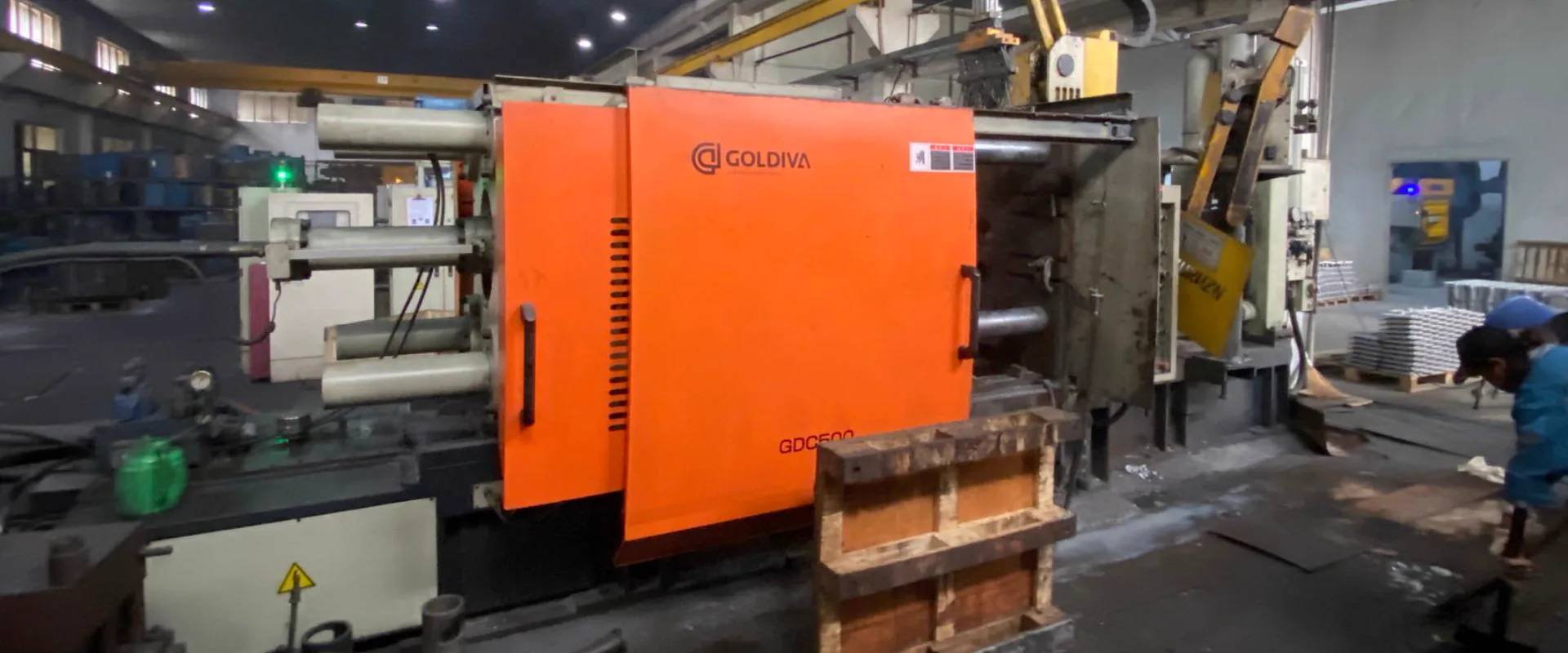
Manufacturing Operations
Die casting production, tooling fabrication, CNC machining, and quality inspection at our Nanjing facility.
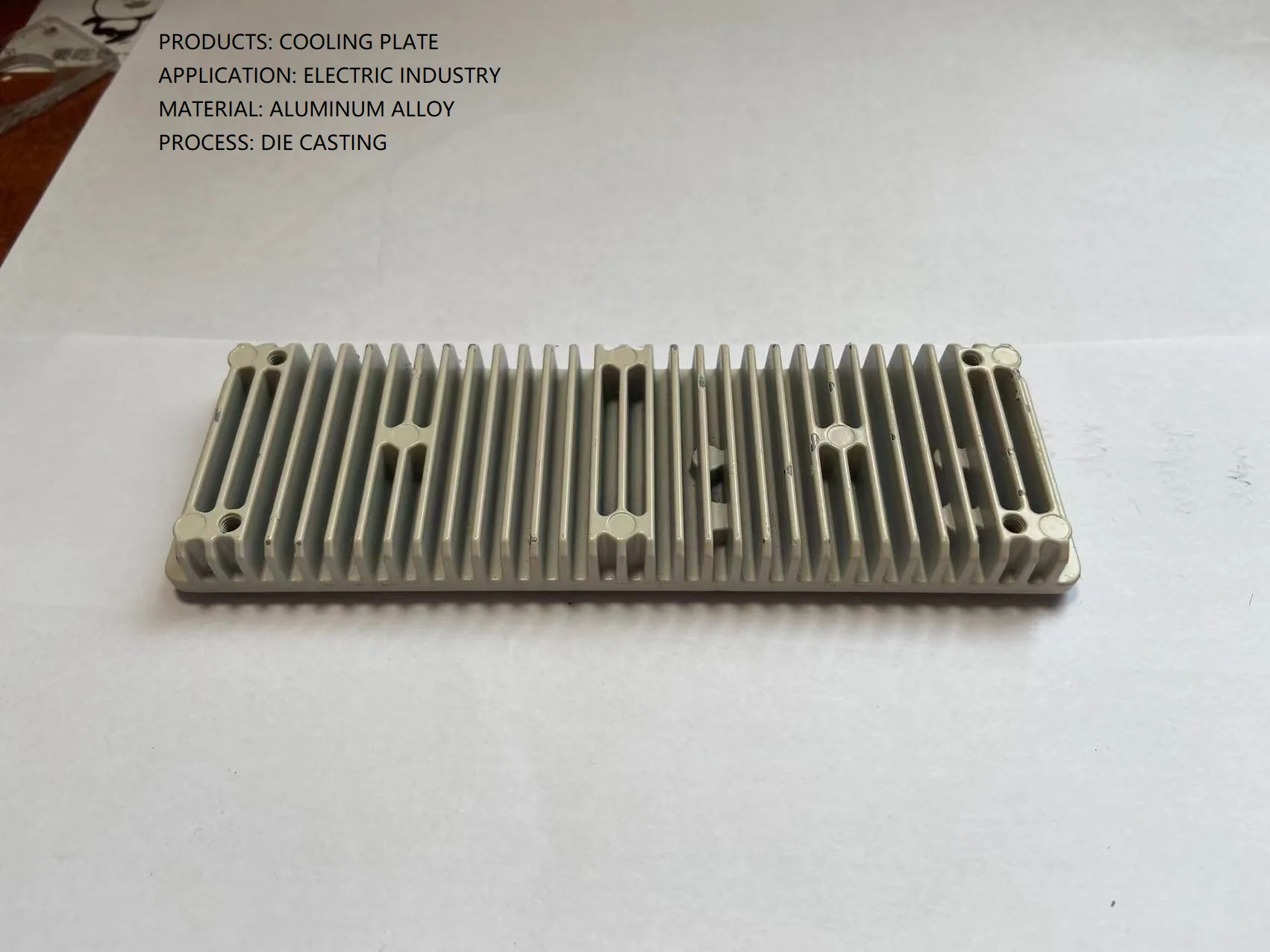
Component Detail
Close-up views of cast components showing surface finish, dimensional features, and application-ready quality.
Who supplies aluminum die castings?
KastMfg casts A380, ADC12, A360 and A383 on cold-chamber machines from 160T to 1,600T, with T6 heat treatment, CNC machining and surface finishing in the same plant. As-cast tolerance runs CT4–CT6 for aluminum; minimum wall is 1.2 mm. Parts ship FOB, CIF or DDP from Nanjing, China.
KastMfg is a China-based aluminum die casting manufacturer producing custom A380, ADC12, A360, A413, and A390 parts on 16 cold-chamber machines from 160T to 1,600T — over 12,000 tonnes per year, with in-house CNC machining, heat treatment, and finishing. Request a quote.
Aluminum die casting is KastMfg's core capability and the foundation of our manufacturing business. We have been producing aluminum die castings for over 20 years, operating a dedicated aluminum HPDC facility with 16 cold-chamber machines from 160T to 1,600T. Our production capacity exceeds 12,000 tonnes of castings per year, serving customers in automotive, industrial machinery, electronics, LED lighting, and telecommunications.
Aluminum is the world's most widely used die casting metal. Its combination of low density (2.74 g/cm³), high strength, excellent thermal conductivity (96 W/m·K), and natural corrosion resistance makes it the preferred choice for automotive lightweighting, thermal management, structural enclosures, and precision industrial components.
Aluminum Alloys We Cast
| Alloy | Standard | Composition | Tensile (MPa) | Yield (MPa) | Key Properties | Best Applications |
|---|---|---|---|---|---|---|
| A380 | ASTM B85 | Al-8.5Si-3.5Cu | 317 | 159 | Best overall: fluidity, machinability, strength | General engineering, motor housings, gearbox covers |
| ADC12 | JIS H5302 | Al-11Si-2Cu | 310 | 160 | Excellent machinability, tight tolerances | Automotive engine/transmission, Japanese OEM supply |
| A360 | ASTM B85 | Al-9.5Si-0.5Mg | 317 | 172 | Superior corrosion resistance, good ductility | Marine, outdoor, coastal environments |
| A413 | ASTM B85 | Al-12Si | 290 | 145 | Best pressure tightness, near-eutectic | Hydraulic manifolds, valve bodies, pressure-tight castings |
| A390 | ASTM B85 | Al-17Si-4.5Cu | 280 | 240 | High hardness, wear resistance | Cylinder liners, pistons, wear surfaces |
A380 — The Workhorse Alloy
A380 accounts for the majority of aluminum die casting production globally, and for good reason. Its silicon content (8.5%) provides the fluidity necessary to fill complex cavities and thin walls reliably. Its copper content (3.5%) contributes strength and machinability. A380 is not the best alloy in any single property category, but its combination of properties is unmatched for general-purpose engineering castings.
ADC12 — The Japanese Standard
ADC12 is the Japanese Industry Standard (JIS) equivalent of A380, with slightly higher silicon (11%) and lower copper. It is specified by Japanese OEM automotive and electronics customers and produces excellent dimensional accuracy and machinability. KastMfg regularly supplies ADC12 castings to Japanese Tier 1 automotive suppliers and their global plants.
A413 — When Pressure Tightness is Required
A413's near-eutectic composition (12% silicon) produces the finest solidification microstructure of the aluminum die casting alloys, with the lowest shrinkage and best resistance to gas porosity. For hydraulic manifolds, pneumatic valve bodies, and pressure-tight enclosures, A413 with vacuum-assisted casting eliminates the need for post-cast impregnation in most applications.
Quick Alloy Selector
| If your program needs... | Choose | Why |
|---|---|---|
| The general-purpose default | A380 | Balanced fluidity, machinability, and strength for motor housings, brackets, covers |
| A Japanese OEM specification | ADC12 | JIS H5302 counterpart of A380, preferred by Japanese Tier 1 supply chains |
| Pressure tightness | A413 | Near-eutectic; best porosity resistance for hydraulics and pneumatics |
| Corrosion resistance outdoors or marine | A360 | Highest corrosion resistance of the set |
| T6 heat treatment and maximum ductility | A356 | Heat-treatable, but not a standard HPDC alloy — cast via gravity, low-pressure, or investment casting route |
| Thinnest walls and fastest cycles on small parts | ZA-8 | Hot-chamber zinc grade; stronger than Zamak 3 where part size fits zinc economics |
Not sure which side of the aluminum/zinc line your part falls on? Send the drawing — our DFM review confirms alloy and process feasibility before tooling commitment.
Technical Capabilities
| Parameter | KastMfg Specification |
|---|---|
| Experience | 20+ years aluminum die casting |
| Machine tonnage | 160T-1,600T (16 cold-chamber machines) |
| Alloys | A380, ADC12, A360, A413, A390 |
| Dimensional tolerance | CT4-CT6 per ISO 8062 |
| Min wall thickness | 1.2 mm standard; 0.8 mm achievable |
| Max projected area | Up to 2,000 cm2 (1,600T machine) |
| Surface finish (as-cast) | Ra 1.6-3.2 μm |
| Weight range | 0.05-25 kg |
| Annual capacity | 12,000+ tonnes (all alloys) |
| Shot monitoring | Velocity, pressure, temperature — logged every shot |
Secondary Operations for Aluminum Die Castings
KastMfg delivers fully processed, ready-to-assemble aluminum components. Secondary operations available in-house:
- 3-axis, 4-axis, and full 5-axis simultaneous machining
- Precision boring to H6/H7 (bearing seats, shaft bores)
- Face milling of sealing surfaces to 0.01 mm flatness
- Thread milling, drilling, tapping to M30
- 18 machining centers; two shifts
- T5 (artificial aging) — improves hardness and yield strength by 20-30%
- T6 (solution + artificial aging) — available on vacuum-assisted die cast parts with adequate low porosity
- Third-party T6 treatment coordinated for standard HPDC parts requiring impregnation
- Shot blasting (standard preparation)
- Powder coating (full RAL/Pantone color range)
- Type II anodizing (5-15 μm, clear or dyed)
- Type III hard anodizing (25-100 μm, 60+ HRC)
- Chromate conversion coating (Alodine) — conductive, pre-paint treatment
- E-coating — internal surface coverage
- Threaded inserts (helicoil, keensert, press-fit)
- Bearing press-fitting
- Sub-assembly with mating components
Quality Control for Aluminum Castings
Incoming alloy verification: Every melt batch verified by OES spectrometer for chemistry conformance to A380, ADC12, A360, or A413 specification.
Process monitoring: Injection velocity, peak pressure, intensification pressure, and die temperature logged every shot. SPC charts maintained for critical process parameters.
Dimensional inspection: CMM first article inspection (100-piece dimensional study on all features). Production SPC on critical dimensions.
Internal soundness: X-ray inspection available for pressure-critical applications. Vacuum-assisted casting with VADC for near-zero porosity requirements.
Mechanical properties: Tensile testing available on witness specimens cast with production batches for programs requiring mechanical property certification.
Industry Applications
Automotive and EV
KastMfg supplies aluminum die castings to automotive Tier 1 customers worldwide. Common parts:
- Gearbox and transmission housings (A380, ADC12)
- EV motor housings and inverter enclosures (A380, vacuum HPDC)
- Battery tray structural members (A380, 1,000T-1,600T machines)
- Brake caliper bodies and booster brackets
Industrial Machinery
- Hydraulic manifold blocks (A413 — pressure tightness)
- Motor end shields and fan covers (A360 — corrosion resistance)
- Gearbox and reducer housings (A380)
- Compressor crankcases
Electronics and Telecommunications
- Heat sinks and thermal management housings (A360 — thermal conductivity)
- 5G base station enclosures and antenna housings
- Server chassis components
- RF shielding enclosures
LED Lighting
- Streetlight and high-bay fixture housings
- LED heat sink bodies
- Floodlight and architectural lighting enclosures
Frequently Asked Questions
What is the minimum order quantity for aluminum die casting?
There is no fixed MOQ. Share your annual volume and we will quote prototype and production tooling separately. Annual programs of 10,000-1,000,000+ pieces are routine.
How long does aluminum die casting tooling take?
Prototype (P20 steel, single-cavity): 3-5 weeks from drawing approval. Production (H13 steel, single-cavity): 5-8 weeks. Multi-cavity or complex slide tools: 7-10 weeks. See our tooling page for full specifications.
What tolerances can you hold on aluminum die castings?
Standard: CT5 per ISO 8062 (±0.1-0.3 mm on most linear dimensions). With CNC post-machining: ±0.02-0.05 mm on critical features. Provide your drawing and we will confirm tolerance feasibility during the DFM review. For how as-cast tolerance grades map to dimension, machining allowance, and datum strategy — including CT4-CT6 transmission housing castings — see the die casting tolerances guide.
Can aluminum die castings be T6 heat treated?
Standard HPDC aluminum contains gas porosity that causes surface blistering during T6 solution treatment. T6 is possible on vacuum-assisted HPDC (VADC) parts with low porosity, or on gravity die cast (permanent mold) / LPDC parts — see die casting vs permanent mold for the full process trade-off. KastMfg offers VADC for programs requiring T6.
Do you offer DFM review before tooling commitment?
Yes. Every KastMfg inquiry begins with a complimentary DFM review. We examine draft angles, wall thickness, undercuts, tolerance feasibility, and gating options, and return a written DFM report within 48 hours.
What is the difference between A380 and ADC12?
A380 and ADC12 are compositionally similar, both around 8-11% silicon with 2-4% copper. ADC12 has slightly higher silicon and tighter impurity limits under JIS H5302, making it preferred by Japanese OEMs. A380 is governed by ASTM B85 and is the global default for general engineering. Both cast and machine well; the choice is usually driven by customer specification.
Can you ship aluminum die castings to Europe or the USA?
Yes. KastMfg exports die castings to North America, Europe, Australia, and the Middle East. We handle ocean and air freight from Nanjing, provide complete customs documentation, and can ship DDP, DAP, or FOB per your preference.
Who owns the die casting tooling?
The customer owns the tooling. Every KastMfg purchase order documents customer tooling ownership, and we deliver full tool drawings and maintenance logs. If you ever need to transfer tooling to another supplier, we coordinate the transfer and provide full documentation.
What is the typical part cost for aluminum die casting?
Part cost depends on alloy, weight, complexity, and annual volume. As a rough guide: small parts (50-200g) in A380 at 10,000+ pieces/year typically range $0.80-3.50 per piece as-cast. Larger structural parts (1-5 kg) at similar volumes range $4.00-15.00. Request a quote with your drawing for an accurate estimate.
How do you prevent porosity in aluminum die castings?
We use multiple methods: vacuum-assisted die casting (VADC) removes 60-80% of trapped air; optimized gate design reduces turbulence; rotary degassing removes dissolved hydrogen; and X-ray inspection verifies internal soundness on pressure-critical parts. See our defects guide for detailed prevention strategies.
HPDC or LPDC — which for structural parts?
Conventional high-pressure die castings can carry entrapped gas, which is why they are generally not solution heat-treated — entrapped gas blisters at solution temperatures. Low-pressure die casting with an alloy like A356-T6 is the classic route when a structural part needs heat treatment for strength and ductility, and the comparison is alloy- and process-dependent rather than a rule. The practical division of labor: HPDC for complex net shapes at volume and cost; LPDC for lower-volume, heat-treatable, higher-integrity structural parts. When a drawing specifies T6 on a die casting, that is the moment to ask which process the designer actually means.
Can aluminum be die cast over a steel insert (overmolding)?
Casting aluminum around a pre-placed steel insert is practiced in the industry — cast-in bushings and liners exist — but it is a specialized operation with real boundaries, and far less routine than insert molding in plastics or overcasting in zinc. Aluminum is cast at 620-700°C, hot enough that the melt aggressively dissolves iron from an unprepared steel surface, forming brittle intermetallic layers at the interface instead of a predictable bond. What makes it work when it works is mechanical, not metallurgical: steel shrinks less than the aluminum around it, so the casting clamps the insert — which is why wrap length, anchor geometry (knurling, through-holes, shaped cross-sections), and insert preheating dominate the design discussion. Preheating matters twice: a cold insert chills the aluminum into cold shuts and poor fusion at the interface, and differential contraction stresses can crack the casting as it cools. The conservative design position most programs land on: cast the aluminum part solid, then assemble — press-fit, threaded, or mechanically staked joints — and reserve cast-in steel inserts for cases where the insert genuinely cannot be added afterward. If a design depends on a cast-in insert, treat it as a feasibility question for DFM review with the caster, not a catalog option.
A vendor proposes "anodized low-copper aluminum" against our "Die Cast Aluminum" spec — what should we check?
Treat it as a specification mismatch until the vendor names an alloy. "Anodized" is a surface treatment, not an alloy — it describes what happened to the part after casting and says nothing about what was poured. "Low-copper" is a compositional description, not a designation, and copper level alone does not determine fluidity, strength, pressure tightness, or machinability. Aluminum die casting alloys carry real designations: the AA 3xx.x die casting series under ASTM B85 (A380, A360, A413 and their kin) or regional equivalents such as ADC12 under JIS H5302, with ingot chemistry governed by the ASTM B179 class of standards. Three documents resolve the question: the actual alloy designation the vendor intends to pour, a composition certificate for that heat, and the standard the designation belongs to. If the vendor cannot produce all three, the substitution is an undefined material, not an alloy proposal. The kernel of sense in it may be cosmetic — high-copper, high-silicon die casting alloys anodize to a dull, mottled finish, and alloys chosen for appearance do exist — but they are chosen by designation, not adjectives. The buyer-side fix is symmetrical: your drawing should name a designation or a service condition, not "Die Cast Aluminum", so any substitution has something defined to be measured against.
Are machined-from-billet parts stronger than die cast parts?
On average yes, and the difference is microstructure, not marketing. Wrought billet carries a uniform, hot-worked grain structure with no internal voids, while a die casting can contain porosity, cold shuts, and inclusions that act as early fatigue sites. The fair comparison is narrower than the averages suggest: a well-run die casting has a fine-grained as-cast skin and, on a per-alloy basis with sound process control, the strength gap to wrought material shrinks — the spec-sheet yield values of A380 are real, and vacuum-assisted casting closes the internal-soundness gap further. The engineering answer is that strength and consistency depend on alloy, heat treatment (which conventional HPDC cannot take), process, and part design; when a program's failure mode is fatigue-critical, design to the casting's qualified values, not to billet intuition — or specify low-pressure die casting for the heat-treatable wrought-like performance. The economics run the other way: billet machining pays at low volume and drops out fast as volume rises.
Can steel or spring steel be die cast?
Not with conventional tooling. Molten steel runs near 1450-1500°C, far beyond what H13 die steel survives, which is why the industry's "die casting" family stops at aluminum, magnesium, and zinc. Specialized high-temperature tooling and steel die casting research exist but are uncommon and costly, not a production option you can order. The near-net steel routes are investment casting, metal injection molding (MIM), or forging — each delivers steel parts with tooling and volume economics of its own. When a drawing asks for a "die cast steel" part, the real question behind it is usually a steel part at die-casting-like unit cost, and that conversation belongs in DFM review with the process options on the table.
Are gasoline engine blocks die cast?
Many are — and the ones that are, are die cast for a reason. High-pressure die casting suits open-deck aluminum block designs, where the water jacket is open to the deck face and no complicated sand core package is needed; the process delivers the thin walls, integrated passages, and unit cost that high-volume engine programs demand, with cast-in or pressed-in iron liners handling bore wear. Blocks that need closed decks or complex internal coring generally route to sand casting, gravity die casting, lost-foam, or low-pressure processes instead, because HPDC cannot handle the sand-core package a closed water jacket requires. So the rule is not "engine blocks are die cast" but "open-deck blocks at volume are HPDC candidates; core-heavy designs go to other processes" — the same process-selection logic that governs any structural casting decision.
How do you protect die cast aluminum from corrosion — especially when bolted to stainless steel?
Coatings first, then break the galvanic pair. For the casting itself, chromate/chem-film conversion coating, powder coating, e-coat, and paint are the standard arsenal; anodizing works unevenly on high-silicon die cast alloys — mottled, gray results — which is why conversion coating plus paint is the common route on die cast housings. When a die cast aluminum part is bolted to stainless steel, the aluminum is the anode in the pair and corrodes preferentially in the presence of an electrolyte. Mitigation is mechanical: isolate the joint with plastic or nylon washers and bushings, seal the faying surfaces with a compatible sealant, and coat the aluminum side generously. The assembly-level habit that prevents most field failures: keep the joint dry — design so water does not pool at the fastener, because a stainless-aluminum pair in dry service is far less aggressive than the same pair outdoors and wet.
Aluminum Die Casting Cluster
- aluminum for die casting
- A390 aluminum die casting
- ADC12 die casting
- A360 vs A380 aluminum die casting
- A413 vs A380 die casting
- aluminum vs zinc die casting
- aluminum die casting automotive
- aluminum die casting electronics
- aluminum die casting EV battery tray
- aluminum die casting EV motor housing
- aluminum die casting heat sink
- A356 aluminum
- A383 aluminum
Request an aluminum die casting quote: casting@kastdiecast.com | +86 138 1403 4409 | No.6, Rungu Road, Nanjing, China
Related Resources
Next steps for aluminum die casting
Custom Die Casting Services - Drawing to Delivery
Custom die casting services from DFM review to delivery: in-house tooling, PPAP sampling, production, CNC machining, and finishing for global OEM buyers.
ServicePrecision Die Casting Manufacturer in China
16 cold-chamber machines from 160T to 1,600T, in-house tooling in 3-5 weeks, 12,000 tonnes a year in Nanjing. Aluminum, zinc and magnesium die castings for OEM buyers.
ToolingDie Casting Tooling
Understand tool build timing, cavity strategy, and how tooling decisions affect unit cost.
CapabilityQuality Control
Review inspection workflow, traceability support, and process control standards before launch.
Process GuideDie Casting Process
See how casting, trimming, machining, finishing, and inspection fit together in production.
Next StepRequest a Quote
Send your drawing package and target volume to get an engineering-backed quotation.
Need a Quote for Your Project?
Our engineering team is ready to review your requirements and provide competitive pricing with fast turnaround.
Request a Quote