Investment Casting Manufacturer - Lost-Wax Precision Parts
Investment casting (lost-wax) for steel, stainless, aluminum, and bronze parts: wax tooling, ceramic shell, heat treatment, CNC, and PPAP for OEM programs from 100 to 10,000+ pieces per year.
Production Capabilities
Supporting visuals for investment casting
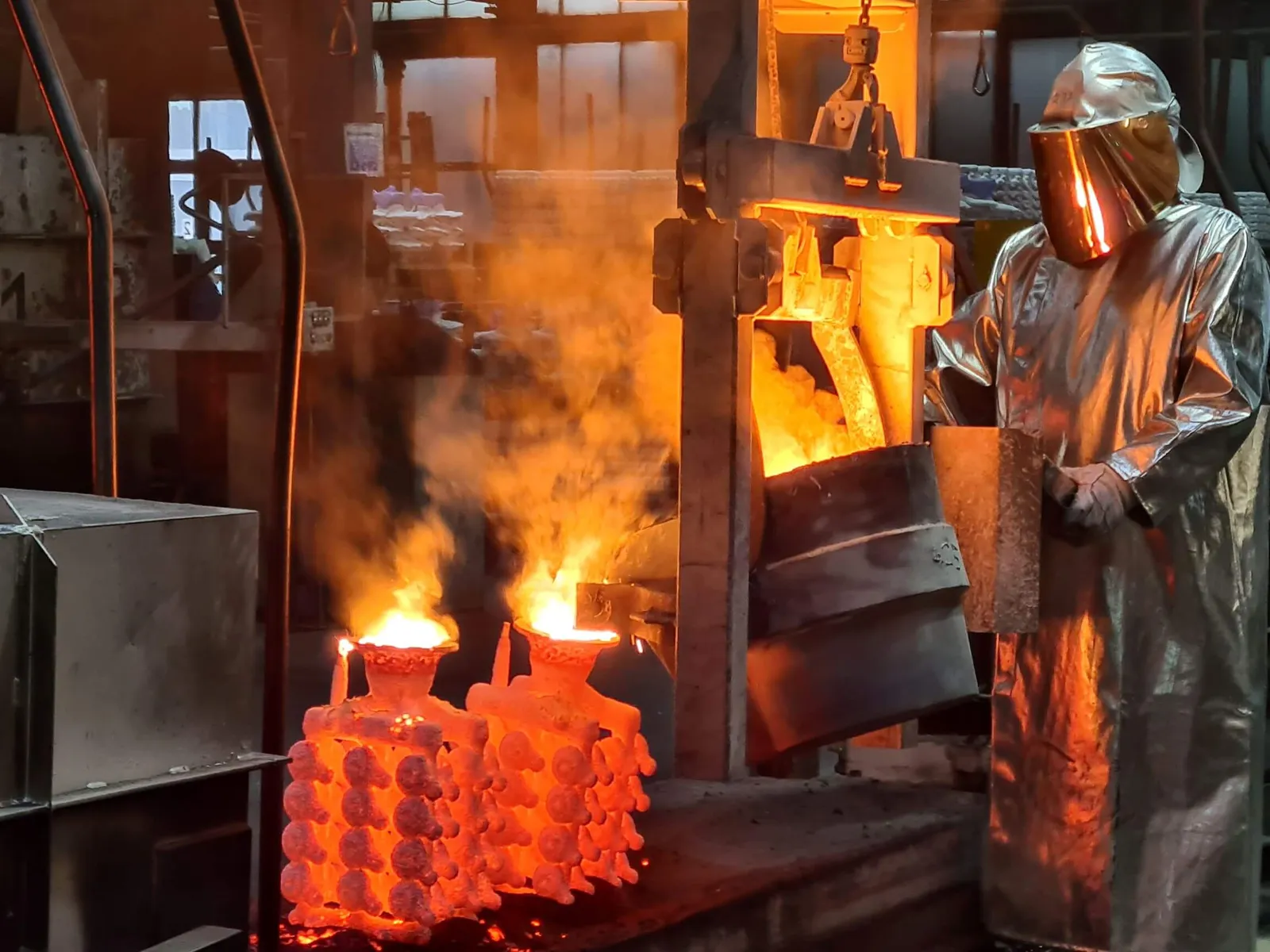
Manufacturing Operations
Die casting production, tooling fabrication, CNC machining, and quality inspection at our Nanjing facility.
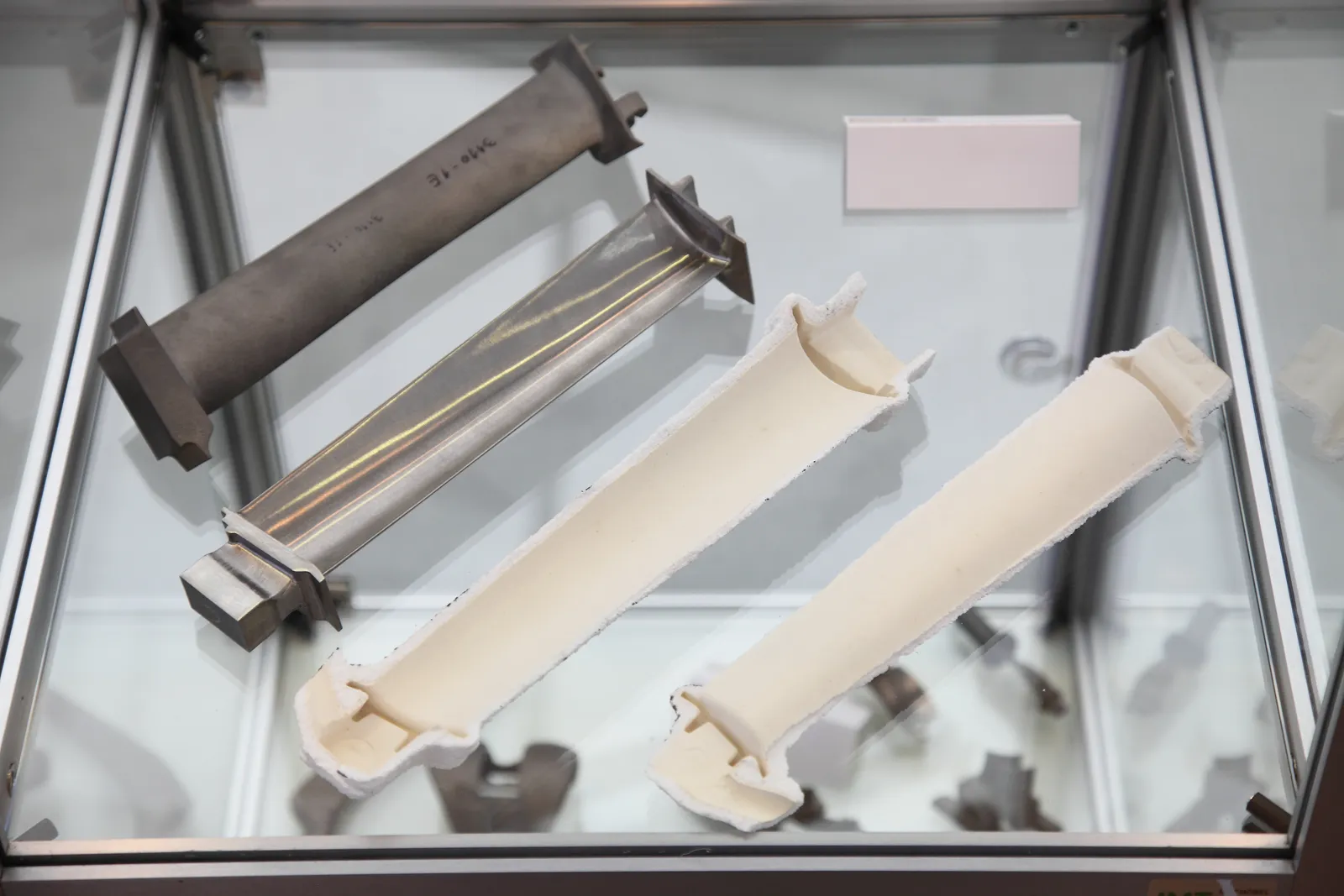
Component Detail
Close-up views of cast components showing surface finish, dimensional features, and application-ready quality.
Investment casting (also called lost-wax casting) is KastMfg's precision route for alloys that die casting cannot process - carbon and alloy steel, stainless steel, tool steel, and complex near-net aluminum or bronze components. Where high-pressure die casting wins on aluminum and zinc at volume, investment casting wins on geometry, alloy freedom, and low-to-medium volume economics.
KastMfg supplies investment castings alongside our die casting programs. One engineering team reviews your drawing, recommends the right process, and delivers castings with the documentation OEM buyers expect - dimensional layout, material certification, and PPAP on request.
Which process does your part need? The split is alloy and volume, not preference:
| Your part | Process | Why |
|---|---|---|
| Aluminum or zinc, thin walls, 5,000+ parts/year | Die casting | Cycle time of 30-90 seconds; as-cast detail; tooling repaid at volume |
| Carbon/alloy/stainless steel, or small parts at low volume | Investment casting | Die casting cannot process steel; wax tooling is cheaper at low volume |
| Aluminum, fewer than ~5,000 parts/year, tight internal passages | Investment casting or permanent mold | Lower tooling cost outweighs the slower cycle |
| Magnesium structural parts | Die casting | AZ91D/AM60B on 160T-250T cold-chamber cells |
The full comparison, including cost and lead-time lines, is in die casting vs investment casting.
What Investment Casting Is
Investment casting builds a disposable ceramic shell around a wax pattern, then melts out the wax and pours molten metal into the cavity. The result is a near-net-shape part with excellent detail, low draft requirements, and the ability to cast internal passages using ceramic cores.
Typical flow:
- Wax pattern - injection-molded or machined wax replica of the part
- Assembly - wax patterns attached to a runner system (tree)
- Shell build - repeated ceramic slurry and stucco dips
- Dewax / burnout - wax removed; shell fired to strength
- Pour - molten metal vacuum-assisted or gravity poured
- Finishing - shell knockoff, cut-off, heat treat, blast, CNC as required
Alloys and Applications
| Alloy family | Examples | Typical applications |
|---|---|---|
| Carbon & alloy steel | 1020, 1045, 4140, 8620 | Valve bodies, brackets, pump housings, tooling inserts |
| Stainless steel | 304, 316; 17-24PH on request | Food, marine, chemical, medical hardware |
| Aluminum | A356, C355 | Aerospace prototypes, complex enclosures |
| Bronze & copper alloys | C87600, C93200 - quoted on request | Marine hardware, wear components |
See dedicated pages: stainless steel casting, aluminum investment casting, and steel investment casting.
Investment Casting vs Die Casting
| Factor | Investment casting | Die casting (HPDC) |
|---|---|---|
| Alloys | Steel, stainless, superalloys, aluminum, bronze | Aluminum, zinc, magnesium (non-ferrous, low melt) |
| Tooling | Wax dies - lower entry cost | Steel dies - higher cost |
| Economic volume | ~100 to 50,000 parts/year | ~5,000 to millions/year |
| Internal geometry | Excellent (ceramic cores) | Limited by die pull |
| Typical tolerance | CT 5-7 class | CT 4-6 class (tighter on small features) |
Full comparison: die casting vs investment casting.
KastMfg Capabilities
| Parameter | Specification |
|---|---|
| Part weight | ~5 g to 25 kg typical |
| Annual volume | 100 to 10,000+ pieces per program |
| Tolerance | Per drawing; CT 5-7 typical as-cast (CT4 achievable on small/precision features) |
| Surface (as-cast) | Ra 3.2-6.3 um typical |
| Secondary ops | Heat treatment, CNC, shot blast, passivation, plating |
| Quality | ISO 9001; PPAP / FAI on request |
When to Specify Investment Casting
Choose investment casting when:
- The alloy must be steel or stainless - die casting is not an option
- Geometry includes undercuts, thin ribs, or internal galleries
- Annual volume is below die casting crossover (~5,000-10,000 for aluminum)
- You need near-net shape with minimal machining on complex forms
Choose custom die casting when the part is aluminum or zinc, walls are thin, and annual demand supports steel die amortization.
Investment Casting Services
- Investment casting services - program overview from RFQ to delivery
- Lost wax casting - same process, alternate search term
- Die casting vs investment casting - process selection guide
- Types of die casting - HPDC and related routes
- Custom die casting - aluminum and zinc programs
- Get a quote - upload drawing for process recommendation
Request investment casting quote: casting@kastdiecast.com | +86 138 1403 4409 | No.6, Rungu Road, Nanjing, China
Image credits: FEINGUSS BLANK GmbH, CC BY-SA 4.0, via Wikimedia Commons; Bin im Garten, CC BY-SA 3.0, via Wikimedia Commons.


Related Resources
Next steps for investment casting
Stainless Steel Casting - Investment Cast 304 & 316
Stainless steel investment casting for 304, 316, and PH grades: corrosion- resistant precision parts for food, marine, chemical, and industrial OEM programs.
ServiceLost Wax Casting - Investment Casting Process Explained
Lost wax casting (investment casting) process, tolerances, alloys, and volume economics. When lost-wax precision casting beats die casting for steel, stainless, and complex geometry.
ToolingDie Casting Tooling
Understand tool build timing, cavity strategy, and how tooling decisions affect unit cost.
CapabilityQuality Control
Review inspection workflow, traceability support, and process control standards before launch.
Process GuideDie Casting Process
See how casting, trimming, machining, finishing, and inspection fit together in production.
Next StepRequest a Quote
Send your drawing package and target volume to get an engineering-backed quotation.
Need a Quote for Your Project?
Our engineering team is ready to review your requirements and provide competitive pricing with fast turnaround.
Request a Quote