ADC12 vs A380 Die Casting - Which Alloy to Specify
ADC12 vs A380 die casting alloys compared: composition, mechanical properties, castability, and when the JIS or ASTM grade is the correct specification.
Production Capabilities
Alloy and application photos for ADC12 vs A380 die casting
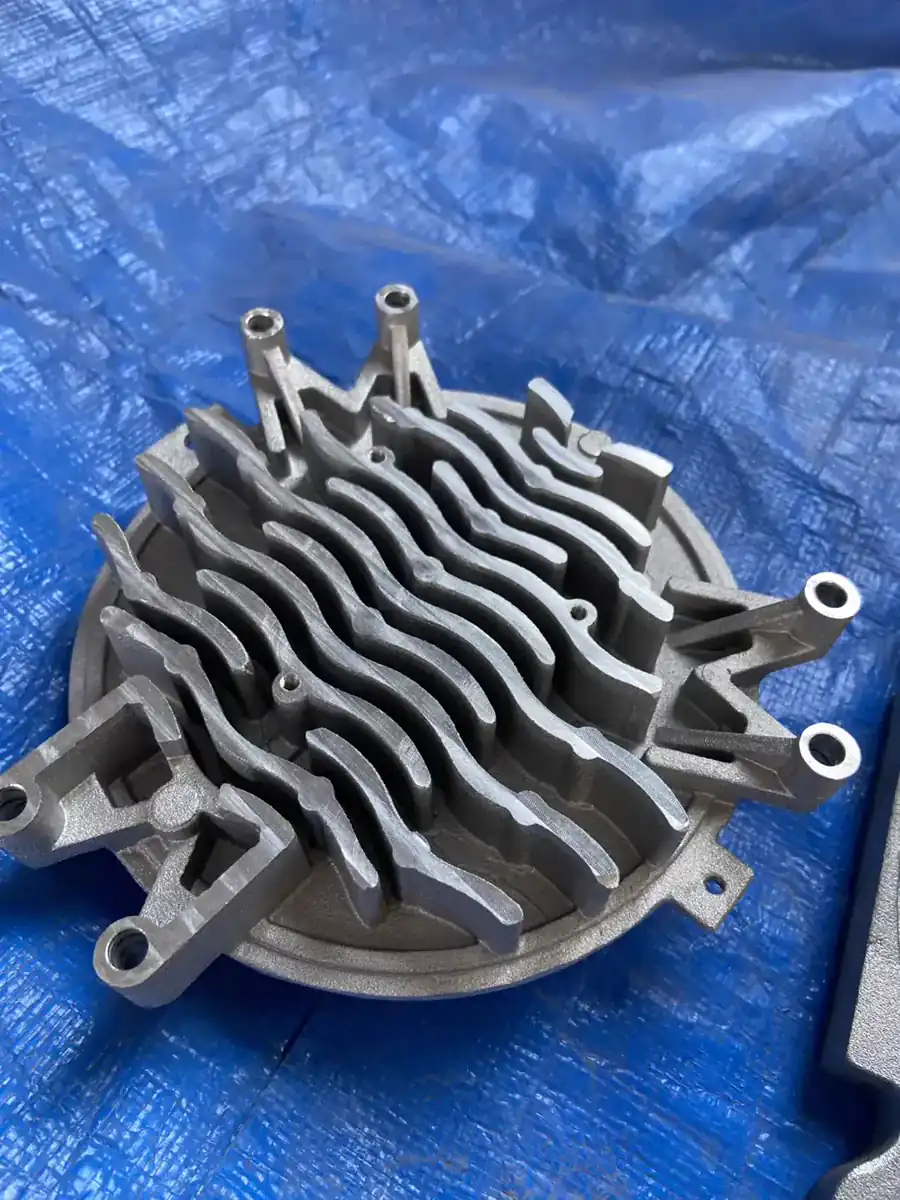
Die Casting Alloy
Material samples and cast components showcasing the alloy composition, grain structure, and as-cast surface quality.
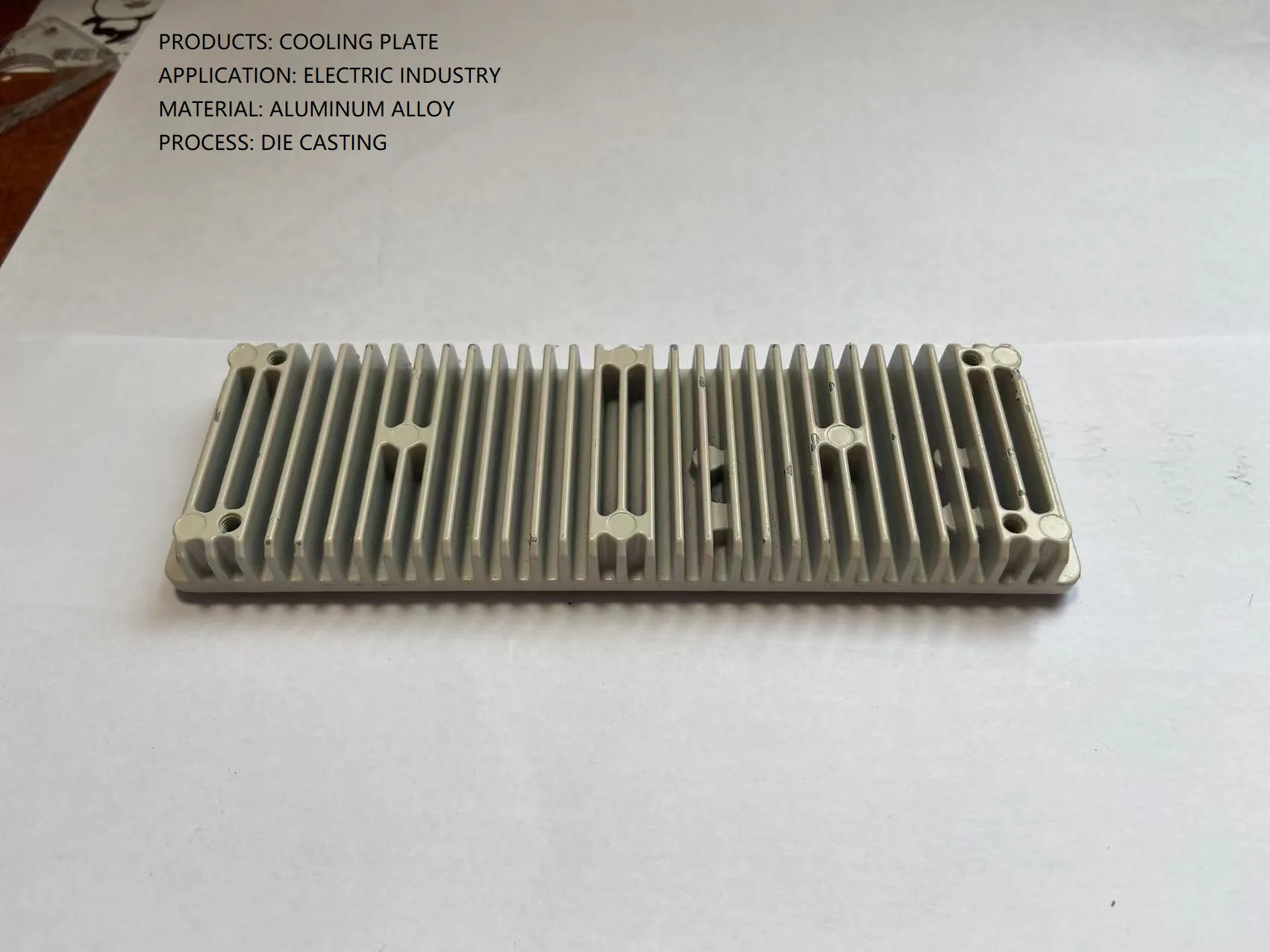
Application Component
Finished die cast parts where this alloy delivers the required mechanical properties and performance in production.
ADC12 and A380 are commonly called "equivalent." The differences are real and matter in specific contexts. This comparison explains when each is the correct specification.
Side-by-Side
| Parameter | ADC12 (JIS H5302) | A380 (ASTM B85) |
|---|---|---|
| Standard | Japanese JIS | American ASTM |
| Silicon | 9.6-12.0% | 7.5-9.5% |
| Copper | 1.5-3.5% | 3.0-4.0% |
| Tensile strength | 310 MPa | 317 MPa |
| Yield strength | 160 MPa | 159 MPa |
| Elongation | 2.5% | 3.5% |
| Hardness | 85 HB | 80 HB |
| Thermal conductivity | 96 W/m·K | 96 W/m·K |
| Castability | Slightly better (higher Si) | Excellent |
| Machinability | Excellent | Excellent |
| Corrosion resistance | Similar | Similar |
| Cost | ±2% (similar) | Baseline |
The Silicon Difference
ADC12's higher silicon range (9.6-12.0% vs A380's 7.5-9.5%) provides:
- Better fluidity: Higher silicon keeps the alloy fluid longer during injection — marginal benefit in complex thin-wall automotive castings
- Slightly finer microstructure: More silicon particles per unit volume, marginally lower porosity tendency at equivalent process parameters
- Slightly harder: 85 vs 80 HB — meaningful for wear surfaces; irrelevant for most structural applications
The Copper Difference
A380's higher copper (3.0-4.0% vs ADC12's 1.5-3.5%) theoretically provides higher tensile strength — but the actual tensile difference is only 7 MPa (317 vs 310 MPa). Within production variation. Not a meaningful design factor for most applications.
The copper difference affects:
- Corrosion resistance (bare metal): A380's higher copper slightly reduces bare-metal corrosion resistance. For coated parts, irrelevant.
- Machinability: Both alloys are excellent — marginal improvement with A380.
Decision Guide
Specify ADC12 when:
- Customer drawing or specification calls ADC12 or JIS H5302 by name
- Program is in a Japanese, Korean, or Asian OEM supply chain requiring JIS certification
- Japanese-format material certificates are required
A380 is equally suitable when:
- North American or European customer specifications
- General industrial, commercial, and consumer applications
- ASTM B85 certification is the standard format required
For most programs, ADC12 and A380 are interchangeable. The decision is driven by supply chain standard and documentation format, not technical performance.
KastMfg stocks both alloys and certifies to either standard.
Related Alloy Guides
- A380 aluminum die casting — North American specification baseline
- ADC12 die casting — JIS H5302 alloy data and applications
- Aluminum die casting services — production and finishing options
- Die casting tooling — die steel, cavities, and tool life for aluminum programs
Frequently Asked Questions
What is ADC12?
ADC12 (sometimes written ADC 12) is a Japanese JIS H5302 aluminum die casting alloy with 9.6-12.0% silicon and 1.5-3.5% copper. It is the standard die casting grade across Japanese and Asian OEM supply chains, roughly equivalent to the American A380 grade.
Is ADC 12 the same as A380?
Not exactly - ADC12 has more silicon and less copper than A380, which gives it slightly better fluidity and hardness. In practice the mechanical properties are close enough that the two are interchangeable for most programs; the choice is driven by which certification standard (JIS vs ASTM) your supply chain requires.
Can you anodize die cast aluminum like ADC12 or A380?
Not decoratively. The 8-12% silicon in these alloys does not convert during anodizing — it remains in the surface as dark particles, so Type II decorative anodize comes out gray, streaky, or blotchy. Type III hard anodize is functionally possible but cosmetically limited. If the part must look anodized, the usual answers are a lower-silicon alloy, a change of process (extrusion or machined billet), or a different finish such as powder coating. Chem film (chromate conversion) forms normally on high-silicon alloys and is the common corrosion-protection choice when appearance is not critical.
Can you weld die cast aluminum like ADC12 or A380?
Fusion welding high-silicon die cast alloys is difficult and process-sensitive, not a routine structural joint. Entrained gas and solidification shrinkage in the casting tend to resurface as porosity in the weld, so results depend heavily on casting quality, joint design, and the welder's procedure. Some practitioners report acceptable results for non-critical repair or fixture work - including welding ADC12 to wrought 5052 or 6061 sheet with 4043 filler - but such joints are process-specific and porosity or leakage remains a credible risk, not a guarantee. For production assemblies, the reliable routes are mechanical fastening, purpose-designed bolted or snap-fit features, adhesives, or brazing where the alloy and flux allow it.
Can you weld die cast A380 to wrought 6061 aluminum?
It is done, but treat it as a procedure-qualified repair, not a routine joint. On welding forums the working answer is 4043 filler (some welders cite 4943) under TIG, which bridges the chemistry between the high-silicon casting and the wrought extrusion or sheet. The variable that decides the outcome is not the filler — it is the casting: entrained gas from die casting resurfaces as porosity as the weld pool solidifies, so the same procedure holds on one casting and leaks on the next. Practical guidance: grind back to sound metal, confirm the alloy if the part's history is unknown, and treat any load-bearing A380-to-6061 joint as a qualified procedure with test coupons. For production assemblies joining cast housings to wrought brackets or plates, design-in mechanical fastening or adhesive bonding instead — see welding vs mechanical fastening on this page.
A die cast aluminum part cracked or broke — repair or replace?
Sort by what the part does before choosing the fix. For non-structural housings, brackets, and fixtures, three repair routes exist in practice: TIG welding (best odds on low-porosity castings, with 4043-class filler), brazing (lower heat, workable on thin sections where the alloy allows), and structural epoxy or adhesive rebuilds (no metallurgical risk, load-limited). For load-critical or safety-relevant fractures — suspension, lifting, pressure-bearing, anything whose failure mode is not visible before it matters — the consensus is replacement, not repair: weld porosity in high-silicon die cast alloys is exactly the kind of hidden defect a cracked housing cannot tolerate twice. If the part is one of yours and tooling still exists, the honest answer is usually a replacement casting, and the welding notes above explain why.
How can I tell whether a part is die cast before repairing it?
Look for the tool signature. Ejector pin marks — small round witness rings on the B-side face — and a sharp, continuous parting line around the perimeter are the classic die casting indicators; a slightly pebbled as-cast skin (versus machining tool marks) supports the same read. Sand castings instead show a rough, grainy surface with gate and riser stubs; a part machined from billet shows cutting marks across every face and no parting line at all. Two cautions from repair threads: these features are supporting evidence, not proof — machining or polishing can erase them, and other molded processes leave parting lines too. Identifying the alloy matters because repair procedures diverge hard: brazing a zinc die casting as if it were aluminum is a classic failure, and A380 vs 6061 changes the filler choice. When in doubt and the stakes are real, a spark test or lab alloy ID costs less than a failed repair.
Which die cast alloys anodize best?
Within common die casting alloys, the lower the silicon, the more uniform the anodic film. Lower-silicon aluminum die casting alloys and secondary alloys specified for finishing give the most consistent results, and magnesium alloys take anodize-type conversion treatments on their own system. For a decorative anodized look on a cast part, many buyers switch to a wrought alloy processed as extrusion or CNC machined from billet — the alloy choice then follows the finish requirement, not the other way around.
Why does anodized die cast aluminum come out gray, streaky, or blotchy?
Because silicon does not anodize. The anodic film grows by converting aluminum to aluminum oxide; silicon particles — 8-12% of alloys like ADC12 and A380 — stay inert, remain in the film as unmelted dark particles, and scatter light. Result: gray tone that deepens with silicon content, streaks where segregation drags chemistry across the surface, and blotches where the last regions to solidify concentrate both silicon and copper. The alloys with the best casting characteristics — high-silicon, near-eutectic — are precisely the ones that anodize worst, because the fluidity buyers want for thin walls is what silicon provides. "Anodize-friendly" and "easiest to cast" pull in opposite directions on the alloy chart, so the decision belongs in the same DFM conversation as wall thickness and draft: pick the alloy for the finish the part actually needs, or pick the finish the alloy can actually give — chem film forms normally on high-silicon alloys where anodize cannot.
Can published A380 mechanical properties be used directly as design values for my part?
Related Resources
Next steps for ADC12 vs A380 die casting
Aluminum for Die Casting: Alloy Selection Guide
Which aluminum for die casting? Compare A380, ADC12, A360, A413, and A390 for castability, strength, corrosion resistance, and cost - with a selection guide for OEM buyers.
Material GuideA380 Aluminum Die Casting | Properties and Uses
A380 is the most common aluminum die casting alloy for automotive, industrial, and electronics parts. Review composition, properties, and applications.
Material HubMaterials Hub
Compare aluminum, zinc, and magnesium alloy options for your application.
ServiceAluminum Die Casting
Review alloy selection, wall thickness, and finishing options for aluminum parts.
CapabilityQuality Control
Review inspection workflow, traceability support, and process control standards before launch.
Process GuideDie Casting Process
See how casting, trimming, machining, finishing, and inspection fit together in production.
Need a Quote for Your Project?
Our engineering team is ready to review your requirements and provide competitive pricing with fast turnaround.
Request a Quote