Die Casting Assembly & Sub-Assembly Services
Die casting assembly service: threaded inserts, bearing press-fit, O-ring assembly, and fastener torquing - complete assemblies from one source.
Production Capabilities
Supporting visuals for die casting assembly service
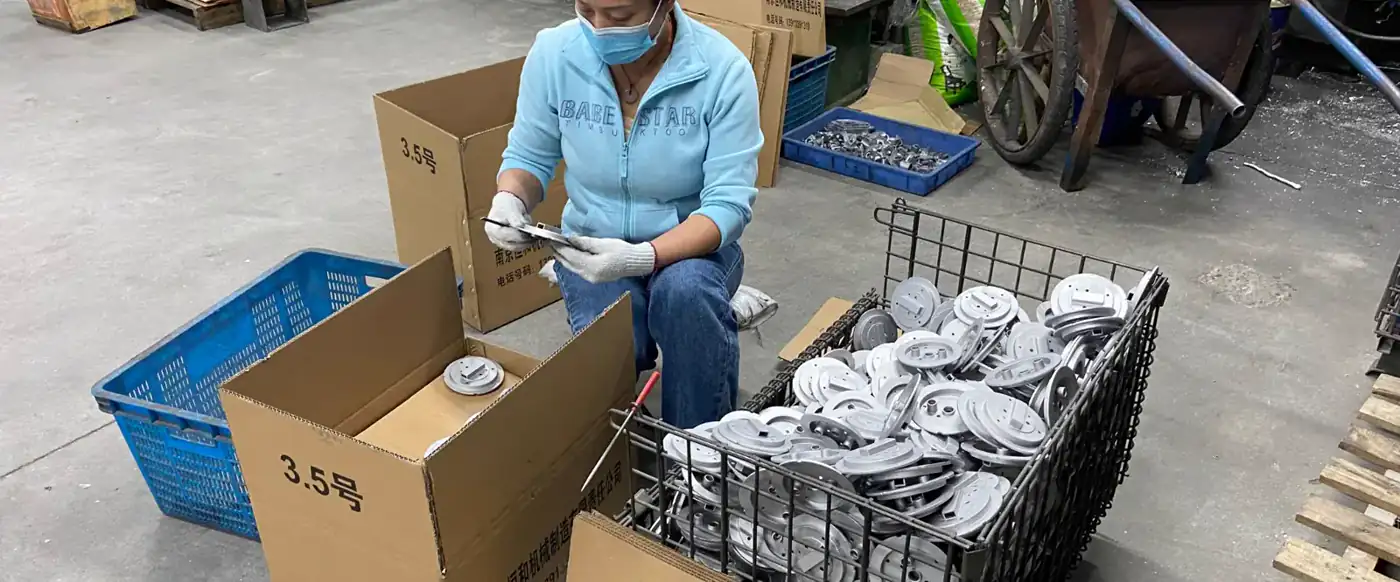
Production Workflow
Die casting machining, finishing, tooling, and assembly operations at our Nanjing facility.
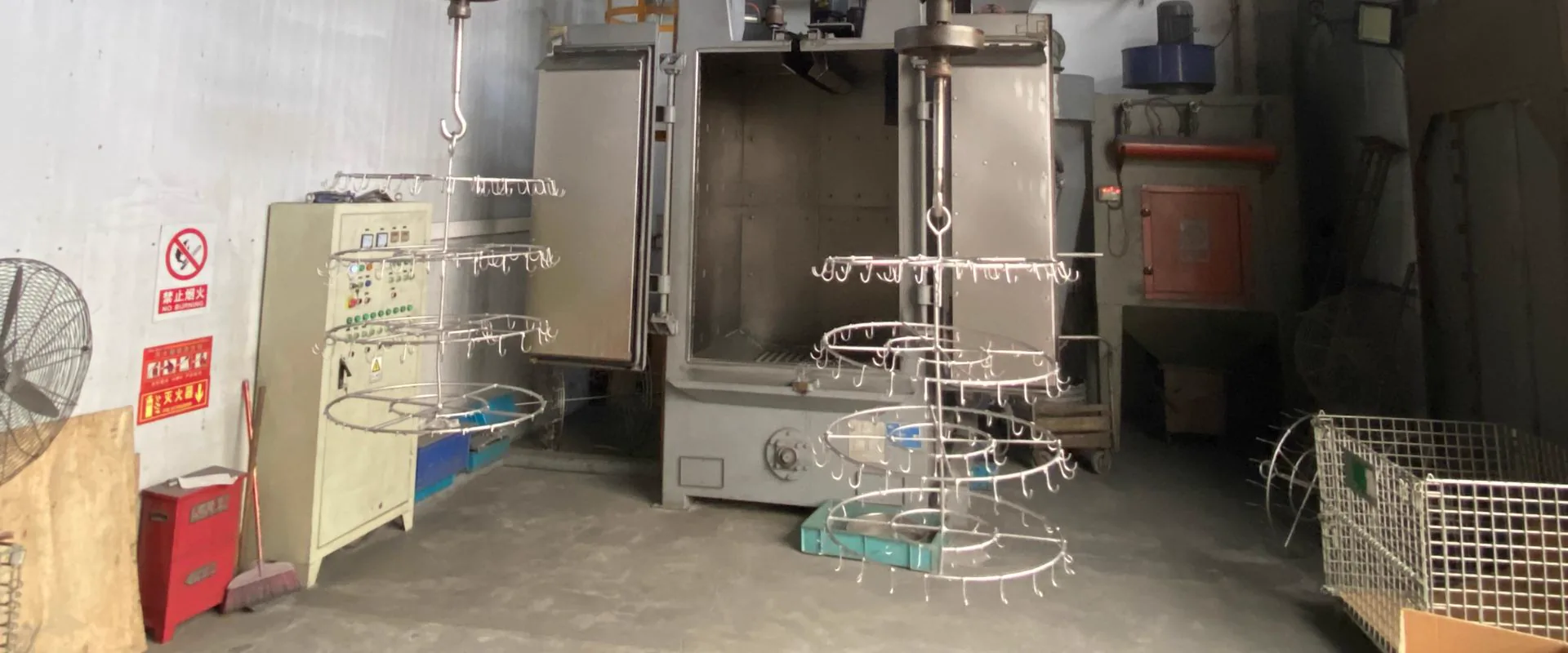
Quality Detail
Close-up views of tooling precision, machined features, surface finishes, and inspection procedures.
KastMfg's die casting assembly service extends our single-source supply from machined castings to complete sub-assembled components. Parts move from die casting to CNC machining to assembly, inspection, and export packing without leaving our 28,000 m² Nanjing facility — so the supplier count, transit legs, and quality handoffs all stay at one.
This page is written for sourcing managers deciding between single-source assembly and managing assembly in-house or through a second-tier supplier. It covers the assembly operations we perform, how we inspect them, how finished assemblies are packaged for export, and exactly what to send us for an assembly quote.
Assembly Operations We Perform
Our assembly cells handle mechanical sub-assembly and light electro-mechanical integration of die cast components. Typical work falls into five categories.
Threaded Insert Installation
Tapped threads in aluminum and magnesium castings wear and strip faster than the surrounding hardware demands. We install three insert types, selected per application:
- Wire thread inserts (Heli-Coil type): free-running and screw-locking variants, inch series conforming to NASM122076 through NASM122275 / MS21209 and metric equivalents, in sizes M3–M20. Thread strength approaches solid steel, and the insert is replaceable in service.
- Key-locking inserts (Keensert type): solid bushing inserts locked by driven keys, conforming to MS51830–MS51834 / NAS1394–NAS1395 series. Higher pull-out and vibration resistance than wire inserts for high-cycle applications.
- Heat-set (thermal) inserts: installed with controlled heat and press force, common in magnesium housings where mechanical interference alone is marginal.
Inserts are installed with torque-controlled tooling. First articles receive pull-out strength verification against the design requirement before production release.
Bearing and Bushing Press-Fitting
Bearings and bushings in aluminum housings need a controlled interference fit, square seating, and no damage to the rolling elements. Our hydraulic press stations monitor every cycle:
- Force–displacement monitoring: each press cycle's signature is compared against a taught reference curve; incomplete seating, wrong orientation, or wrong component are rejected automatically.
- Squareness control: fixtures hold the bearing face perpendicular to the bore within 0.02 mm.
- Post-press verification: the housing bore is re-checked on CMM for press-induced distortion before the part proceeds.
The same controlled press process covers bushings, dowels, pins, and shaft insertion.
O-Ring, Seal, and Gasket Assembly
For hydraulic, pneumatic, and fluid housings:
- O-rings pre-lubricated with a fluid-compatible lubricant (silicone or petroleum-based, matched to the media)
- Visual and dimensional verification of seal size and cross-section before installation
- Post-assembly check for twist, pinching, or extrusion
- Gasket seating and housing closure to a specified torque sequence
Fastener Assembly
- Screw and bolt torquing with calibrated DC electric tools holding ±5% torque accuracy, with cycle data recorded per joint
- Torque-angle strategies where specified by the customer
- Stud installation by press-fit or thread-locking compound
- Loctite or equivalent threadlocker application per the vibration-resistance specification
Sub-Component Integration
- Shaft and gear insertion into housings
- Valve spool and spring installation
- Electrical connector and sensor mounting
- Gasket fitting and housing closure
Scope note: our assembly work covers mechanical sub-assembly and light electro-mechanical mounting. We do not perform full electronics box-build, wire harness production, or welded fabrication. Surface plating and anodizing are performed by qualified finishing partners — never claimed as in-house — and finished parts return to us for assembly.
Inspection at the Assembly Stage
Assembly errors are expensive to find at the customer's dock, so verification is built into the station, not added at the end. The full casting-stage program (OES chemistry verification, X-ray, SPC, CMM) is described on our quality control page; assembly adds its own layer:
- Work instructions: every assembly has a step-by-step instruction with torque values, orientation checks, and defined inspection points per station.
- Poka-yoke fixtures: station tooling physically prevents incorrect assembly — wrong insert, missing O-ring, reversed orientation — rather than relying on operator attention alone.
- First-article verification: initial units receive insert pull-out testing, fastener torque audit, and press-cycle signature review before the run is released.
- In-process inspection: dimensional and functional checks after each critical operation, not only at final test.
- Functional testing: movement and actuation checks on mechanisms; pressure decay or helium leak testing on sealed housings where the customer's specification requires it.
- Traceability: each assembly record links the casting batch, machined lot, component lots (inserts, bearings, fasteners), operator, and recorded torque/press data. A quality record for the complete component exists as one document — not one per supplier.
- Final inspection: 100% visual check plus dimensional sampling against the drawing before packing; records ship with the parts.
Packaging Assembled Sub-Assemblies for Export
Assembled components are packaged differently from loose castings, because the risks are different — a finished sub-assembly can pass every functional test at the station and still arrive damaged if a bearing face rubs against a carton wall for three weeks at sea.
- Foam-lined trays sized to the assembly, preventing contact on bearing surfaces, sealing faces, and precision bores
- Protective caps on threaded features and exposed sealing faces
- VCI polyethylene bags, standard on ocean freight, protecting aluminum, zinc, and magnesium surfaces against corrosion for up to 24 months in sealed packaging
- Desiccant packs for bearing- and corrosion-sensitive assemblies
- Customer-specific labeling and kitting, including mixed-SKU carton mapping for production-line delivery
The export documentation package — commercial invoice, packing list, certificate of origin, material certificates, and inspection reports — ships with every order. Packaging is designed to the specific assembly and quoted per project, so unusual shapes or customer line-side requirements are priced in the quotation rather than discovered at the dock.
Single-Source Assembly vs. Managing Assembly Yourself
| Factor | KastMfg single-source | Separate casting + assembly suppliers |
|---|---|---|
| Transit legs | None — casting, machining, assembly in one building | Parts ship between suppliers before shipping to you |
| Handling damage | Controlled internal transfer between stations | Each extra leg adds damage claims and repacking |
| Lead time | Assembly scheduled against the machining cell directly | Assembly supplier queues behind their other customers |
| Accountability | One quality record from melt to final assembly | Casting and assembly suppliers can each blame the other |
| Traceability | Casting batch linked to component lots in one system | Assembly supplier has no visibility into casting history |
| Kitting | Supplier-side labeling and mixed-SKU packing | Buyer kits, or pays a third party to kit |
In-house assembly keeps process control close to your floor, which makes sense for very high volumes, proprietary processes, or regulated operations with dedicated lines. For the majority of die cast sub-assembly programs — mechanical assembly, defined torque specs, standard functional tests — a single-source die casting assembly service removes a supplier, a transit leg, and a blame gap at a lower total cost. The decision usually comes down to whether your assembly requirement is mechanical (our scope) or process-proprietary (yours).
What to Send for an Assembly Quote
An assembly quotation is only as accurate as the information behind it. Send the following with your RFQ:
- Assembly drawing and BOM — 3D CAD (STEP) plus the bill of materials with part numbers for every component, including purchased items
- Torque specifications — target torque, tolerance, and any torque-angle strategy for each fastened joint; insert pull-out requirements where defined
- Test requirements — functional checks, leak test parameters and acceptance limits, any customer-specific standards the assembly must meet
- Annual volume and release schedule — steady-state demand and batch sizes drive line setup and packaging design
- Component supply terms — components we source (inserts, bearings, fasteners, seals) versus parts free-issued by you
- Packaging, labeling, and kitting requirements — line-side delivery format, label content, mixed-SKU rules
- Quality documentation — PPAP level, FAI format, or any customer-specific approval process
Submit everything through the RFQ page — you will receive an itemized quotation, typically within 48 business hours, with assembly pricing separated from casting and machining so you can compare single-source against split-supply on equal terms.
Frequently Asked Questions
Do you assemble castings produced by another supplier?
Assembly is offered as part of complete-component supply from our own castings. The value of the service — one quality record, no transit legs, full traceability from melt to assembly — depends on controlling the whole chain, so we do not take in outside castings for assembly only.
Can you source customer-specified inserts, bearings, and fasteners?
Yes. We routinely source customer-specified brands — wire and key-locking inserts, bearing brands, seal compounds, fastener grades — through our supplier base with certificates of conformance. Alternatively, you can free-issue components against your own supply agreements; both arrangements are quoted per project.
What assembly documentation do you provide?
Assembly-level FAI, recorded torque and press data, material certificates per batch, and PPAP documentation at the level your program requires. Records ship with the parts, and assembly data is archived against the casting batch for future reference.
Is plating or anodizing done before assembly?
Where the finished assembly requires plating or anodizing, those processes are performed by our qualified finishing partners before assembly. Finishing is never performed in-house, and assembly sequences are planned so plated or anodized surfaces are protected during the remaining operations and in packaging.
Next step: assemble your BOM, drawings, and torque specifications, and send them through the RFQ page. Our engineers will review the design for assembly and return an itemized quotation — typically within 48 business hours.
Assembly inquiry: casting@kastdiecast.com | +86 138 1403 4409 | No.6, Rungu Road, Nanjing, China
Related Resources
Next steps for die casting assembly service
Die Casting Surface Finishing Services In-House
Die casting surface finishing services in-house: shot blasting, powder coating, anodizing Type II and III, chromate conversion coating, and e-coating.
ServiceDie Casting CNC Machining - Milling to 5-Axis
Die casting CNC machining in-house: milling, drilling, boring, turning, and 5-axis machining with single-source supply from casting to finished part.
Case StudyCase Studies
See how die casting, machining, sealing, and finishing requirements were delivered on production programs.
CapabilityQuality Control
Review inspection workflow, traceability support, and process control standards before launch.
Process GuideDie Casting Process
See how casting, trimming, machining, finishing, and inspection fit together in production.
Next StepRequest a Quote
Send your drawing package and target volume to get an engineering-backed quotation.
Need a Quote for Your Project?
Our engineering team is ready to review your requirements and provide competitive pricing with fast turnaround.
Request a Quote