Structural Die Casting: High-Integrity Parts for Load-Bearing Use
Structural die casting explained: high-integrity processes that produce load-bearing, heat-treatable parts - vacuum casting, alloys, T6 treatment, and automotive and EV structural applications.
Production Capabilities
Supporting visuals for structural die casting
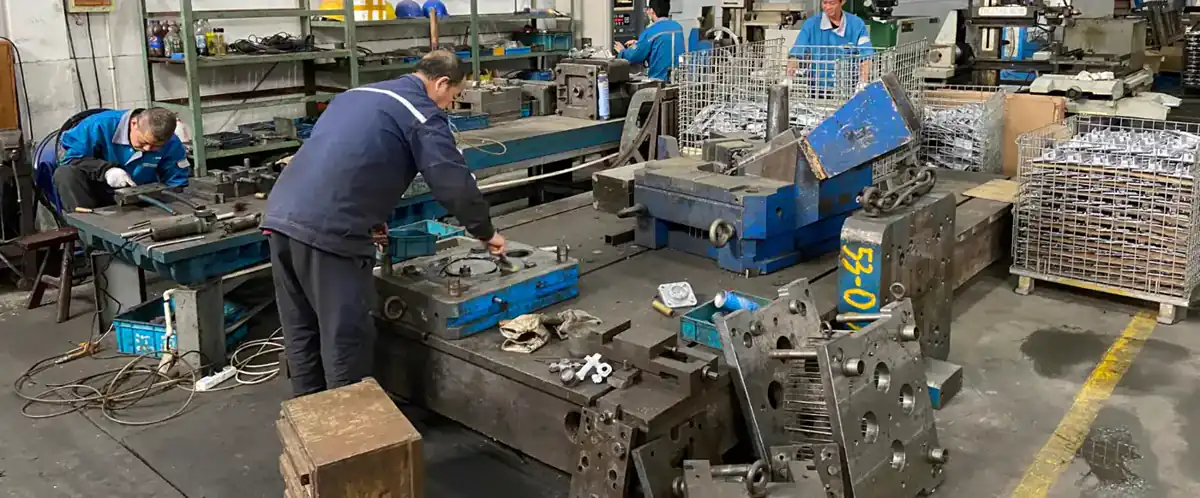
Manufacturing Operations
Die casting production, tooling fabrication, CNC machining, and quality inspection at our Nanjing facility.
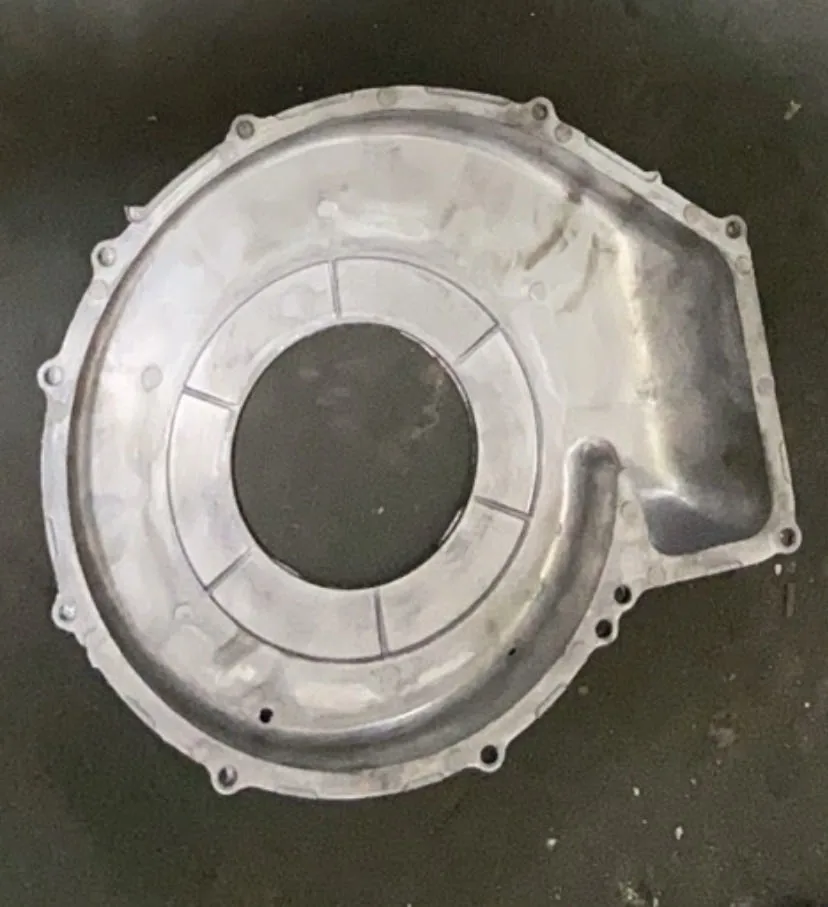
Component Detail
Close-up views of cast components showing surface finish, dimensional features, and application-ready quality.
Structural die casting produces parts that carry load, resist fatigue, or must survive a crash - the opposite of a simple housing or cover. These parts demand near-zero internal porosity, so they can be heat treated to T6, welded, or qualified to automotive safety standards. It is the most technically demanding branch of die casting.
What Makes a Casting "Structural"
A structural casting is one where integrity, not just shape, is the requirement. These parts:
- Carry load - suspension, chassis, and mounting components.
- Resist fatigue - survive millions of cyclic loading cycles.
- Must be heat treatable - T6 treatment requires low porosity to avoid blistering.
- Are often weldable - for assembly into larger structures.
Conventional high pressure die casting traps gas during turbulent fill, leaving microscopic porosity that blisters during heat treatment and reduces fatigue life. Structural casting uses high-integrity processes to eliminate that porosity.
The High-Integrity Processes
Three process families produce structural castings:
Vacuum-Assisted Die Casting
A vacuum pump evacuates the die cavity before and during injection, removing air that would otherwise be trapped. This is the workhorse of structural casting, producing parts that are sound enough for T6 heat treatment. See vacuum die casting for the full process.
Squeeze Casting
Molten metal is poured and then solidified under sustained high pressure, producing near-forging density. It is slower and more expensive than vacuum casting but delivers the best mechanical properties. See squeeze casting.
Semi-Solid Casting
The alloy is injected in a partially solidified, globular state, filling laminarly with minimal air entrapment. Ideal for thin-wall structural parts. See thixocasting for details.
Alloys for Structural Castings
| Alloy | Process | Properties |
|---|---|---|
| A356 | Vacuum / squeeze | T6 tensile ~262-270 MPa, good ductility, weldable |
| A357 | Vacuum / squeeze | T6 tensile ~310-350 MPa, premium aerospace and motorsport |
| AlSi10MnMg | High vacuum | Ductile, high elongation, crash energy absorption |
| AlSi9MnMoZr | High vacuum | Ductile aluminum-silicon-magnesium, energy absorption |
| AZ91D / AM60 | Semi-solid | Lightweight magnesium structures |
A356 dominates structural work because it combines castability with excellent T6 response and weldability - see A356 aluminum for alloy details. For crash-sensitive parts, ductile alloys such as AlSi10MnMg (often sold under trade names like Silafont-36) are specified for their higher elongation and energy absorption.
Typical Structural Applications
Automotive and EV
- Suspension knuckles and control arms
- Subframe and crossmember components
- Shock tower and mounting brackets
- EV motor housings and battery tray components (see EV die casting)
- Large single-piece castings enabled by gigacasting
Aerospace-Adjacent
- Load-bearing brackets and fittings
- Structural housings requiring fatigue resistance (see aerospace die casting)
Industrial
- High-pressure hydraulic bodies and manifolds (see pressure-tight die casting)
- Pump housings under cyclic pressure
The T6 Heat Treatment Requirement
Structural aluminum castings are almost always heat treated to T6, which involves solution treatment, quenching, and artificial aging. This is only possible with high-integrity casting, because conventional die castings blister at solution temperatures as trapped gas expands.
The result is a significant strength increase - A356 in T6 reaches roughly 262-270 MPa tensile, versus roughly 170-200 MPa as-cast. See heat treatment for the full process.
Why Structural Casting Costs More
Structural casting commands a price premium over conventional die casting for three reasons:
- Slower cycle times - vacuum and squeeze casting are slower than conventional HPDC.
- Higher tooling cost - vacuum systems and pressure-sustaining dies are more complex.
- Quality overhead - X-ray inspection, mechanical testing, and full traceability are standard.
The premium is justified when failure is not an option - and it is still far cheaper than forging or fabrication for most complex structural parts.
FAQ
What is the difference between structural and conventional die casting?
Structural casting uses high-integrity processes (vacuum, squeeze, semi-solid) to eliminate internal porosity, enabling heat treatment, welding, and fatigue resistance. Conventional die casting is faster and cheaper but traps porosity that limits these properties.
What alloy is best for structural die casting?
A356 aluminum is the standard choice - it is heat-treatable to T6, weldable, and fatigue-resistant. A357 offers higher strength for premium applications, and ductile alloys such as AlSi10MnMg are chosen for crash energy absorption.
Can structural die castings be heat treated?
Yes. High-integrity structural castings are routinely heat treated to T6 because their low porosity prevents blistering. This is a key advantage over conventional die castings.
Is structural die casting suitable for EV parts?
Yes. EV motor housings, battery tray components, and structural nodes are major structural casting applications, driven by the need for lightweight, heat-treatable, load-bearing parts.
Related
KastMfg produces structural aluminum castings by vacuum-assisted die casting with in-house T6 heat treatment, X-ray inspection, and full traceability documentation. For a structural program, send us your drawing for a process-fit review.
Related Resources
Next steps for structural die casting
Automotive Die Casting for Powertrain Components | IATF 16949
Automotive die casting for powertrain components: transmission housings, engine brackets, turbocharger housings, structural parts. IATF 16949 structured QMS with PPAP Levels 1-5 and APQP support.
IndustryAerospace Die Casting: Alloys, Standards & Applications
Aerospace die casting explained: typical aircraft parts, A356/A357 aluminum and AZ91D magnesium alloys, AS9100 and NADCAP requirements, structural vs non-critical housings, and why high-integrity vacuum casting matters.
Industry HubAll Industries
Browse automotive, electronics, lighting, and industrial die casting applications.
Case StudyCase Studies
See how similar programs were delivered across materials, tolerances, and export requirements.
CapabilityQuality Control
Review inspection workflow, traceability support, and process control standards before launch.
Process GuideDie Casting Process
See how casting, trimming, machining, finishing, and inspection fit together in production.
Need a Quote for Your Project?
Our engineering team is ready to review your requirements and provide competitive pricing with fast turnaround.
Request a Quote