Die Casting Glossary - 60+ Technical Terms
Complete die casting glossary for engineers and buyers: process terms, quality vocabulary, tooling terminology, alloy designations, and trade terms.

Technical Director, Die Casting Engineering
Blog Visual Plan
Article visuals for die casting glossary
These visuals use your current KastMfg image library now, and they will automatically switch to article-specific images when you add them later.
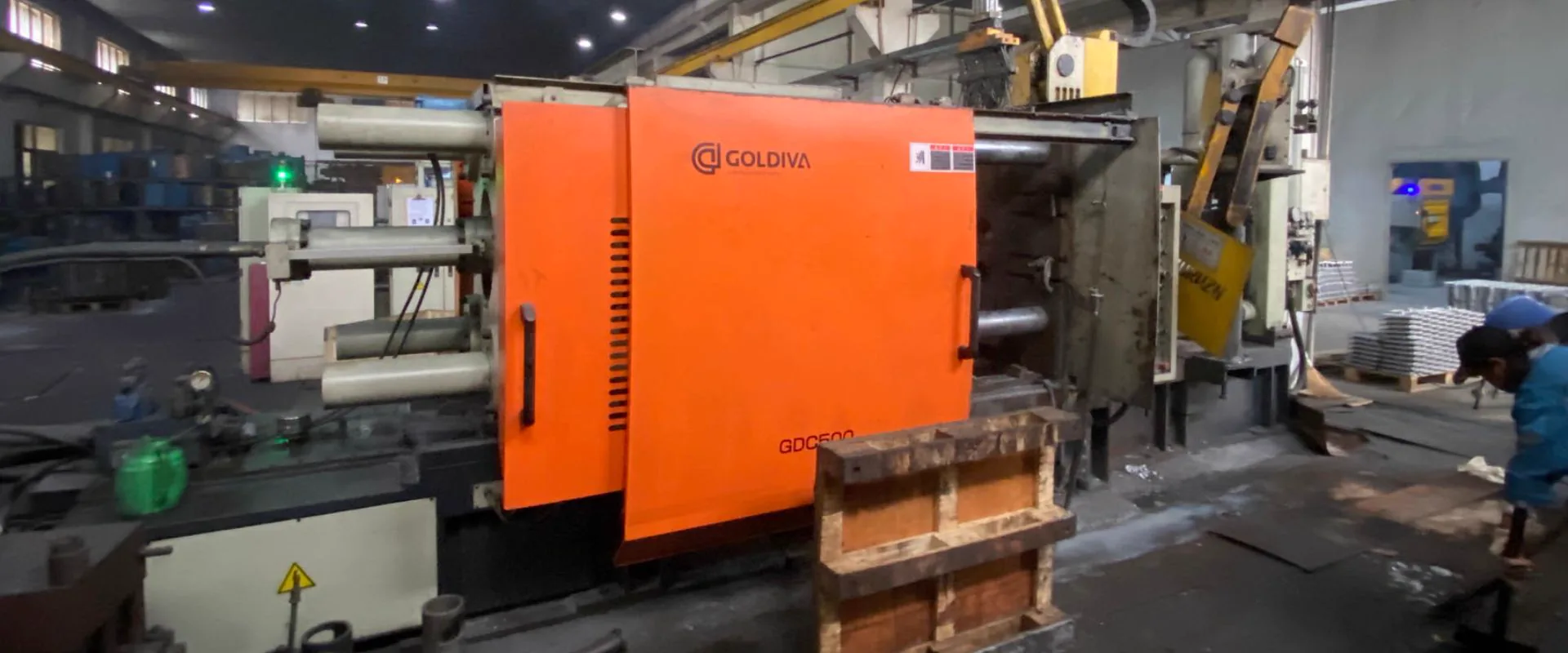
Lead Technical Image
Add a hero-level manufacturing, tooling, or component image that reinforces the article topic above the body copy.
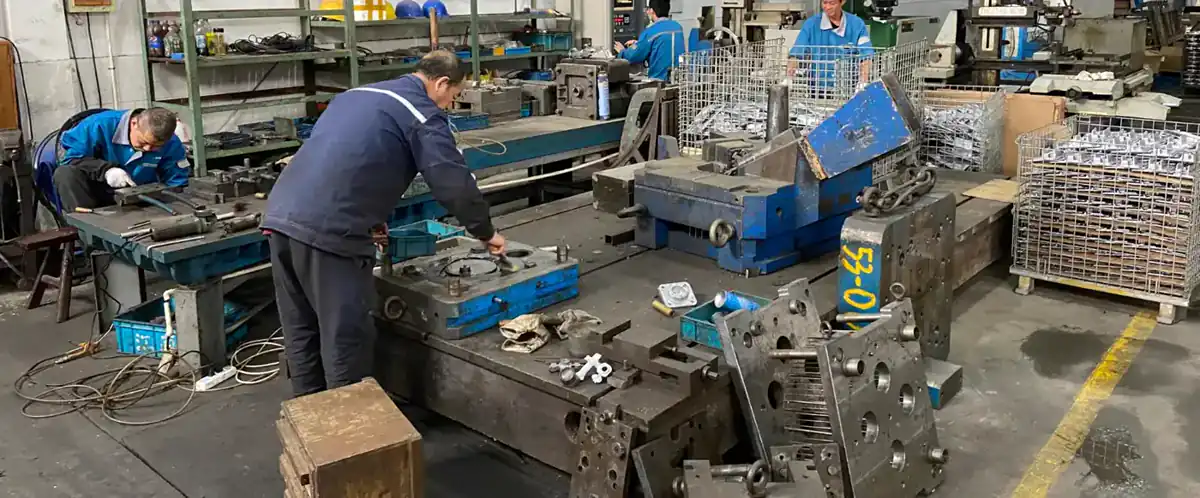
Comparison or Detail Image
Reserve a second image for an alloy comparison, defect example, tooling detail, or application close-up deeper in the article.
Reference for engineers, buyers, and quality professionals working with die casting.
Process Terms
As-cast: The condition immediately after ejection, before secondary operations.
Cavity: Space within the die filled with metal to produce the casting. Single or multi-cavity dies are common.
Cold chamber: Process with injection cylinder separate from holding furnace. Metal is ladled each cycle. Used for aluminum, magnesium, copper.
Clamping force: Force holding die halves closed during injection, in tonnes. Must exceed separating force (injection pressure x projected area).
Cover half: Stationary die half, mounted to fixed platen. Gate typically enters here.
Cycle time: Total time from die close to die close — injection + solidification + ejection + die preparation.
Draft angle: Taper on surfaces parallel to die-opening direction, enabling clean ejection. Measured in degrees.
Ejector half: Moving die half containing ejector pins.
Ejector pin: Hardened steel pin pushing the solidified casting from the die cavity on die opening.
Fast shot: Second, high-velocity injection phase filling the die cavity.
Gate: Restricted opening where metal enters the cavity from the runner. Gate velocity is metal speed at this point.
Hot chamber: Process with injection system submerged in molten metal. Used for zinc and low-melting-point alloys.
Intensification: High-pressure phase after cavity filling, compressing semi-solid metal to reduce shrinkage porosity.
Overflow well: Small supplementary cavity at the end of metal flow, capturing cold metal and air.
Parting line: Plane at which die halves separate. Leaves a visible mark on the casting.
Projected area: Cavity area projected perpendicular to die-opening direction. Used to calculate separating force.
Runner: Channel directing metal from sprue to gate(s).
Shot: One complete injection cycle producing one or more castings.
Shot sleeve: Cold-chamber cylinder into which metal is ladled before injection.
Slow shot: Low-velocity initial injection filling the shot sleeve without air entrainment.
Sprue: Initial channel from machine nozzle into the runner system.
Quality Terms
Blister: Surface bubble from gas porosity expansion during heat treatment.
Cold shut: Seam where two flow fronts met but did not fuse due to partial solidification.
Cpk: Process capability index. Cpk >=1.33 typical minimum; >=1.67 required for automotive critical characteristics.
CT grade: Casting Tolerance grade per ISO 8062. Die casting achieves CT3-CT6.
FAI: First Article Inspection — dimensional verification of first production parts.
Flash: Thin unwanted metal fin at parting line, slides, or ejector pin locations.
Gas porosity: Internal voids from gas entrapment during injection or dissolved gas rejection during solidification.
Misrun (short shot): Incomplete die fill — cavity portion not filled before solidification.
PPAP: Production Part Approval Process — automotive quality submission before production start.
Shrinkage porosity: Internal voids in thick sections from insufficient liquid metal feeding during solidification.
Soldering: Metal bonding to die surface, causing surface tearing at ejection. Also called die erosion.
SPC: Statistical Process Control — real-time monitoring with control charts.
Tooling Terms
H13: Hot work tool steel hardened to 44-48 HRC. Standard for production aluminum/magnesium dies.
P20: Pre-hardened tool steel, 28-32 HRC. Used for prototype dies and short-run zinc dies.
Core: Steel projection forming internal features (holes, passages, pockets).
Insert: Replaceable die component. Worn inserts replaced without replacing the entire die.
Mold flow simulation: Computer simulation of fill, solidification, and stress before tooling is cut.
Slide (side action): Die component moving perpendicular to die opening to form undercuts.
Alloy Terms
ADC12: JIS H5302 aluminum alloy with 9.6-12% silicon. Japanese standard, equivalent to A383.
A380: ASTM B85 aluminum with 8.5% Si and 3.5% Cu. Most widely produced die casting alloy globally.
A413: ASTM B85 near-eutectic aluminum with 12% Si. Best pressure tightness and thermal conductivity.
AZ91D: High-purity magnesium with 9% aluminum. Most widely produced magnesium die casting alloy.
Eutectic: Alloy composition solidifying at a single temperature. For Al-Si: 12.6% silicon.
HB (Brinell): the hardness scale die casting datasheets use (500 kgf, 10 mm ball). Typical as-cast values: A380 ~80 HB; Zamak 3 ~82 HB; Zamak 5 ~91 HB; A390 ~120 HB.
SHG zinc: Special High Grade zinc, 99.99% minimum purity. Required for Zamak alloys to prevent zinc pest.
T5: Aluminum temper — artificially aged only. Moderate strength improvement.
T6: Aluminum temper — solution treated, quenched, artificially aged. Maximum strength.
Zamak: Family of zinc-aluminum die casting alloys (Zamak 2, 3, 5, 7).
Commercial Terms
DDP: Delivered Duty Paid — seller delivers to named destination, pays all duties.
FOB: Free on Board — seller responsible until goods loaded on vessel.
IMDS: International Material Data System — automotive material declaration database.
MOQ: Minimum Order Quantity.
RFQ: Request for Quotation.
This glossary is updated periodically. For undefined terms, contact KastMfg's engineering team.
Contact: casting@kastdiecast.com | +86 138 1403 4409
Related Guides
About The Author
Mike Yao on die casting glossary
Technical Director, Die Casting Engineering
Technical Director at KastMfg with 20+ years in high-pressure die casting, leading engineering and program management across aluminum, zinc, and magnesium programs for automotive, EV, electronics, and medical OEMs worldwide.
View author profileRelated Reading
Keep exploring the blog
Die Casting vs Permanent Mold Casting: Which to Choose?
Die Casting vs Permanent Mold Casting: How to Choose Die casting and permanent mold casting are both metal mold processes - both use reusable steel or iron dies rather than expe...
Mike Yao
8 min read
Die Casting Tooling Steel: H13 vs P20 Compared
H13 vs P20 Die Casting Tooling Steel - When to Use Each H13 and P20 are both tool steels, but they are not equal choices for die casting. H13 is the standard for production die...
Mike Yao
6 min read
Die Casting Tooling Cost - Factors & Ranges
Die Casting Tooling Cost — What Drives It and How to Reduce It Die casting tooling is typically the largest single upfront investment in a casting program. A simple single-cavit...
Mike Yao
6 min read
Die Casting Die Explained - Anatomy, Steel, Life, and Cost
Die Casting Die - What It Is, How It's Built, and What It Costs A die casting die is a precision steel mold - typically two machined halves of H13 hot-work tool steel - that sha...
Mike Yao
5 min read