Die Casting Die Explained - Anatomy, Steel, Life, and Cost
What a die casting die is and how it works: cover and ejector halves, slides and core pulls, H13 vs P20 tool steel, realistic die life in shots for zinc, aluminum and magnesium, lead times, and cost ranges.

Technical Director, Die Casting Engineering
Blog Visual Plan
Article visuals for die casting die
These visuals use your current KastMfg image library now, and they will automatically switch to article-specific images when you add them later.
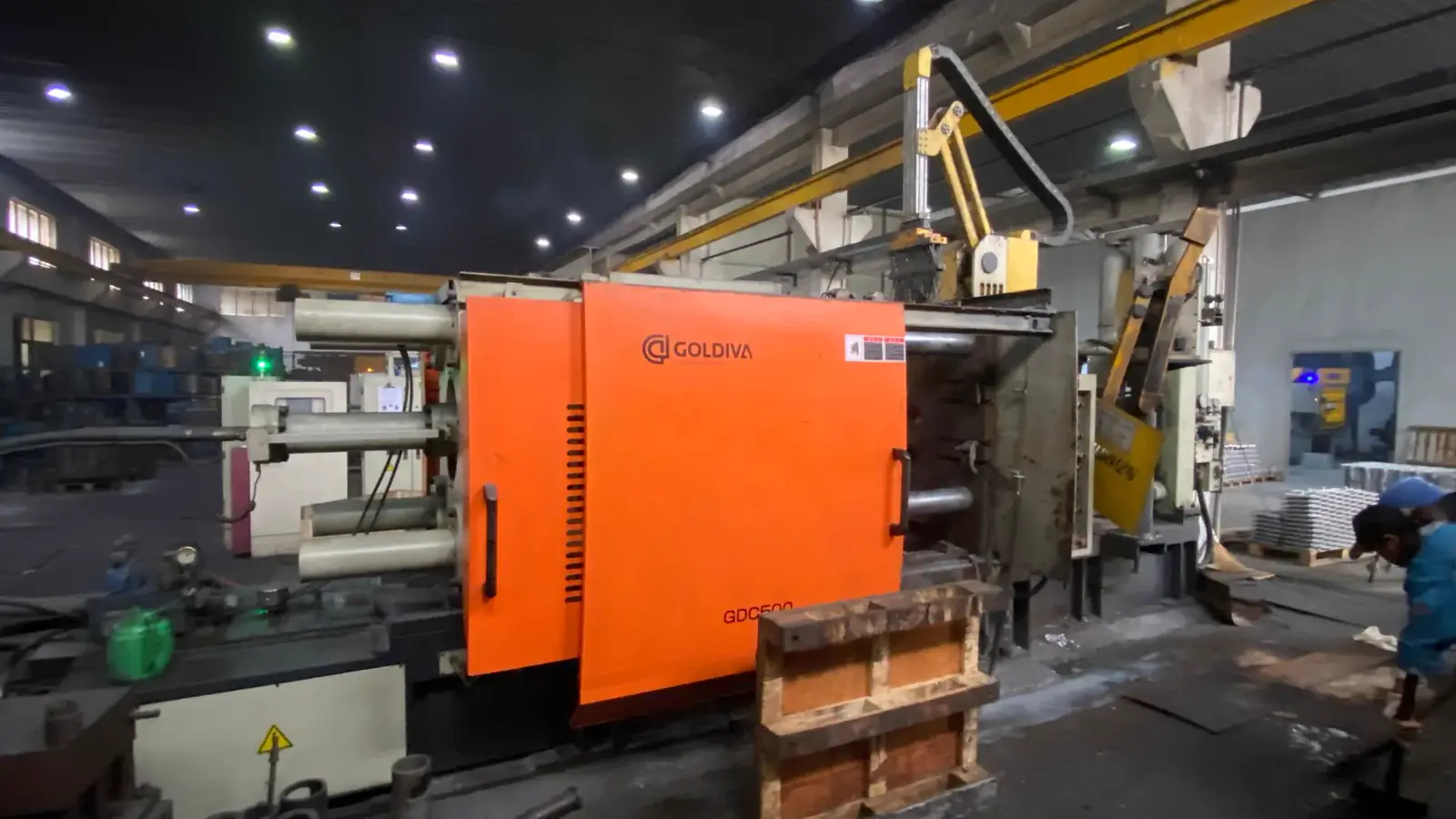
Lead Technical Image
Add a hero-level manufacturing, tooling, or component image that reinforces the article topic above the body copy.
Comparison or Detail Image
Reserve a second image for an alloy comparison, defect example, tooling detail, or application close-up deeper in the article.
A die casting die is a precision steel mold - typically two machined halves of H13 hot-work tool steel - that shapes molten metal injected into it under high pressure. It is the largest upfront investment in the program and the single biggest quality lever. For the commercial side, see die casting tooling.
Anatomy of a Die Casting Die
Main components, in NADCA terminology:
The two die halves. The cover die half mounts to the stationary platen and receives the metal; the ejector die half mounts to the moving platen and carries the ejection system. Their interface - the parting line - sets flash location and draft.
Cavity inserts. The impressions that form the part are cut into replaceable cavity inserts, so worn cavities can be swapped without rebuilding the tool.
Slides and core pulls. Undercuts are formed by slides moved by core pulls (hydraulic or mechanical). Each slide adds cost and a maintenance point.
Ejection, runner, vents, cooling. After solidification, ejector pins push the casting off the ejector half. Metal enters through the runner system - sprue (plus biscuit in cold-chamber work), runners, gates - while air escapes through overflows and vents; gate location and velocity, set here, drive porosity. Cooling channels remove heat, with baffles and bubblers reaching deep cores.
The casting die is only part of the tooling, though. A complete casting tooling package typically includes the die, a trim die for gate and flash removal, and checking fixtures.
Tool Steel: H13 vs P20 (and When Each Wins)
H13 (AISI H13 / DIN 1.2344) is the standard steel for production aluminum and magnesium dies - a chromium-molybdenum-vanadium hot-work steel chosen for thermal-fatigue resistance, hot strength, and toughness. Typical working hardness is 44-48 HRC (46-50 HRC for selected inserts; above ~50 HRC, cracking risk rises rather than wear life improving - Uddeholm guidance). Die steel is only about 5-15% of total die cost, so saving on steel is usually saving the wrong money.
P20, pre-hardened at roughly 28-32 HRC, suits prototype and short-run dies, but is not the preferred insert steel for high-volume aluminum dies, which demand more hot strength. Also: S7 covers high-impact gate inserts, and beryllium-copper inserts cover localized rapid cooling. Full trade-off: H13 vs P20 die casting steel guide.
Die Casting Die Life: How Many Shots?
Die life is the number of usable castings before replacement or major repair - the NADCA definition, and the number to amortize against. So how long do die casting dies last? It depends on alloy, geometry, temperature control, steel quality, and maintenance:
| Alloy / process | Typical die life | Notes |
|---|---|---|
| Zinc, hot chamber | ~500,000-1,000,000+ shots | ~1M upper-end rule of thumb for well-designed zinc tooling |
| Aluminum, cold chamber | ~50,000-150,000 shots | ~100,000 common planning number; difficult castings substantially less |
| Magnesium, cold chamber | ~100,000-400,000 shots | Approximate - less consistently documented |
Treat these as ranges, not guarantees. Die casting die life moves with alloy aggressiveness, part geometry (hot gates, sharp corners, ribs), die temperature control (roughly 180-250°C die face for aluminum, cooler for zinc), steel quality and heat treatment, and maintenance.
Why Dies Wear Out: Heat Checking and Friends
The dominant failure mode is heat checking - a network of fine surface cracks from repeated thermal cycling. Each shot flash-heats the die surface at the gate; spray and cooling channels pull it back down. The damaging mechanism is the cyclic thermal stress, not the peak temperature, and cracking appears first at gates, sharp corners, ribs, and poorly cooled regions.
Other wear modes: erosion and washout at high-velocity gates, soldering (aluminum bonding to the die surface), and mechanical cracking from stress concentrators. Regular maintenance turns a nominal die life into an actual one.
Lead Time and Cost
A conventional production die takes 6-12 weeks: DFM and design, steel procurement and heat treatment, CNC and EDM machining, fitting, assembly, then T1 sampling and corrections. Simple prototype dies take 3-5 weeks; multiple slides, vacuum systems, or large structural castings can exceed 12 weeks.
US-market budgeting ranges:
| Tooling class | Typical cost |
|---|---|
| Prototype / simple short-run die | $3,000-8,000 |
| Production single-cavity die | $15,000-50,000 |
| Complex multi-cavity die with slides / core pulls | $50,000-100,000+ (large structural dies can exceed this) |
Steel is only ~5-15% of total die cost (Uddeholm), heat treatment ~5-10% - engineering and machining dominate, so the cheapest quote is rarely the cheapest tool. Details: die casting tooling cost.
Buying Tooling: What Actually Matters
- You are buying a package, not a die. Casting tooling means die + trim die + checking fixtures as one system; a quote pricing only the die is incomplete.
- In-house vs outsourced coordination. When designer, toolmaker, and casting engineer work for one company, problems get fixed before T1 instead of across vendors' schedules. At KastMfg: die casting tooling.
- Die life is a planning number - ask what the quote assumes. A responsible quote states the expected shot count for your alloy and geometry; wide gaps between quotes mean different assumed life, steel, or scope.
- Clarify ownership and transferability up front - who owns the die, what documentation ships, whether you can move it. See die casting tooling ownership.
Frequently Asked Questions
What is a die casting die?
A precision steel mold - usually two machined halves of H13 tool steel - that forms molten metal injected under high pressure. It contains the cavity impression, slides for undercuts, an ejection system, runner and venting, and cooling channels, and it is the largest upfront cost in the program.
How long do die casting dies last?
Roughly 500,000-1,000,000+ shots for well-designed zinc hot-chamber dies, 50,000-150,000 shots for aluminum cold-chamber dies (~100,000 is a common planning number), and on the order of 100,000-400,000 shots for magnesium (less consistently documented). Alloy, geometry, die temperature, steel, and maintenance all move these numbers.
What steel is used for die casting dies?
H13 hot-work tool steel at 44-48 HRC is the standard for production aluminum and magnesium dies; P20 at 28-32 HRC suits prototype and short-run dies. S7 covers high-impact gate inserts; beryllium-copper inserts serve localized rapid-cooling zones.
How much does a die casting die cost?
$3,000-8,000 for a prototype or simple short-run die, $15,000-50,000 for a production single-cavity die, and $50,000-100,000+ for a complex multi-cavity die with slides and core pulls. Steel is only ~5-15% of the total; differences mostly reflect engineering and machining.
How long does it take to make a die casting die?
About 6-12 weeks for a conventional production die (design, steel and heat treatment, machining, T1 sampling, corrections). Simple prototypes take 3-5 weeks; multiple slides, vacuum systems, or large structural parts can push past 12.
What is heat checking in die casting?
A network of fine surface cracks caused by repeated thermal cycling - rapid heating by the molten shot, cooling by spray and channels. Cyclic stress, not peak temperature, does the damage; it appears first at gates, sharp corners, and poorly cooled regions and is the main limit on die life.
Related Reading
- die casting tooling - KastMfg's in-house tooling capability
- die casting tooling cost - what drives a quote
- H13 vs P20 die casting steel guide - steel in depth
- die casting DFM guide - design before cutting steel
- die casting simulation - mold flow before cutting steel
Planning a new die casting program? Send your drawing to casting@kastdiecast.com - we quote tooling itemized by component, with die-life assumptions stated up front | +86 138 1403 4409 | No.6, Rungu Road, Nanjing, China
About The Author
Mike Yao on die casting die
Technical Director, Die Casting Engineering
Technical Director at KastMfg with 20+ years in high-pressure die casting, leading engineering and program management across aluminum, zinc, and magnesium programs for automotive, EV, electronics, and medical OEMs worldwide.
View author profileRelated Reading
Keep exploring the blog
Die Casting Tooling Steel: H13 vs P20 Compared
H13 vs P20 Die Casting Tooling Steel - When to Use Each H13 and P20 are both tool steels, but they are not equal choices for die casting. H13 is the standard for production die...
Mike Yao
6 min read
Can Steel Be Die Cast? Why Conventional HPDC Says No
Can Steel Be Die Cast? Why Conventional HPDC Says No No - steel cannot be made by conventional high-pressure die casting. The commercial process is limited to zinc, magnesium an...
Mike Yao
6 min read
Die Casting Tooling Cost - Factors & Ranges
Die Casting Tooling Cost — What Drives It and How to Reduce It Die casting tooling is typically the largest single upfront investment in a casting program. A simple single-cavit...
Mike Yao
6 min read
Die Casting vs Permanent Mold Casting: Which to Choose?
Die Casting vs Permanent Mold Casting: How to Choose Die casting and permanent mold casting are both metal mold processes - both use reusable steel or iron dies rather than expe...
Mike Yao
8 min read