Helium Leak Test vs Pressure Decay - Which One for Die Castings?
Helium leak test vs pressure decay compared: sensitivity (10^-12 vs 10^-3 mbar L/s), cycle time, cost, and which method fits coolant, oil, and air specs on aluminum die castings.

Technical Director, Die Casting Engineering
Blog Visual Plan
Article visuals for helium leak test
These visuals use your current KastMfg image library now, and they will automatically switch to article-specific images when you add them later.
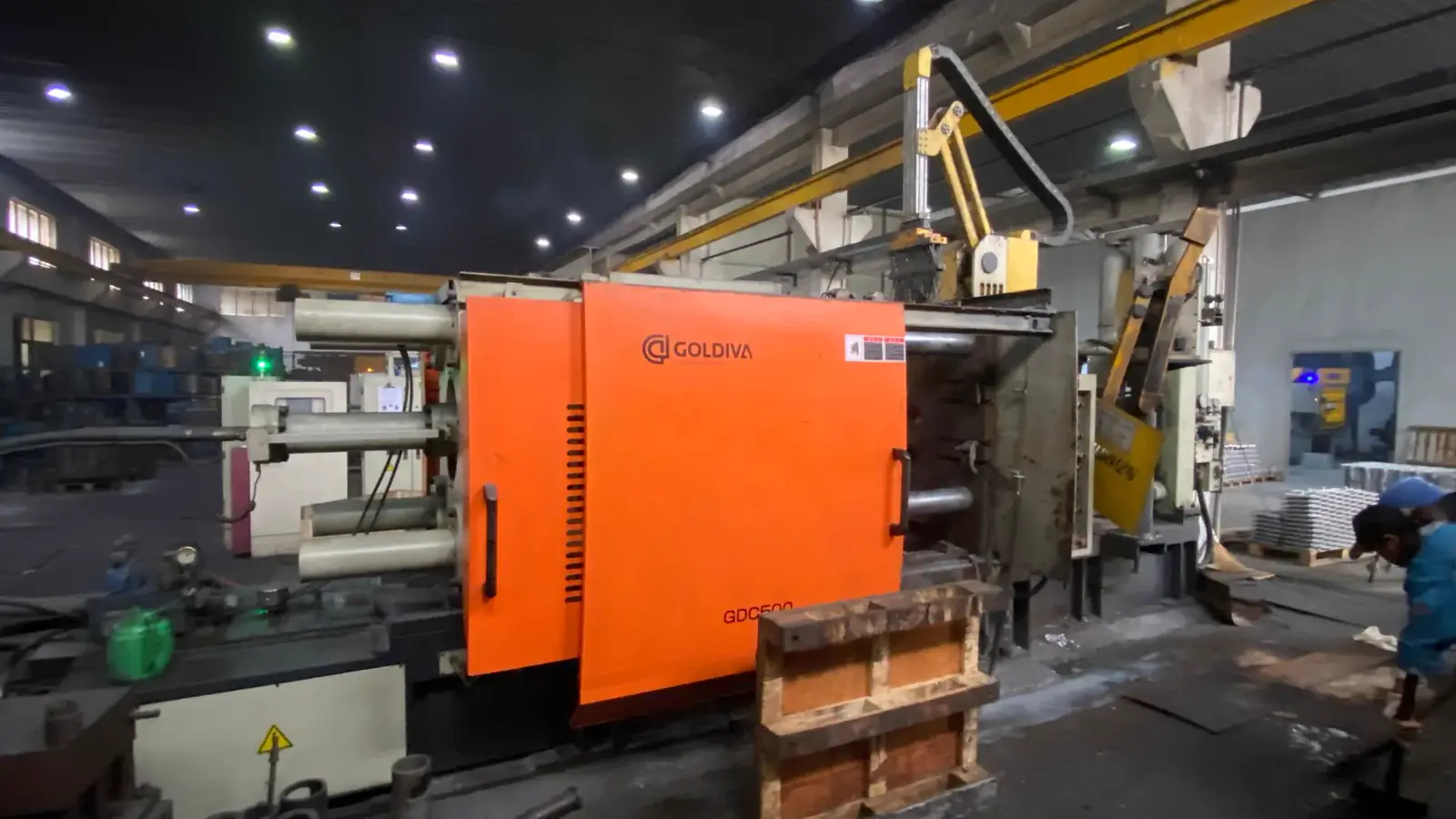
Lead Technical Image
Add a hero-level manufacturing, tooling, or component image that reinforces the article topic above the body copy.
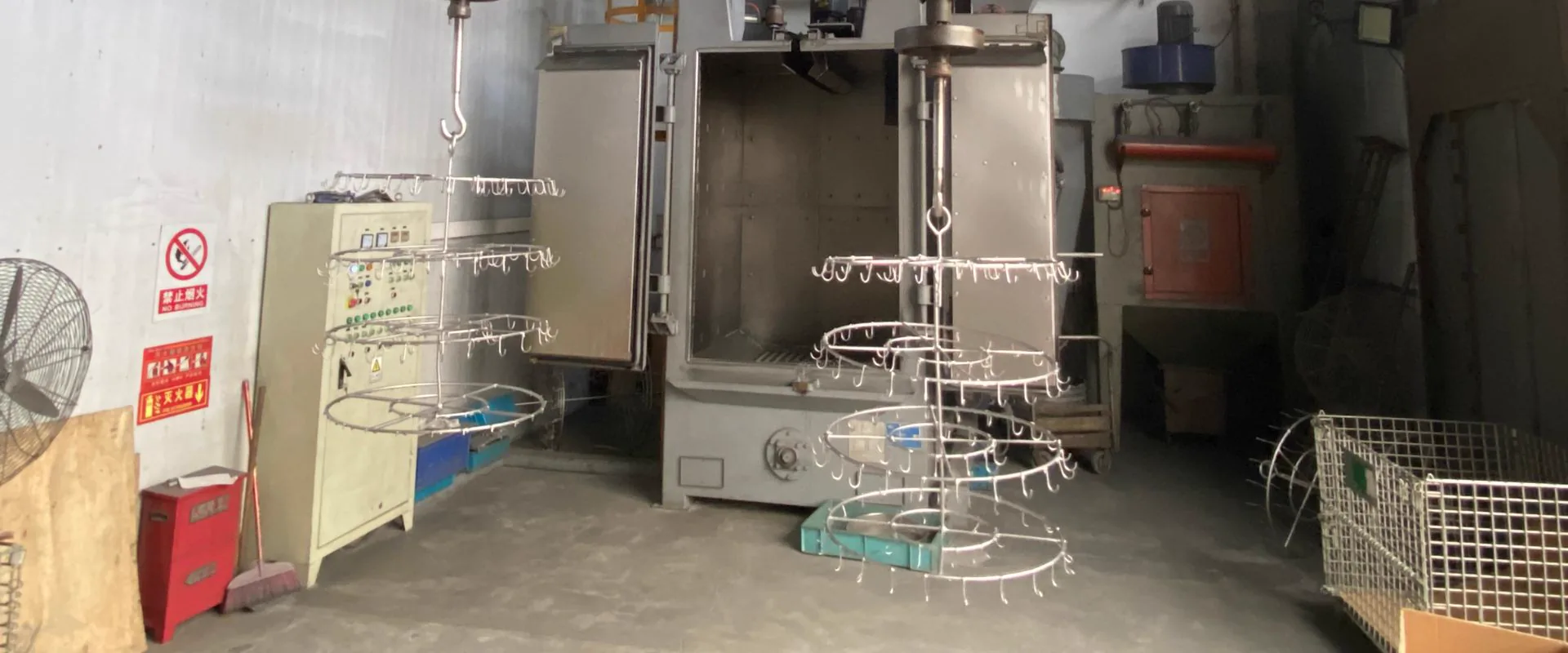
Comparison or Detail Image
Reserve a second image for an alloy comparison, defect example, tooling detail, or application close-up deeper in the article.
Both are production leak test methods, and the spec on your drawing decides between them. A pressure decay leak test is the fast, cheap workhorse for moderate specs, with roughly 10^-1 to 10^-3 mbar·L/s practical sensitivity. A helium leak test with mass spectrometer detection covers tight specs, reaching 10^-9 to 10^-12 mbar·L/s at instrument level. If your requirement reads a few cc/min at a few bar, you almost never need helium; if it is written in mbar·L/s at 10^-5 or tighter, you almost never can avoid it.
Below: how each works, what each resolves in production, and how to write the spec.
How a Helium Leak Test Works vs How a Pressure Decay Test Works
Pressure decay (air leak testing)
A pressure decay test pressurizes the casting's internal passage - usually dry air or nitrogen - seals it off, and watches the pressure fall. Any drop beyond the calibrated limit means leakage through a crack or a connected pore network.
In gauge decay, pressure is read directly at the part; in the differential variant, it is read against a sealed reference volume that rejects supply-pressure drift and temperature as common-mode noise - which is why differential decay is generally the more sensitive, repeatable setup.
Helium leak detection
A helium leak test uses helium as a tracer gas - its small atoms escape through paths that barely pass air. Three production configurations exist:
- Vacuum chamber (vacuum method): the part is pressurized with helium and placed in an evacuated chamber connected to a mass spectrometer, which counts arriving helium molecules. Instrument capability runs ~10^-9 to 10^-12 mbar·L/s - INFICON's UL6000 specifies below 5x10^-12 mbar·L/s in vacuum mode, and Leybold's LDS3000 reaches ~10^-11 mbar·L/s in ultra mode.
- Sniffer: the part is pressurized with helium and a probe sweeps the outside surface. Sensitivity is ~10^-5 to 10^-7 mbar·L/s - lower, but it localizes the leak, so the sniffer suits qualification and root-cause work rather than 100% screening.
- Accumulation: the part sits in a closed chamber for a fixed dwell time while the spectrometer reads the rise in helium concentration - a lower-cost route at ~10^-5 mbar·L/s class sensitivity, where vacuum-chamber hardware is hard to justify.
Sensitivity: The Deciding Number
| Method | Practical sensitivity (mbar·L/s) | Notes |
|---|---|---|
| Water bubble immersion | ~10^-3 (optimistic) | Cheap; operator- and vision-dependent; coarse leaks |
| Pressure decay | ~10^-1 to 10^-3 | The fast production workhorse for moderate specs |
| Helium accumulation | ~10^-5 class | Lower-cost tracer-gas route; dwell-time limited |
| Helium sniffer | ~10^-5 to 10^-7 | Localizes leaks; qualification and root-cause use |
| Helium vacuum chamber | ~10^-9 to 10^-12 instrument capability | Refrigerant, vacuum, and hermetic parts |
One caveat outweighs that table: the 10^-9 to 10^-12 figures are instrument capability, not production acceptance limits. Background helium, outgassing, fixture sealing losses, and affordable test time all move the practical limit up - INFICON cites ~10^-3 mbar·L/s as the realistic best for pressure decay and water-bath methods, and notes that tighter specs around 10^-5 mbar·L/s generally need tracer gas. What a line can hold is defined by validation with calibrated reference leaks on representative parts, not the datasheet.
Units move between conventions too: 1 mbar·L/s = 0.1 Pa·m3/s, and 1 atm·cc/s ≈ 1.013 mbar·L/s - commonly treated as roughly equal. Many drawings instead say "cc/min at X bar"; the equivalent leak rate depends on test pressure, gas, and temperature, so a spec is comparable to a measurement only when all three are stated.
Speed, Cost, and Production Fit
- Cycle time. Pressure decay takes seconds per part and drops straight into a production takt. A helium vacuum chamber needs pump-down, so cycles run longer - though automated chambers integrate into production lines.
- Gas cost. Compressed air is nearly free; helium is not. Shops cut consumption with recovery systems, recirculating accumulation chambers, or forming gas (a hydrogen-nitrogen mix) where the spec allows.
- Robustness. Pressure decay fixtures tolerate a normal shop environment; helium testing is more sensitive to contamination and background helium and demands tighter control.
- Volume effects. A given leak moves a small internal volume faster than a large one, so large or variable volumes erode decay sensitivity. Tracer-gas methods measure the escaping gas itself, which matters for big, complex castings.
Which One for Your Die Casting?
Choose helium leak testing when:
- the spec sits below pressure-decay capability (roughly 10^-3 mbar·L/s);
- the part has a large or variable internal volume;
- line temperature swings enough to defeat temperature compensation;
- passages are multiple or hard to seal for decay;
- the product is high-integrity by function - refrigerant, vacuum, semiconductor-adjacent hardware.
Choose pressure decay when:
- the spec is moderate - 10^-1 to 10^-3 mbar·L/s, or a few cc/min at a few bar;
- you need fast, cheap, robust 100% production testing;
- internal volume is repeatable and line temperature is stable.
At moderate specs, a well-designed differential decay setup beats a poorly controlled helium setup on repeatability and cost - method selection is a system decision, not a datasheet comparison.
Worked examples.
- A coolant passage at a few cc/min and a few bar - plausible for automotive coolant, oil, and air castings, though an application-specific example, not an industry rule - usually goes to differential pressure decay: seconds per part at compressed-air cost.
- A refrigerant or vacuum-tight component specified in mbar·L/s at 10^-5 or tighter sits below pressure decay's practical range. That goes to helium: vacuum-chamber screening, or accumulation where the budget requires it.
Write the spec so it can be tested. There is no universal leak limit for aluminum die castings - the allowable leak depends on function (coolant, oil, air or vacuum, refrigerant). Automotive leak specs are typically OEM or Tier-1 internal standards defining test pressure, stabilization time, part volume, threshold, and calibration leaks. A well-written requirement looks like:
"Max air leakage: X cc/min at Y bar gauge, after Z s stabilization, T s measurement."
ASTM E498 covers mass-spectrometer (helium) leak testing if you need a method-level standard; ASTM F2095 is for flexible packaging, not metal castings. The full method set is in die casting leak testing; capability in pressure-tight die casting. A leak test catches connected porosity - pair it with die casting porosity testing, or cut porosity at the source with vacuum die casting.
Frequently Asked Questions
What is the difference between helium leak testing and pressure decay?
Pressure decay pressurizes the part with air or nitrogen and measures the pressure drop; helium leak testing uses helium as a tracer gas and a mass spectrometer to count escaping molecules. Sensitivity: ~10^-1 to 10^-3 mbar·L/s practical for decay, versus ~10^-9 to 10^-12 mbar·L/s instrument capability for vacuum-mode helium.
How sensitive is a pressure decay leak test?
Roughly 10^-1 to 10^-3 mbar·L/s for many industrial applications - INFICON cites ~10^-3 mbar·L/s as the realistic best for pressure decay and water-bath methods. A differential reference-volume configuration rejects supply-pressure and temperature common-mode effects, so it beats simple gauge decay on sensitivity and repeatability.
How sensitive is helium leak detection?
~10^-9 to 10^-12 mbar·L/s instrument capability in vacuum mode (INFICON UL6000 below 5x10^-12 mbar·L/s; Leybold LDS3000 ~10^-11 mbar·L/s ultra); sniffer ~10^-5 to 10^-7 mbar·L/s; accumulation ~10^-5 mbar·L/s class. These are instrument figures - validated production sensitivity is lower once background helium, outgassing, fixtures, and test time are counted.
When should die castings be helium leak tested?
When the spec is below pressure-decay capability (below ~10^-3 mbar·L/s), or with large or variable internal volume, unstable line temperature, multiple or hard-to-seal passages, or high-integrity function - refrigerant, vacuum, hermetic, or semiconductor-adjacent parts.
What do cc/min leak specs on castings mean?
"cc/min at X bar" states a gas flow under defined test conditions; the equivalent leak rate in mbar·L/s depends on test pressure, gas, and temperature, so spec and measurement are comparable only when all three are stated. Conversion: 1 atm·cc/s ≈ 1.013 mbar·L/s; 1 mbar·L/s = 0.1 Pa·m3/s.
Is helium leak testing expensive?
Per test, yes: the hardware costs more and helium is an ongoing expense. Recovery systems, recirculating accumulation chambers, and forming gas cut consumption - but for moderate specs, pressure decay remains the cheaper 100% test.
Related Reading
- die casting leak testing - the full method overview this page complements
- pressure-tight die casting - KastMfg pressure-tight capability
- die casting porosity testing - the porosity behind the leaks
- vacuum die casting - reducing porosity at the source
- die casting quality standards - the quality framework behind leak specs
Have a leak-tightness spec on your drawing? Send it with the part file to casting@kastdiecast.com - we will recommend the test method and quote tested castings | +86 138 1403 4409 | No.6, Rungu Road, Nanjing, China
About The Author
Mike Yao on helium leak test
Technical Director, Die Casting Engineering
Technical Director at KastMfg with 20+ years in high-pressure die casting, leading engineering and program management across aluminum, zinc, and magnesium programs for automotive, EV, electronics, and medical OEMs worldwide.
View author profileRelated Reading
Keep exploring the blog
Pressure-Tight Die Castings: How to Specify Leak Testing
Pressure-Tight Die Castings: How to Specify Leak Testing Hydraulic valve bodies, pump housings, fluid manifolds, and cooling-loop parts fail in the field for one simple reason:...
Mike Yao
10 min read
Die Casting Porosity Testing - X-Ray, CT & Leak
Testing for Porosity in Die Castings - X-Ray, CT Scan, Leak Test and Impregnation Die casting porosity testing checks whether internal voids, gas pores, shrinkage cavities, or c...
Mike Yao
9 min read
Die Casting vs Permanent Mold Casting: Which to Choose?
Die Casting vs Permanent Mold Casting: How to Choose Die casting and permanent mold casting are both metal mold processes - both use reusable steel or iron dies rather than expe...
Mike Yao
8 min read
HPDC vs LPDC - High Pressure vs Low Pressure Die Casting Compared
HPDC vs LPDC - High Pressure vs Low Pressure Die Casting The difference between HPDC and LPDC comes down to how hard and how fast the metal enters the die: high pressure die cas...
Mike Yao
7 min read