CMRT and Conflict Minerals for Die Cast Parts
Practical guide to conflict minerals die casting declarations: what a CMRT covers, where alloy smelter data comes from, and what to request in your RFQ.

Technical Director, Die Casting Engineering
Blog Visual Plan
Article visuals for conflict minerals die casting
These visuals use your current KastMfg image library now, and they will automatically switch to article-specific images when you add them later.
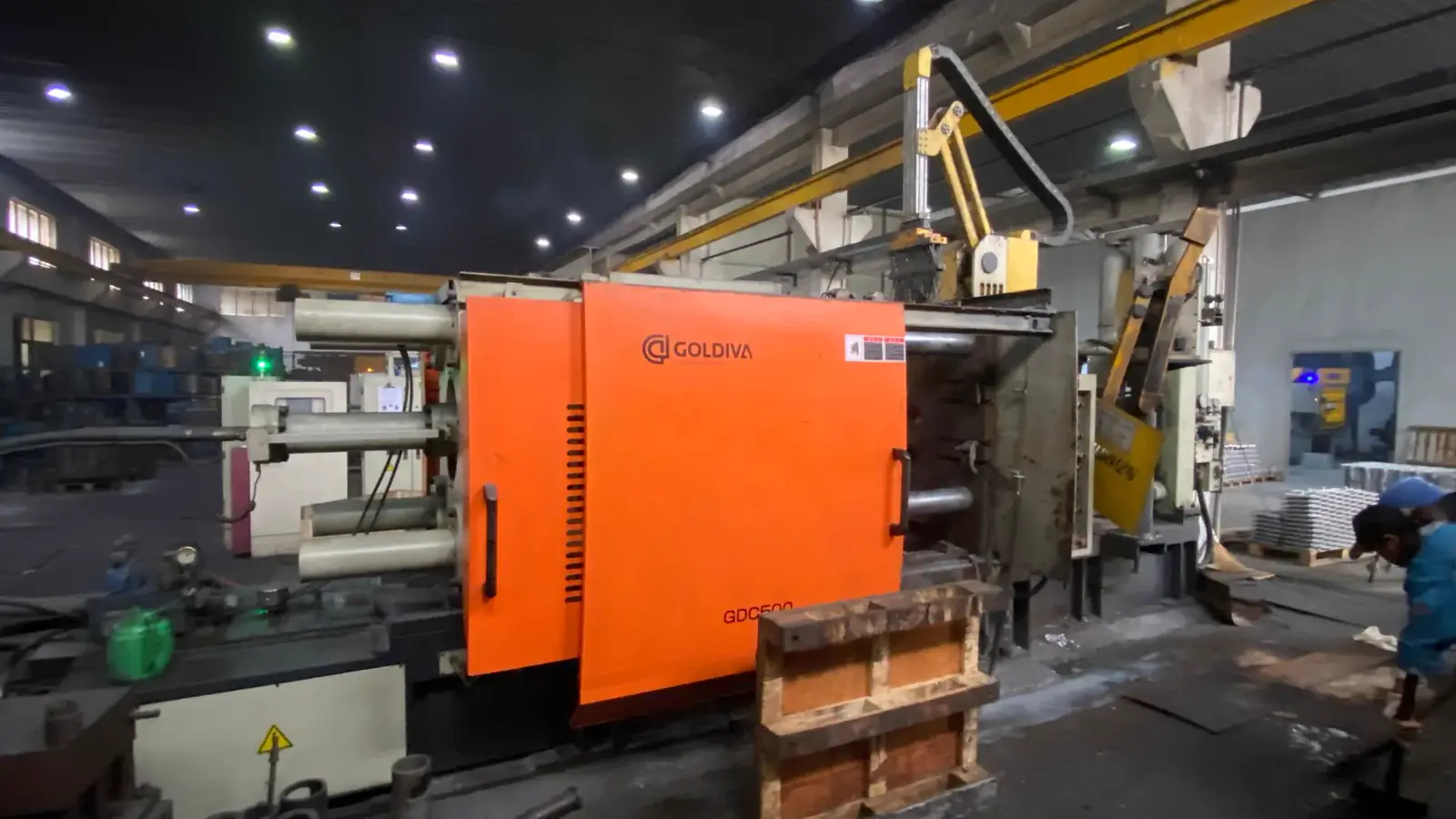
Lead Technical Image
Add a hero-level manufacturing, tooling, or component image that reinforces the article topic above the body copy.
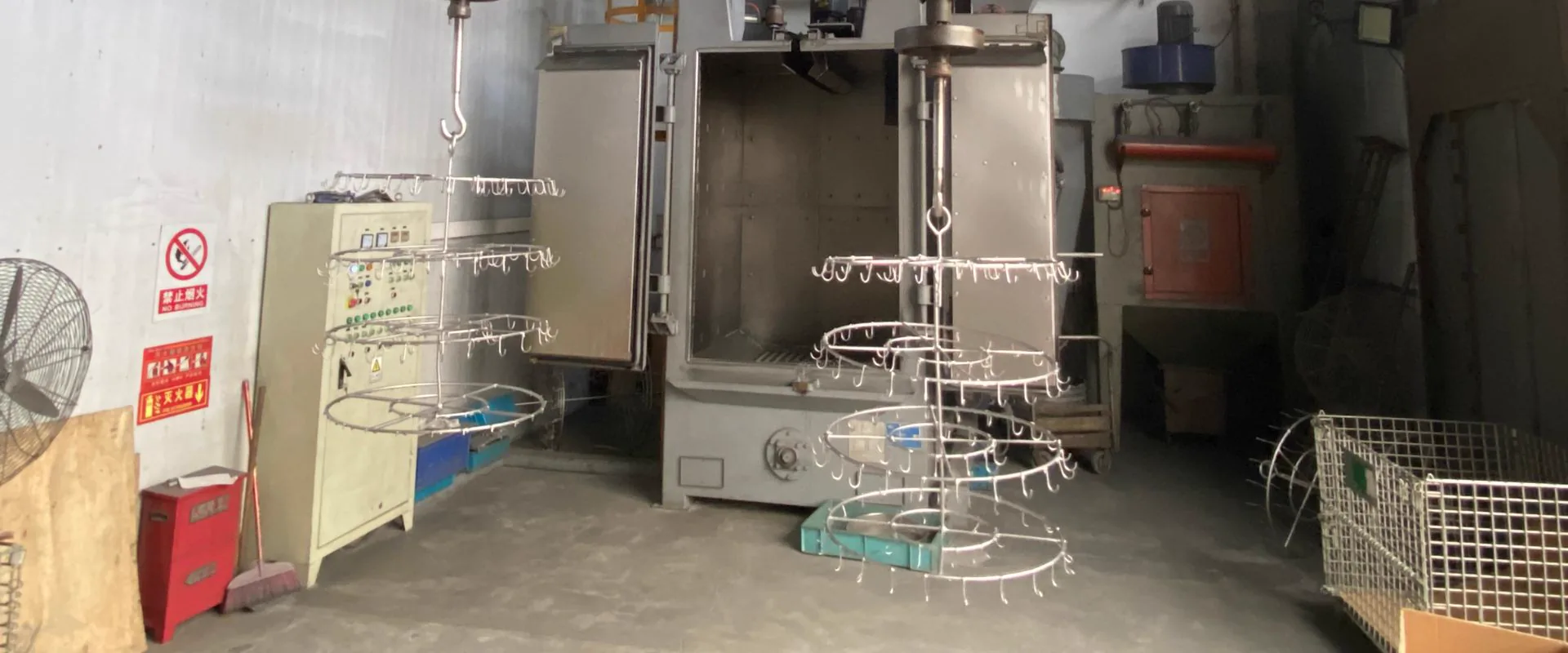
Comparison or Detail Image
Reserve a second image for an alloy comparison, defect example, tooling detail, or application close-up deeper in the article.
Somewhere in the life of most die casting programs, a spreadsheet arrives from a customer. It asks about smelters. It arrives dressed in acronyms — CMRT, 3TG, conflict minerals — and it lands on the desk of whoever handles quality, compliance, or purchasing, often with a deadline measured in days.
The request is not exotic, and it is not an accusation. It is a data question about where the metals in the parts came from, and it exists because the companies at the top of the supply chain answer to regulators and to their own sourcing commitments. A die casting supplier sits in the middle of that chain: it buys alloy, remelts it, and shapes it. The information being requested lives upstream, at the producers of the ingot.
This article explains what the request means, what a CMRT declaration actually contains, where a die casting factory gets its smelter data, what Chinese die casters typically do when the request arrives, and what to ask for at the RFQ stage so the paperwork does not become the long pole in your program.
What "Conflict Minerals" and 3TG Mean
The four minerals at the center of these requests are tin, tantalum, tungsten, and gold — abbreviated 3TG after their initials (with gold supplying the G). They earned their special treatment because they are mined in, or smelted from ores originating in, conflict-affected and high-risk areas — most prominently the Democratic Republic of the Congo and adjoining countries — where mining and mineral trade have historically financed armed groups.
Around that concern, a body of disclosure practice has grown. In the United States, the reporting rule administered by the SEC focuses on these four minerals and requires certain reporting companies to describe their presence and sourcing in the products they manufacture or contract to manufacture. Industry initiatives developed the practical tools for answering those questions: the Responsible Minerals Initiative (RMI) publishes the Conflict Minerals Reporting Template — the CMRT — and updates it periodically to reflect current reporting expectations.
Two practical notes for die casting buyers. First, the 3TG net is wider than the headline metals suggest: the metals appear as alloying and trace elements, in coatings and platings, and in the upstream supply chains of nearly every engineered material, so a request about "gold" can legitimately reach a zinc bracket. Second, when precise details matter — which fields the form contains, what the current declaration options are — work from the current CMRT template from RMI rather than from secondhand descriptions, including this article's. The template is the source of truth for the form itself.
Why Die Casting Buyers Receive CMRT Requests
The obligations and commitments sit at the top of the chain. Brands and listed companies answer to regulators and to public sourcing commitments; they collect declarations from their tier-one suppliers, who forward the request to their suppliers, and so the request cascades down until it reaches a foundry. A die caster usually never sells to the end brand at all — the request arrives through one or two intermediaries.
The trigger is usually one of three moments: a new program is being sourced and the compliance file is assembled alongside the technical one; an annual refresh cycle sweeps the supply base; or a contract clause requiring cooperation with materials-compliance requests is being enforced. Whatever the trigger, the practical meaning for the die caster is the same — complete or confirm a declaration about the metals purchased for the parts in question.
For the buyer, the useful realization is that your supplier is answering a question about its own suppliers. How well it does that depends on how well it manages and documents its alloy sourcing — which makes the CMRT request, handled properly, a small structured audit of your supplier's material management.
What a CMRT Declaration Actually Contains
Described generally — the exact fields are defined by the current CMRT template from RMI — a declaration covers four things.
The declaring company identifies itself: legal name, contact point, and the scope of what is being declared. Scope is the first decision that shapes everything downstream: a company-level declaration covers the smelters behind everything the company buys, while a product-category or part-level declaration attempts to trace the materials in specific items. Part-level scope is more precise and more work, because it must follow the specific alloys that actually went into your parts.
The heart of the form is the smelter and refiner list: the facilities upstream in the supply chain that have been identified as smelting or refining the 3TG materials the company uses, along with what is known about them — for example, which of those facilities participate in independent audit programs. This is the genuinely hard field, and the reason is structural: a die caster does not operate smelters. Its list can only be assembled from data held by the companies it buys metal from.
The declaration also records how the company reached its answers — what diligence was performed, and where knowledge ends. A CMRT is a statement of what a company knows about its supply chain, not a warrant that the chain contains nothing.
Where the Smelter Data Comes From: The Alloy Suppliers
A die casting foundry is a remelter, not a smelter. Metal arrives as ingot or billet from alloy producers and recyclers; the smelting and refining of ore into metal happened upstream of the foundry's gate. That structural fact answers most of the confusion around CMRT requests:
The smelter names a die caster can report come from its alloy suppliers. Alloy producers maintain smelter and refiner lists for the materials they sell and share those lists with their customers on request; a responsible die caster passes that upstream data through rather than inventing its own. Different alloy families trace to different metal streams — an A380 aluminum housing and a Zamak 3 zinc bracket pull on separate supply chains, each with its own smelter set. A recycler in the stream adds one more hop between the ore and your part.
The practical consequence for buyers: a die caster's declaration is only as current and as specific as the alloy supplier's data behind it. If the foundry changed ingot suppliers to hold price during a volatile market, the smelter list changed with it — and a declaration pulled from an old file quietly stopped describing the real supply chain.
How Chinese Die Casting Factories Typically Handle the Request
Practice across the Chinese die casting industry is fairly consistent, and understanding it will make your requests more effective:
Most die casters provide a company-level declaration assembled from the smelter data supplied by their ingot producers — because that is the data they actually possess. They do not smelt in-house, and they generally cannot audit smelters themselves; the traceability work happens upstream and is passed down the chain. Larger factories with structured compliance support handle product-level declarations more readily; smaller shops may be completing their first CMRT when your request arrives, and the difference between a fast answer and silence is often just whether you sent them the template and a clear statement of the scope you need.
Alloy sourcing moves with the market. A declaration on file from two seasons ago may not reflect the current ingot suppliers, which is why asking for a refresh together with an alloy-change notification commitment is more useful than asking once. And material compliance paperwork rarely travels alone — REACH and RoHS documentation for the supplied materials is usually requested alongside the CMRT and is usually held by the same people, so bundling the request saves a round of emails.
For a wider view of how to evaluate a Chinese supplier's documentation and traceability practices in general — not only for materials compliance — see the guide to auditing a China die casting supplier.
What to Ask For in the RFQ
Ask in writing for exactly what your compliance program needs, and remove the ambiguity that makes suppliers guess:
- The declaration completed on the current CMRT template from RMI — attach the template to the RFQ so no one has to find or guess the version
- The alloy supplier's smelter data or declaration standing behind the alloys used for your parts
- Confirmation of which alloy families and supplementary materials (coatings, platings, inserts) are covered by the declaration
- REACH and RoHS documentation for the materials to be supplied — these are frequently requested together with the CMRT and belong in the same file
- An agreement to notify you when alloy sourcing changes materially
- A refresh cadence that matches your customer's program
Suppliers who handle this well will ask questions back — which scope level you need, which template version, what deadline — because those questions determine whether they can answer accurately. That dialogue is a good sign: it means the declaration you receive describes a real supply chain rather than a recycling of last year's file.
Common Misconceptions
Treating a CMRT as an approval. A completed CMRT is a declaration of what a company knows about its supply chain. It is not an audit result, not a license, and not a certification status a supplier either holds or lacks. Nobody passes or fails a CMRT; the completed form is an input into your customer's due diligence, not a conclusion from it.
Expecting the die caster to be a smelter. Asking a foundry to report "its own smelters" misreads the chain of custody. The die caster's furnaces remelt purchased alloy; the smelting and refining happened upstream. The useful data in a foundry's declaration is the alloy supplier's smelter list, and a supplier that explains this is being accurate, not evasive.
Reading a smelter list as a verdict. The appearance of a smelter name on a list is not, by itself, a finding about anything — status information about facilities changes as independent audit programs update, and a declaration captures a moment in time. The interpretation belongs to your customer's compliance process, which weighs the data; the declaration's job is to make that data visible.
Assuming company-level scope covers your exact parts. A company-level declaration aggregates everything the supplier buys, which can include alloys and materials that never came near your parts. That breadth is acceptable for many programs and inadequate for others. If your customer needs part-level scope, ask for part-level scope explicitly — and expect it to take longer, because the specific alloys for your parts have to be traced.
FAQ
Does a zinc die casting need a conflict minerals declaration too?
The request follows your customer's compliance program, not the alloy family. When a program covers supplied materials, the declaration for zinc castings reports the smelter data behind the zinc alloy supply chain, exactly as an aluminum part reports behind its own. The question to answer is what your customer's program requires — then the alloy family follows.
Is one CMRT from my supplier enough for my customer?
Usually it is the starting point. What actually suffices is defined by your customer's program: the scope level (company or part), the template version, and the currency of the data. Forwarding a stale declaration, or one whose scope does not match the question, creates a second round of correspondence that the original request was meant to prevent.
How often should declarations be refreshed?
Follow your customer's program — the cadence is set there, not by the die caster. A common practical arrangement is an annual refresh plus a reissue whenever the supplier changes alloy sourcing or the template is updated materially, but treat that as commercial practice to agree on, not a rule to assume.
Our supplier has never completed a CMRT. What do we send them?
Three things: the current CMRT template from RMI, a clear statement of the scope you need (company-level or part-level, and which parts), and a request for the alloy supplier's smelter data. Most die casters can obtain upstream data from their ingot suppliers quickly. If they cannot or will not, that is useful information about their documentation practices in general.
Does a completed CMRT mean the parts are "conflict free"?
No, and it is not designed to. A CMRT reports the supply chain as known at a point in time. Conclusions about sourcing are drawn by your customer's due-diligence process using that data — they are not stamped by the declaration itself. Resist absolute shorthand in either direction when summarizing a declaration internally.
Send Your Compliance-Ready RFQ to KastMfg
KastMfg is a China-based (Nanjing) die casting manufacturer producing aluminum, zinc, and magnesium high-pressure die castings from purchased alloy, with tooling constructed and maintained in-house, CNC machining, and DFM review with quotes. Materials declarations are supported with data from our alloy suppliers — smelter information for conflict minerals reporting on the current CMRT template from RMI, together with REACH and RoHS documentation for the materials supplied. To receive a quotation grounded in your real scope, submit:
- CAD model (STEP/STP) and PDF drawing with revision
- Alloy requirement, including any mandated ingot source
- Annual volume and expected program life
- Key dimensions and critical features
- Surface finish and treatment requirements, including coatings and platings to be covered by declarations
- Testing and inspection requirements, plus the compliance documents you need (CMRT scope, REACH, RoHS)
- Destination country and delivery term
Send your package through the request a quote page or email it to casting@kastdiecast.com.
KastMfg Manufacturing Co., Ltd. Email: casting@kastdiecast.com | Phone: +86 138 1403 4409 No.6, Rungu Road, Nanjing, China
Related
About The Author
Mike Yao on conflict minerals die casting
Technical Director, Die Casting Engineering
Technical Director at KastMfg with 20+ years in high-pressure die casting, leading engineering and program management across aluminum, zinc, and magnesium programs for automotive, EV, electronics, and medical OEMs worldwide.
View author profileRelated Reading
Keep exploring the blog
Die Casting vs Permanent Mold Casting: Which to Choose?
Die Casting vs Permanent Mold Casting: How to Choose Die casting and permanent mold casting are both metal mold processes - both use reusable steel or iron dies rather than expe...
Mike Yao
8 min read
Can Steel Be Die Cast? Why Conventional HPDC Says No
Can Steel Be Die Cast? Why Conventional HPDC Says No No - steel cannot be made by conventional high-pressure die casting. The commercial process is limited to zinc, magnesium an...
Mike Yao
6 min read
Threaded Holes in Die Cast Aluminum: Guide
Threaded Holes in Die Cast Aluminum: Guide Ask a machining forum whether threads can be tapped straight into die cast aluminum and the answers split into two camps. One calls it...
Mike Yao
12 min read
Die Casting Design Guide: Rules, Tolerances & DFM
Die Casting Design Guide: Rules That Cut Cost and Improve Quality Good die casting design is the single biggest lever on part cost and quality - more than the alloy, more than t...
Mike Yao
5 min read