Melting Point of Aluminum and Casting Alloys - Reference Chart
Melting point of pure aluminum (660.3°C / 1220.5°F) plus solidus-liquidus melting ranges for A380, A383, A360, A390, A413, A356 and ADC12 die casting alloys, 6061/6063/7075 wrought alloys, and actual die casting temperatures.

Technical Director, Die Casting Engineering
Blog Visual Plan
Article visuals for melting point of aluminum
These visuals use your current KastMfg image library now, and they will automatically switch to article-specific images when you add them later.
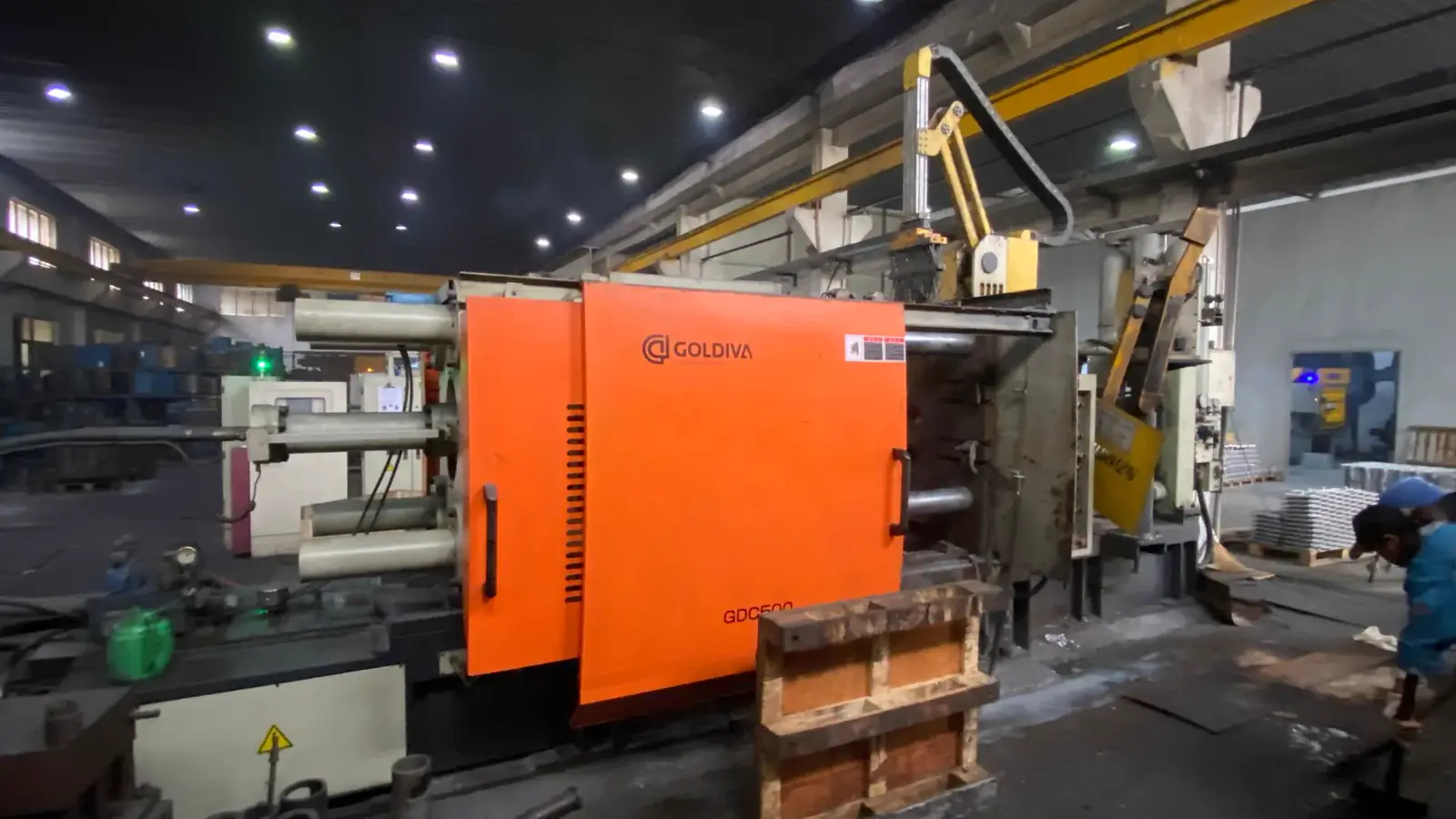
Lead Technical Image
Add a hero-level manufacturing, tooling, or component image that reinforces the article topic above the body copy.
Comparison or Detail Image
Reserve a second image for an alloy comparison, defect example, tooling detail, or application close-up deeper in the article.
The melting point of aluminum is 660.3°C (1220.5°F) for the pure metal. Aluminum alloys do not melt at one point: they soften at the solidus and finish melting at the liquidus, so every alloy melts across a range - the common die casting grades run roughly 515-596°C. That range, not the 660°C headline number, is what decides furnace settings, injection temperature, die life, and energy cost in a cold-chamber die casting shop.
This page is the quick reference: aluminum alloy melting point ranges by grade, actual casting temperatures, and what the numbers mean when you are specifying a part.
Melting Point Chart: Aluminum Alloys
Pure aluminum (99.99%) melts at a single point - 660.3°C (1220.5°F), against a boiling point of roughly 2470°C (4478°F). Every alloy below melts across a solidus-to-liquidus range instead:
| Alloy | Solidus | Liquidus | Notes |
|---|---|---|---|
| Pure aluminum (99.99%) | - | 660.3°C (1220.5°F) | Single melting point - reference, not a casting alloy |
| A380 | 557°C (1035°F) | 596°C (1105°F) | Die casting - the North American workhorse |
| A383 | 540°C (1000°F) | 595°C (1100°F) | Die casting - improved fill over A380 for intricate parts |
| A360 | 557°C (1035°F) | 596°C (1105°F) | Die casting - higher strength, better corrosion resistance |
| A413 | 574°C (1065°F) | 582°C (1080°F) | Die casting - near-eutectic ~12% Si; narrowest freezing range, excellent fluidity |
| A390 | 510°C (950°F) | 650°C (1200°F) | Die casting - hypereutectic; primary silicon solidifies first; widest freezing range |
| ADC12 | ~515°C (959°F) | ~585°C (1085°F) | JIS die casting alloy - the Asia workhorse; approximate, composition-dependent |
| A356 | 555°C (1031°F) | 615°C (1139°F) | Permanent mold / sand casting; heat-treatable - not a die casting alloy |
| 1100 | 643°C (1190°F) | 657°C (1215°F) | Commercially pure wrought alloy |
| 6061 | 582°C (1080°F) | 652°C (1206°F) | Wrought - extrusion and machining alloy, not die castable |
| 6063 | 616°C (1140°F) | 654°C (1210°F) | Wrought - extrusion alloy |
| 7075 | 477°C (890°F) | 635°C (1175°F) | Wrought - highest-strength common alloy; lowest solidus in this table |
Note on A380: the 557°C solidus follows NADCA data, but some producer datasheets list it slightly lower, around 538-546°C. Treat any commercial alloy's solidus as approximate - composition and measurement method move it.
For composition and mechanical properties, see the individual alloy pages: A380, A383, A360, A413, A390, A356, and ADC12, or the full aluminum casting alloys overview.
Why Silicon Lowers the Aluminum Melting Point
Pure aluminum melts at 660.3°C. Add silicon and the aluminum melting point collapses toward the eutectic at 577°C at 12.6% Si - the composition where the alloy liquefies most easily. Copper, present in alloys like A380 and A383, pushes the range lower still.
That is why die casting alloys cluster between roughly 515°C and 595°C instead of near 660°C. A413, at ~12% silicon, sits almost exactly on the eutectic - which is why its freezing range is a razor-thin 8°C and it flows superbly into thin walls. A390 goes the other direction: silicon content past the eutectic means primary silicon crystals solidify first, stretching its freezing range to 140°C - excellent wear resistance, but a demanding alloy to feed and machine.
Casting Temperature vs Melting Point
Foundries never cast at the liquidus - the aluminum melting temperature on a datasheet is only the floor, and production adds superheat on top. In cold-chamber aluminum die casting of A380-class alloys:
- Holding furnace / melt temperature: typically 650-700°C. Running toward the 660-710°C hot end buys fluidity for difficult fills, but increases oxidation, hydrogen pickup, and die soldering.
- Injection temperature: typically 660-700°C - roughly 50-100°C of superheat above the ~596°C liquidus.
- Die surface temperature: typically 180-250°C, with 200-230°C the common target; 250-300°C is the upper range for problem fills.
Rule of thumb for buyers: you never need to specify melt temperature. But the process window explains why aluminum runs cold-chamber machines, hotter dies, and shorter die life than zinc - and it shows up quietly in the piece price. See hot chamber vs cold chamber die casting.
Aluminum vs Other Casting Metals: Melting Points in Context
| Metal / alloy family | Melting range | Process consequence |
|---|---|---|
| Zinc (Zamak) | ~380-390°C | Hot chamber, fastest cycles, longest die life - see melting point of zinc |
| Magnesium (AZ91D) | ~470-595°C | Cold/hot chamber both exist; needs melt protection |
| Aluminum (A380) | 557-596°C | Cold chamber only; harder on dies than zinc |
| Brass | ~900-940°C | Punishing on dies - rarely die cast; see brass die casting |
| Steel | ~1,370-1,510°C | Not die castable at all - see steel die casting |
The pattern: every 100°C of melting range costs you something - machine type, cycle time, die life, or the process entirely. Aluminum sits in the middle: hot enough to exclude hot-chamber casting, cool enough to be the default structural die casting metal.
What the Melting Point of Aluminum Means for Buyers
- Judge alloys on the solidification range, not a single number. Narrow ranges (A413's 8°C) feed cleanly and fill thin walls; wide ranges (A390's 140°C) demand more from die design. The aluminum alloy melting point is always a band - ask which band.
- Melting point is a process number, not a service-temperature rating. A380's continuous service limit is only ~150°C (300°F) - some sources cite 130-150°C. Above that, tensile and yield strength drop and creep rises. Creep, not melting, is the real ceiling.
- 6061 and 7075 cannot be die cast. They are wrought alloys. If a drawing calls out 6061 but the process is die casting, the equivalent conversation starts at A380 or A360. See the aluminum casting guide and aluminum die casting.
- The melting range explains the cost structure. Aluminum's 600°C-class process means cold-chamber machines, 180-250°C dies, and more thermal wear than zinc - which is why zinc keeps small precision parts and aluminum takes the larger structural ones. Aluminum vs zinc die casting walks through the choice.
Frequently Asked Questions
What is the melting point of aluminum?
Pure aluminum melts at 660.3°C (1220.5°F). Alloys melt across a range instead: they start softening at the solidus and finish melting at the liquidus - A380, the most common die casting alloy, runs 557-596°C (1035-1105°F).
What is the melting point of aluminum in Fahrenheit?
1220.5°F for pure aluminum. The die casting alloys land lower: A380 and A360 melt across 1035-1105°F, while Asia's ADC12 runs roughly 959-1085°F.
At what temperature is aluminum die cast?
The melt is typically held at 650-700°C and injected at roughly 660-700°C - about 50-100°C of superheat above the liquidus of an A380-class alloy. The die cavity surface runs much cooler, around 180-250°C.
Does aluminum melt at a lower temperature than steel or brass?
Yes - far lower. Aluminum alloys melt in the ~477-660°C band, brass runs ~900-940°C, and steel ~1,370-1,510°C. Aluminum does melt much higher than zinc, though: Zamak alloys liquefy around 380-390°C, which is why zinc gets hot-chamber machines and aluminum does not.
What is the melting point of 6061 aluminum?
6061 aluminum melts across 582-652°C (1080-1206°F), from solidus to liquidus. One caveat: 6061 is a wrought alloy for extrusion and machining, not a die casting alloy. If the drawing says 6061 and the process is die casting, the practical equivalents are A380 or A360.
Can aluminum die castings handle high service temperatures?
For A380, treat ~150°C (300°F) as a conservative continuous limit; published guidance ranges 130-150°C. Past that, tensile and yield strength fall and creep climbs. The constraint is creep, not melting - size the part against creep data, not the melting point.
Related Reading
- density of aluminum - the sister data page for the same alloys
- recycled aluminum in die casting - energy, closed loop and purity control
- melting point of zinc - the sister reference for the lower-melting family
- aluminum casting alloys - full alloy selection guide
- hot chamber vs cold chamber die casting - what melting point decides
- aluminum vs zinc die casting - choosing between the two families
- aluminum die casting - KastMfg aluminum capability
Choosing between aluminum alloys? Send your drawing and service conditions to casting@kastdiecast.com - we will recommend the alloy and quote the tooling | +86 138 1403 4409 | No.6, Rungu Road, Nanjing, China
About The Author
Mike Yao on melting point of aluminum
Technical Director, Die Casting Engineering
Technical Director at KastMfg with 20+ years in high-pressure die casting, leading engineering and program management across aluminum, zinc, and magnesium programs for automotive, EV, electronics, and medical OEMs worldwide.
View author profileRelated Reading
Keep exploring the blog
Melting Point of Zinc and Zamak Alloys - Reference Chart
Melting Point of Zinc - and the Zamak Die Casting Alloys Chart Pure zinc melts at 419.5°C (787°F). Die casting zinc alloys - the Zamak and ZA families - melt slightly lower, acr...
Mike Yao
6 min read
Thermal Conductivity of Aluminum: Alloy Chart
Thermal Conductivity of Aluminum: Alloy Chart The thermal conductivity of aluminum is approximately 237 W/m·K for the pure metal - and almost nothing ships as pure aluminum. The...
Mike Yao
7 min read
Density of Aluminum - Pure Metal and Die Casting Alloys Chart
Density of Aluminum - and the Die Casting Alloy Chart The density of aluminum is 2.70 g/cm3 (0.0975 lb/in3) for the pure metal. The aluminum alloy density spread from there is r...
Mike Yao
7 min read
Aluminum Casting Alloys - Complete Selection Guide
Aluminum Casting Alloys - The Complete Selection Map Aluminum casting alloys look like an alphabet soup - A380, A356, ADC12, 319, 535 - but the logic is simple once you sort the...
Mike Yao
3 min read