Die Cast Cooling Plates: Design Review to Leak Testing
Die cast cooling plate sourcing guide: from CAD and sealing interfaces to flatness, machining, cleanliness, and leak-tested acceptance for EV thermal programs.

Technical Director, Die Casting Engineering
Blog Visual Plan
Article visuals for die cast cooling plate
These visuals use your current KastMfg image library now, and they will automatically switch to article-specific images when you add them later.
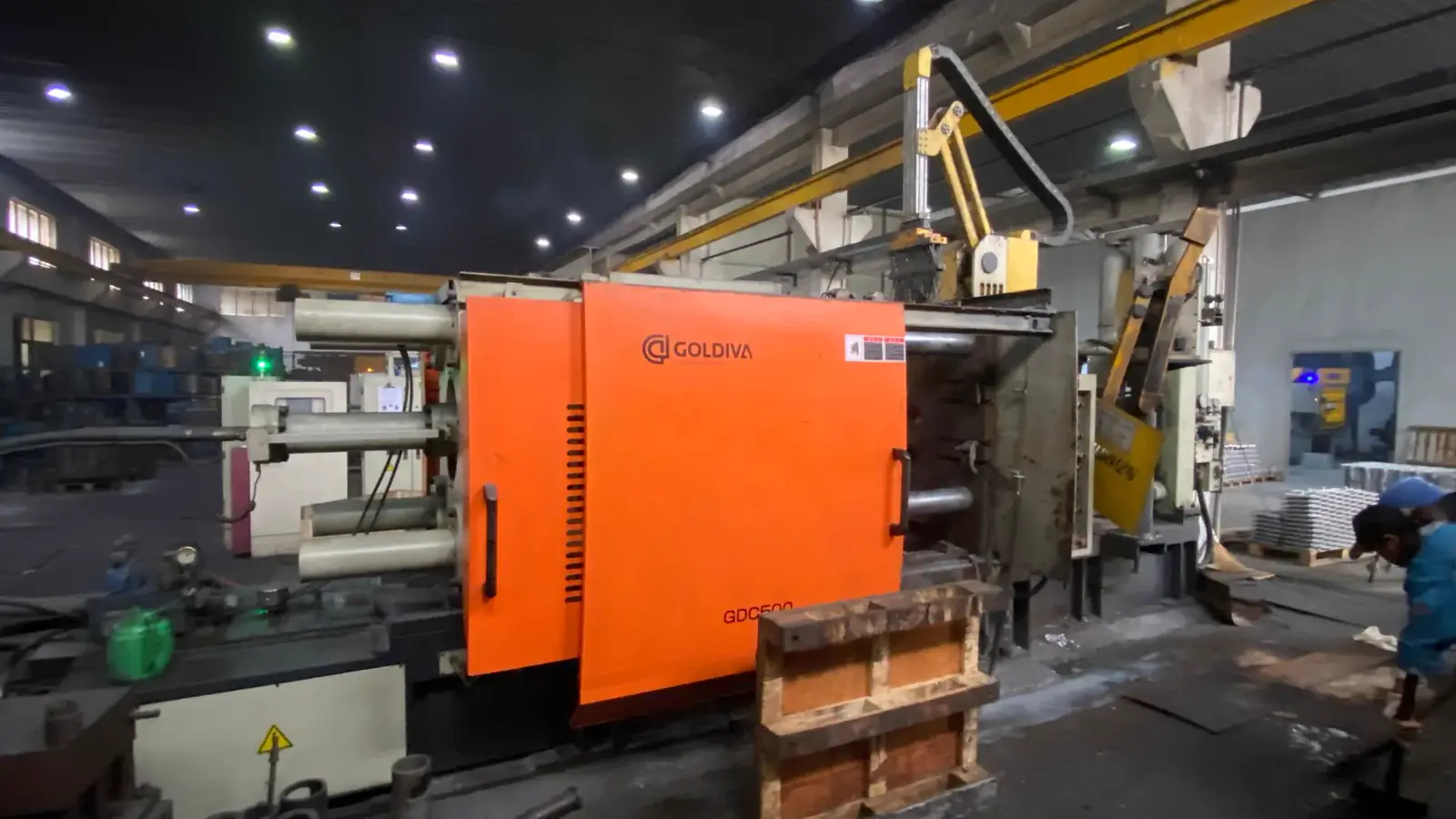
Lead Technical Image
Add a hero-level manufacturing, tooling, or component image that reinforces the article topic above the body copy.
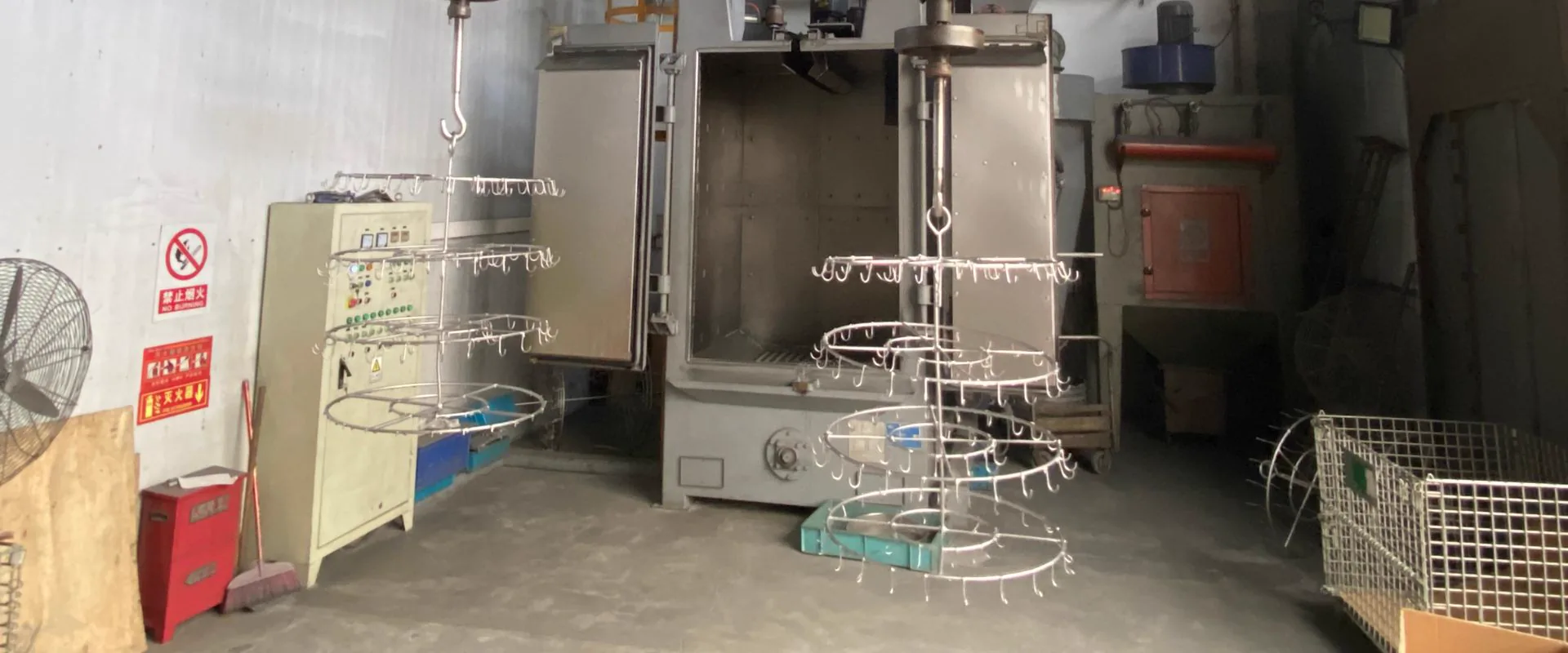
Comparison or Detail Image
Reserve a second image for an alloy comparison, defect example, tooling detail, or application close-up deeper in the article.
The existing heat sink types and materials article classifies thermal solutions — extrusions, skived fins, bonded assemblies, and their tradeoffs. This article is written for a different moment: the one where a thermal design is heading toward production as a liquid-cooled die cast plate for EV battery systems, power electronics, industrial drives, or data-center hardware, and the buyer must turn a CAD model into a manufacturable, sealable, testable procurement program.
A cooling plate earns its keep by moving heat and holding fluid. Both functions must survive manufacturing. The supplier evaluation question is therefore not "can you die cast aluminum?" — many can — but "can you take this plate from CAD, through casting, machining, sealing, and cleanliness control, to parts that pass the leak test at rate?" This article walks the buyer-side evaluation flow that answers that question.
Quick Answer: What a Die Cast Cooling Plate RFQ Must Define
A quotable cooling plate RFQ defines the fluid and its service conditions; the pressure class and leak test that prove the fluid circuit; every port, thread, and sealing interface with its machining and verification requirements; the flatness and surface condition of the thermal interface face; cleanliness requirements for the wetted circuit; the alloy and finish system; annual volume; and the records the supplier must deliver per lot. If any of those elements lives only in a conversation, it will resurface as a change order.
What Die Casting Contributes — and What It Does Not
High-pressure die casting brings real advantages to cooling plates: thin, stiff walls; complex three-dimensional geometry; integrated mounting features; and high-volume economics once tooling exists. It can place cooling channels close to the heat source in ways that constrain machining less and enable shapes machining cannot reach economically.
Honesty about the other half of the process is what separates a manufacturable design from a beautiful model. Sealing interfaces — O-ring grooves, port threads, flat faces for gasketed covers — are machined features, produced to drawing tolerances on machining equipment, not cast to tolerance in the die. The thermal interface face that contacts the module is likewise a machined and verified surface. And performance — thermal resistance, flow behavior, pressure drop — is never implied by the casting route; it is demonstrated by test under your specification. A supplier evaluation that starts from these boundaries moves faster than one that discovers them mid-program.
Reading the CAD the Way a Supplier Will
The first artifact of a serious supplier is the quality of its CAD review. Expect the review to address, and prepare your documentation to answer:
- Wall thickness and transitions. Channels and walls that are too thin, or that transition abruptly, create fill and shrinkage risk. The DFM review should flag these zones before tooling, not after first articles.
- Draft and parting line. Every cast surface carries draft; every cavity has a parting line. If either crosses a sealing or thermal interface, the design must move it or the process must add stock for machining — decide which.
- Channel proximity to surfaces. Channels close to the mounting face help thermal performance and risk breakthrough and distortion during machining. The review should state minimum stock as a design rule, from your analysis, not from habit.
- Machining allowances. Faces that will be machined need cast stock; features that must stay uncut need protection. Both belong in the CAD/DFM conversation.
- Datum scheme. Casting, machining, and inspection need a common datum logic, or the plate measured at the supplier and the plate measured at your dock disagree.
A supplier who returns a CAD review touching these points is showing process maturity. One who returns only a price is showing you where the risk will live.
Sealing, Interfaces, and Plumbing
The fluid circuit is where cooling plate programs succeed or leak. Treat every interface as a defined, machined, verified feature:
Ports and threads. State the thread or fitting standard per port, the sealing method (thread sealant, O-ring face seal, welded or brazed fittings where applicable), and the installation torque or assembly specification if the supplier assembles fittings. Verification — a plug or fitting installed during leak test — belongs in the test definition, not in a note added after the first leak.
O-ring grooves and gasket faces. Groove dimensions, surface finish, and flatness are drawing items. State the inspection method and sampling so groove quality is evidenced, not assumed.
Cover plates and manifold interfaces. Where a cover closes a cast channel, define the cover's supply scope, the fastener pattern and torque sequence, the gasket or sealant system, and whether the assembly is leak-tested assembled or open-circuit. A plate tested without its cover proves only half the boundary.
Assembly and cap discipline. Decide which fittings ship installed, which ports ship capped, and what torque or retention method applies. Loose or wrong caps are a leading cause of contaminated circuits and damaged threads in transit — export packaging for these parts is a specification, not an afterthought.
Flatness and the Thermal Interface Surface
The thermal interface face is the plate's contract with the module, cold plate stack, or power electronic device. Its flatness, roughness, and cleanliness decide how well thermal interface material performs — and none of those values can come from the casting process alone. Define flatness over a stated length with a stated measurement support condition, the surface finish, and any prohibition on coatings or markings in the interface zone. Where the interface is large, state how flatness is sampled across it — single-point checks can miss exactly the bow that hurts thermal contact. If the device vendor publishes interface requirements, cite them in the drawing so the supplier measures against the same contract you do.
Cleanliness and Coolant Compatibility
A cooling circuit that is tight but dirty fails thermally or abrasively. Define cleanliness for the wetted path: acceptable particle burden or a flushing protocol, cap requirements after flushing, and any prohibition on residues incompatible with the coolant. Match the circuit materials to the coolant chemistry — water-glycol, dielectric fluids, and oils each stress alloys, finishes, and elastomers differently — and state the coolant in the RFQ so compatibility review happens before tooling, not in the field. Corrosion protection on the wetted path, where required, must be specified as a validated system, with sealing faces masked or treated per the design.
Leak Testing as the Acceptance Gate
Every cooling plate program ends at the same gate: proof that the circuit holds. The test belongs in the RFQ with the same rigor as any machined dimension. Define the method per the pressure class and sensitivity your design analysis requires — air pressure decay for production screening, helium methods where limits demand them, hydrostatic proof at a defined class for margin demonstration — with medium, stabilization and hold times, allowable leak, orientation, fixturing, and records, per your specification. The comparative background lives in the porosity testing guide and the helium versus pressure decay discussion; the limit values themselves come from your design authority and test specification. State whether each plate is screened or production is sampled, what a failure triggers for the affected lot, and how results trace to lot, heat, and tool cavity so a field complaint stays a bounded event.
Evaluating Suppliers on Process, Not Promises
With drawings and specifications in hand, supplier evaluation becomes a structured reading of process capability rather than a brochure comparison. Work through the chain: their CAD/DFM response quality; their tooling approach for thin walls and channel geometry; their machining plan and fixture strategy for sealing and interface features; their sealing assembly and verification discipline; their cleanliness and packaging controls; their leak-test fixturing and record system; and their traceability from casting lot to shipped part. Site audits and sample builds remain the ground truth — the supplier audit guide frames the questions worth asking on the floor, and the quality control page shows how records discipline scales into production. For the casting side of capability, review aluminum die casting alongside your part's specific demands.
What to Put in the RFQ
The block below consolidates the fluid-side requirements into language that can drop into an RFQ attachment. Fill every variable from your design analysis:
Cooling plate fluid circuit — draft specification wording:

"Working fluid: [coolant chemistry and concentration].
Circuit operating pressure: [value]; proof/test pressure class: [value per
design analysis]. Leak test: [method] with [medium], stabilization [value],
hold [value], allowable leak [limit with unit and reference conditions],
per [test specification], [every part / sampling plan], with records
traceable to [lot / heat / cavity]. All ports and threads per [interface
standard]; O-ring grooves and gasket faces per [drawing notes], verified by
[method]. Interface face: flatness [value over stated length, support
condition], finish [value], coating prohibited in [zone]. Cleanliness:
[flush protocol / particle spec]; ports capped per [packaging spec]."
FAQ
Can a cooling plate be leak-tight straight from the die?
Cast surfaces are not sealing surfaces. Threads, grooves, and gasket faces are machined to drawing tolerances, and the finished circuit is proven by the leak test you specify. A supplier claiming otherwise is describing a different part than the one you need to buy.
Which leak test should my cooling plate use?
Match the method to the required sensitivity and production rate: air pressure decay for typical production screening, helium methods where limits demand higher sensitivity, hydrostatic proof for margin demonstration at a defined class. Your design analysis sets the limit; the method choices follow it.
Do die cast cooling plates need CNC machining?
Expect machining on sealing interfaces, port features, the thermal interface face, and datum features. Machining scope is a line item in the quote — defining it in the RFQ keeps comparisons honest across suppliers.
What volume justifies die casting for a cooling plate?
The crossover depends on geometry, size, and program life rather than one universal threshold. Share annual volume and program life in the RFQ; the tooling strategy and price breaks should come back as an explicit, discussable structure.
What records should I require per lot?
At minimum: material report tied to heat or lot, leak test records per your specification, dimensional results for defined critical features, and traceability linking records to the shipped lot. Higher-consequence programs add cleanliness and coating evidence.
Send Your Cooling Plate RFQ to KastMfg
KastMfg is a China-based (Nanjing) die casting manufacturer offering aluminum, zinc, and magnesium high-pressure die casting with in-house tooling, CNC machining, vacuum-assisted die casting capability, and DFM review with quotes — prepared to evaluate cooling plate programs from CAD through leak-tested parts. For a grounded quotation, submit:
- CAD model (STEP/STP) and PDF drawing with the current revision, including interface details
- Alloy requirement, or the thermal and service conditions if open
- Annual volume and expected program life
- Key dimensions: interface flatness, port and groove specifications
- Surface finish system for the wetted path and the interface zone
- Fluid identity, operating conditions, and the pressure/test specification with acceptance limits
- Interface drawings for fittings, covers, and mating hardware, plus assembly scope
- Destination country and preferred delivery term
Send your package through the request a quote page or email it to casting@kastdiecast.com.
KastMfg Manufacturing Co., Ltd. Email: casting@kastdiecast.com | Phone: +86 138 1403 4409 No.6, Rungu Road, Nanjing, China
Related
About The Author
Mike Yao on die cast cooling plate
Technical Director, Die Casting Engineering
Technical Director at KastMfg with 20+ years in high-pressure die casting, leading engineering and program management across aluminum, zinc, and magnesium programs for automotive, EV, electronics, and medical OEMs worldwide.
View author profileRelated Reading
Keep exploring the blog
Die Casting Design Guide: Rules, Tolerances & DFM
Die Casting Design Guide: Rules That Cut Cost and Improve Quality Good die casting design is the single biggest lever on part cost and quality - more than the alloy, more than t...
Mike Yao
5 min read
Die Casting Porosity Testing - X-Ray, CT & Leak
Testing for Porosity in Die Castings - X-Ray, CT Scan, Leak Test and Impregnation Die casting porosity testing checks whether internal voids, gas pores, shrinkage cavities, or c...
Mike Yao
9 min read
Threaded Holes in Die Cast Aluminum: Guide
Threaded Holes in Die Cast Aluminum: Guide Ask a machining forum whether threads can be tapped straight into die cast aluminum and the answers split into two camps. One calls it...
Mike Yao
12 min read
EV Battery Tray Die Casting RFQ: Sealing, Flatness, Thermal
EV Battery Tray Die Casting RFQ: Sealing, Flatness, Thermal The existing overview of aluminum die casting for EV battery trays covers what these parts are and why die casting fi...
Mike Yao
9 min read