EV Battery Tray Die Casting RFQ: Sealing, Flatness, Thermal
EV battery tray die casting RFQ: what to specify on sealing surfaces, flatness, datums, cooling interfaces, leak testing, machining, and PPAP deliverables.

Technical Director, Die Casting Engineering
Blog Visual Plan
Article visuals for ev battery tray die casting
These visuals use your current KastMfg image library now, and they will automatically switch to article-specific images when you add them later.
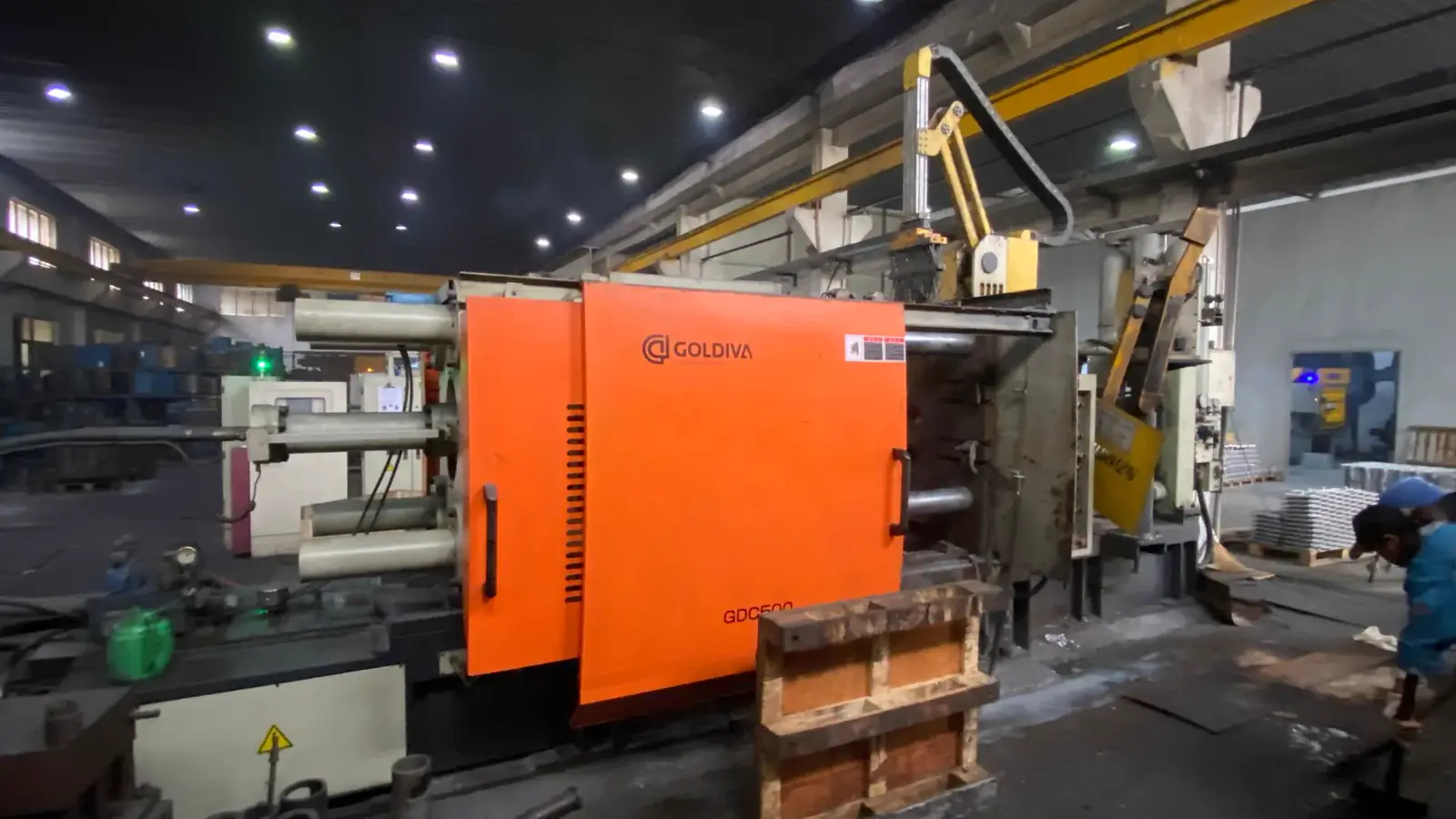
Lead Technical Image
Add a hero-level manufacturing, tooling, or component image that reinforces the article topic above the body copy.
Comparison or Detail Image
Reserve a second image for an alloy comparison, defect example, tooling detail, or application close-up deeper in the article.
The existing overview of aluminum die casting for EV battery trays covers what these parts are and why die casting fits them. This article answers a different question: what does an OEM need to define before a battery tray RFQ returns a quote that survives contact with production — a quote in which sealing, flatness, thermal interfaces, machining scope, and validation deliverables are all visible, priced, and testable?
A battery tray is not a commodity casting. It is a structural enclosure, a pressure boundary for the cooling circuit, a thermal path, a corrosion barrier, and a mating surface for modules, covers, and vehicle structure — all at once. Suppliers can only quote against what the drawing package states. Everything this article asks you to define is something that otherwise becomes a change order, a tooling revision, or a dispute after first articles.
Quick Answer: What the RFQ Must Make Testable
Before sending a die cast battery tray RFQ, define in the drawing package: which faces are sealing faces and the leak test that proves them; the flatness and datum scheme that controls module mounting and cover sealing; how the tray interfaces with the cooling system and thermal interface materials; the machining scope on critical faces; the corrosion-protection system and its compatibility with the alloy; and the validation deliverables — dimensional reports, material reports, leak test records, and the PPAP level your program requires. State the destination country, volumes, and delivery term so logistics scope is quotable.
The Tradeoffs a Battery Tray Forces
A battery tray design is a negotiation between five requirements that pull in different directions:
- Structure. The tray carries load cases from handling through vehicle life. Structural performance comes from alloy, wall design, ribs, and bosses — and it constrains how thin walls can go and where material must stay.
- Sealing. The enclosure must keep water and contaminants out of the battery space. Sealing lives on machined faces with gaskets or sealant; it competes with weight and cost for the same real estate.
- Thermal management. Whether cooling plates mount to the tray or channels are integrated, heat must move out of the cells. Thermal needs drive flatness, surface condition, and interface design.
- Corrosion. A tray sees road salt, humidity, and dissimilar-metal contact. Protection is a system decision — alloy, finish, drainage, and isolation hardware — not a coating note added at the end.
- Manufacturability. Draft, wall thickness transitions, parting-line placement, and feeder strategy decide whether the casting fills soundly and whether critical zones end up machineable.
None of these wins alone. The RFQ's job is to show the supplier the balance your program has already chosen, so DFM review debates engineering intent instead of discovering it.
Sealing Surfaces and Leak-Tightness
Sealing fails at interfaces: tray-to-cover, tray-to-cooling-plate, and every connector pass-through. For each sealing interface, the drawing package should identify the sealing face explicitly, define its finish and flatness, and specify the leak test that proves the assembled or finished tray.
Write the requirement as a testable statement rather than an adjective. The block below is a starting wording; variables come from your design:
Sealing requirement — draft wording:

"Surfaces identified as sealing faces in [drawing number, revision]
shall be machined to [surface finish / flatness per drawing notes]
and shall be free of [defect classes, e.g., porosity breakthrough,
tool marks, coating overspray] over the gasket path.
The finished tray shall pass [leak test method] with [medium] at
[test pressure], hold [hold time], with allowable leakage of
[limit] as defined in [test specification]. Connector pass-throughs
shall be verified with [fitting/fixture ref] installed."
Two disciplines keep this enforceable. First, separate the cast surface from the machined sealing surface: as-cast surfaces near sealing paths should be treated as unproven until machined, because casting skin and subsurface porosity do not belong in a gasket line. Second, test what the vehicle sees — if the cover is part of the pressure boundary, define whether the leak test is run on the bare tray, the tray with cover torqued to specification, or both.
Flatness and the Datum Strategy
Flatness on a battery tray is not a cosmetic callout. Module mounting surfaces must sit within the flatness the module and its thermal interface material can absorb; the cover sealing flange must close the gasket uniformly; and cooling plates, if bolted to the tray, need flatness compatible with their own sealing method. None of these numbers can be invented in an article — they come from the module design, the gasket supplier's data, and the cooling plate specification — but the drawing must state them, with the measurement method and support conditions that make them repeatable.
Just as important is the datum scheme. A tray is cast, trimmed, machined, coated, measured, and assembled — and each operation needs a stated datum reference. Define which datums are cast, which are machined first, and which features anchor the CMM program. Without this, two inspectors can measure the same tray differently and both be right. The same datum logic drives machining fixture design, which is why it belongs in the RFQ rather than in a later measurement plan.
Cooling and Thermal Management Interfaces
Decide early how the tray participates in cooling, because the answer changes the RFQ. In one architecture, cooling plates mount to the tray's flat underside and the tray is a thermal spreader; in another, cooling channels are integrated into the tray itself and become pressure boundaries. Each demands different things of the supplier: the first demands flat, clean mounting surfaces and controlled interface flatness; the second demands channel integrity, leak testing of the channels as circuits, and machining of channel ports and sealing grooves.
Either way, thermal performance claims belong to verification, not to the quote. Thermal resistance, flow behavior, pressure drop, and cycle life are demonstrated by test under your specification — on prototypes and validation builds — not asserted from the casting process. State the tests your program requires, and let the supplier quote the parts, the machining, and the test evidence separately so each is visible.
Machining, Joining, and Assembly Scope
A cast tray is rarely a finished tray. Expect machining on sealing faces, module and cover mounting surfaces, bores, connector features, and datum features — and say so in the RFQ so the casting quote and the finished-part quote are different, visible lines. The guide to CNC machining after die casting covers how casting and machining allowances are decided.
Joining scope needs the same clarity. State whether the supplier's scope includes installing studs, inserts, or bushings; whether the tray ships bare, primed, coated, or with cover and cooling hardware assembled for leak test; and who supplies the fasteners and gaskets. Every undefined interface is a cost discovered later at a worse time. Assembly-scope definition also protects the leak test: a tray tested bare and assembled at the customer can behave differently from a tray tested assembled.
Corrosion Protection and Surface Finish
Corrosion protection for a die cast aluminum tray is a system: alloy selection, conversion coating or anodizing where used, e-coat or powder coat, edge and drain-path detailing, and isolation from dissimilar metals in assembly. Specify the finish system by name and standard, including color or class where it matters, masking of sealing and grounding surfaces, and any adhesion or corrosion test the coated part must pass. Note that not every finish is compatible with every alloy and every casting condition — the surface finishing guide explains the process landscape; your drawing decides which one this program buys. Define cosmetic expectations separately: which surfaces are visible, which are functional, and what appearance standard applies, so inspection argues from a document instead of taste.
Validation, Samples, and PPAP Deliverables
Automotive and EV programs run on evidence. Define the deliverable chain in the RFQ: prototype parts with what dimensional reporting; first-article parts with full layout or CMM reports; material reports tied to heat or lot; leak test records per lot; coating test reports; and the PPAP level, format, and timing your program requires, with the part-specific control plan, process flow, and measurement plan that support it. The PPAP guide for die casting buyers maps the usual documentation structure; your program's quality agreement decides the level.
One discipline here saves programs: samples used for validation must come from production-intent tooling and process conditions, with any deviations listed and dispositioned. A tray approved from bridge tooling and a favorable process window teaches you little about production — and a supplier can only comply with an intention you state.
What the RFQ Package Should Contain
Think of the RFQ package as a decision flow, not a pile of files. It starts with geometry: the CAD model and the PDF drawing at a stated revision, plus assembly drawings showing cover, cooling hardware, module, and vehicle interfaces. From geometry, the conversation moves to material: the alloy designation if fixed, or the service conditions — thermal, structural, corrosion, conductivity — if the alloy is open for recommendation. Volume and program data come next: annual volume, program life, ramp plan, and the sample and PPAP timeline, because these decide tooling strategy and price structure. Then the definition of done: sealing test, flatness and datum scheme, finish system, machining scope, assembly scope, and the records that prove each. Finally, the commercial frame: destination country, delivery term, packaging standard, and the quality agreement under which changes and deviations are handled. A supplier receiving this package can return a quote in which every line traces to a sentence you wrote — which is exactly what makes two supplier quotes comparable.
FAQ
Should the RFQ ask for the tray as-cast or fully machined?
Ask for both, as separate lines: a casting price at defined volumes and a machining price with the critical features listed. The split shows you what the casting is worth and what the finishing adds — and it keeps the comparison clean across suppliers.
Can a die cast tray hold the cooling-fluid pressure by itself?
It can when the cooling circuit is designed as part of the tray and validated by test — channels, ports, and sealing grooves included. More often the tray hosts bolted cooling plates, and the pressure boundary is the plate assembly. Your drawing decides which architecture this program uses; the supplier's leak test must follow it.
What flatness can die casting achieve on module mounting surfaces?
Cast-in flatness alone is not the right basis for module sealing surfaces; plan machining on critical faces and define flatness, datum scheme, and measurement method on the drawing. Values come from your module and gasket design, not from the process in general.
Do I need PPAP for an EV battery tray?
Most automotive programs do, at a level set by the customer and the risk class of the part. State the level, format, and timing in the RFQ so documentation effort is quoted and scheduled from the start.
What does KastMfg need to quote a battery tray program?
The CAD model and drawing revision; alloy or service conditions; annual volume and program life; the sealing, flatness, and test specifications; finish and cosmetic scope; machining and assembly scope; validation deliverables; and destination country with the delivery term.
Send Your Battery Tray RFQ to KastMfg
KastMfg is a China-based (Nanjing) die casting manufacturer offering aluminum, zinc, and magnesium high-pressure die casting with in-house tooling, CNC machining, vacuum-assisted die casting capability, and DFM review with quotes — with quality and validation documentation prepared per your drawing, your specifications, and your program's quality agreement. For a quotation that reflects the real scope of a battery tray program, submit:
- CAD model (STEP/STP) and PDF drawing with the current revision, plus assembly interface drawings
- Alloy requirement, or the structural, thermal, and corrosion service conditions
- Annual volume and expected program life
- Key dimensions: sealing faces, flatness callouts, and the datum scheme
- Surface finish system and cosmetic requirements
- Test specification: leak test method, pressure class, and record requirements for the tray and any cooling circuits
- Validation deliverables: sample plan, dimensional reporting, material reports, PPAP level
- Destination country and preferred delivery term
Send your package through the request a quote page or email it to casting@kastdiecast.com.
KastMfg Manufacturing Co., Ltd. Email: casting@kastdiecast.com | Phone: +86 138 1403 4409 No.6, Rungu Road, Nanjing, China
Related
About The Author
Mike Yao on ev battery tray die casting
Technical Director, Die Casting Engineering
Technical Director at KastMfg with 20+ years in high-pressure die casting, leading engineering and program management across aluminum, zinc, and magnesium programs for automotive, EV, electronics, and medical OEMs worldwide.
View author profileRelated Reading
Keep exploring the blog
Aluminum Die Casting for EV Battery Trays
Aluminum Die Casting for EV Battery Trays and Housings EV battery systems use aluminum castings for structural support, sealing, thermal management, mounting, and protection. No...
Mike Yao
3 min read
Die Cast Cooling Plates: Design Review to Leak Testing
Die Cast Cooling Plates: Design Review to Leak Testing The existing heat sink types and materials article classifies thermal solutions — extrusions, skived fins, bonded assembli...
Mike Yao
8 min read
Die Cast Enclosure IP Ratings: Design Guide
Die Cast Enclosure IP Ratings: Design Guide Ask an electronics forum how to house a controller that must survive rain, hose-down, or a dunk in shallow water, and the answers con...
Mike Yao
14 min read
Die Casting Porosity Testing - X-Ray, CT & Leak
Testing for Porosity in Die Castings - X-Ray, CT Scan, Leak Test and Impregnation Die casting porosity testing checks whether internal voids, gas pores, shrinkage cavities, or c...
Mike Yao
9 min read