How Are Engine Blocks Made? Sand Casting vs HPDC vs LPDC
How engine blocks are made: sand-cast iron vs high-pressure and low-pressure die cast aluminum, open vs closed deck design, alloys 319, A356, A380, and cylinder bore technologies.

Technical Director, Die Casting Engineering
Blog Visual Plan
Article visuals for how are engine blocks made
These visuals use your current KastMfg image library now, and they will automatically switch to article-specific images when you add them later.
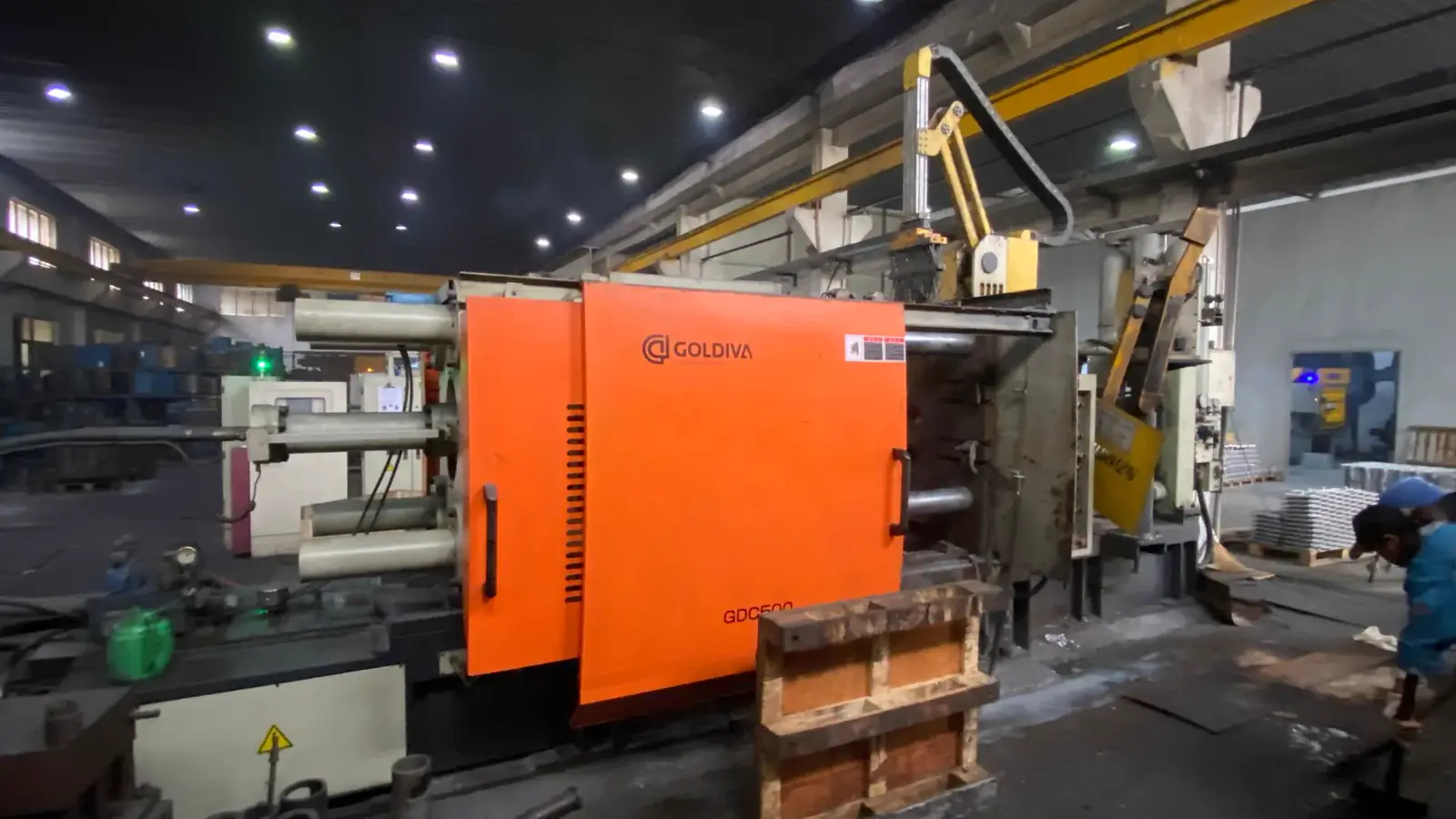
Lead Technical Image
Add a hero-level manufacturing, tooling, or component image that reinforces the article topic above the body copy.
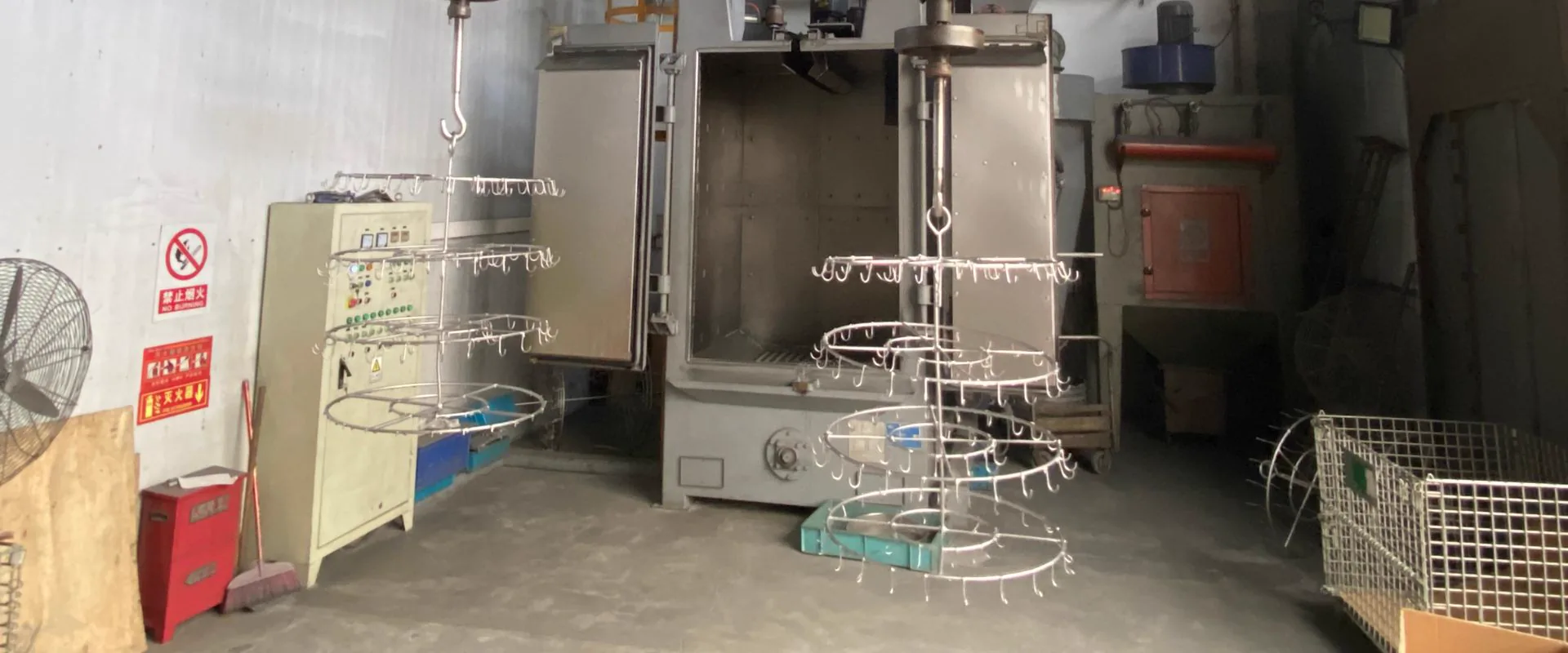
Comparison or Detail Image
Reserve a second image for an alloy comparison, defect example, tooling detail, or application close-up deeper in the article.
Ask how engine blocks are made and the honest answer splits in two: the material decides half of it, and the deck design decides the other half. A cast iron block is almost always a sand casting, because only expendable sand cores can form the water jacket, oil galleries, and crankcase cavities inside. An aluminum block can follow several routes - high pressure die casting, low pressure die casting, gravity or permanent mold, lost foam, or semi-solid - and the right choice depends on wall thickness, heat treatment, the cylinder bore technology, and whether the deck is open or closed.
The cylinder block is the textbook case of engine block casting: the part's internal geometry is so hostile to tooling that the process, the alloy, and the bore technology all have to be chosen together. This guide walks through engine block manufacturing route by route.
The Three Main Routes
Three production routes cover nearly every engine block on the road. None of them is universally best; each owns a distinct band of the volume, weight, and performance spectrum.
Sand-Cast Iron
Molten gray or compacted-graphite iron is poured into a sand mold assembled around sand cores that shape the water jacket, oil passages, and crankcase interior. A new mold is made for every casting, so per-unit cost stays high - acceptable for iron blocks, which now serve mostly commercial vehicles, trucks, and performance applications where iron's damping, wear resistance, and low material cost still win. Sand cores handle the undercuts and enclosed cavities that no permanent-mold tool could pull, which is why iron has never needed another process.
HPDC Aluminum
High pressure die casting injects aluminum into a hardened steel die at high speed and pressure, filling thin-wall cavities in milliseconds. For high-volume, thin-wall, open-deck blocks it is the economical route: seconds per shot, excellent repeatability, low metal content per part. The limits come from the same physics - turbulent fill traps gas, so conventional HPDC aluminum cannot take a full solution heat treatment, and the steel tooling cannot form the enclosed water jacket a closed deck needs.
LPDC Aluminum
Low pressure die casting pushes metal upward from a pressurized furnace into the die, slowly and with far less entrained air. LPDC blocks can be T6 heat treated for strength, can hold sand or salt cores that form the water jacket, and support closed-deck architecture - the reasons the process stays important wherever strength, heat treatment, liners, or deck stiffness dominate the specification. Gravity die casting, lost foam, and semi-solid routes fill similar niches. HPDC leads on economics for thin open-deck parts; it is not the only answer for aluminum blocks.
| Route | Typical use | Advantages | Limitations |
|---|---|---|---|
| Sand-cast iron | Truck, commercial, performance iron blocks | Any internal geometry via sand cores; iron wear resistance and damping | Heavy; high per-unit cost; new mold per casting |
| HPDC aluminum | High-volume thin-wall open-deck blocks | Fast cycles; thin walls; low piece cost at scale; repeatable | Gas porosity blocks full T6; steel cores cannot form enclosed water jackets |
| LPDC aluminum | Blocks needing T6, liners, or closed deck | Heat treatable; cores allowed; lower porosity; stiffer deck designs | Slower cycles; thicker walls; higher metal content |
Notice what the table hides: the boundaries move with annual volume and cylinder pressure, so a block that is rational at 500,000 units a year can be the wrong answer at 50,000.
Open Deck vs Closed Deck
Open deck: the water jacket around the cylinder bores is open at the top; the head gasket and cylinder head close it. Open-deck blocks cast easily and cool well, but the cylinder walls stand with little support, so combustion pressure and head-bolt clamping distort the bores more.
Closed deck: a metal bridge covers the top of the bores, leaving only coolant holes connecting the water jacket. The deck resists bore distortion and supports high cylinder pressure - the layout of choice for turbocharged and high-specific-output engines - but the enclosed water jacket is exactly the kind of internal geometry that is hard to cast.
The trade-off is stiffness against cooling and castability. An open deck gives the coolant free access to the bore walls and the foundry an easy tool; a closed deck buys bore support at the price of restricted coolant paths and a core-heavy casting. Getting heat out of a closed-deck block takes more water-jacket design work, which is one reason the choice is made at the engine architecture stage, not in the foundry.
That is where deck design and process lock together. Conventional HPDC forms internal features with steel cores and slides, which can only produce shapes that pull straight out of the die; an enclosed, undercut water jacket cannot. Closed-deck casting therefore normally relies on sand cores paired with gravity, LPDC, or lost-foam processes. Honda's technical report on a closed-deck aluminum diesel block - pressure-resistant sand cores, heat treatment, and centrifugally cast liners - shows a worked special case, not a conventional HPDC arrangement.
Why HPDC Cannot Use Ordinary Sand Cores
In HPDC the aluminum enters the cavity at high speed under intensification pressure. An ordinary bonded sand core cannot survive that impact: it erodes, breaks, and the fragments become defects inside the casting. So HPDC builds internal features only from steel cores, slides, and pullers - tooling that must withdraw from the part after solidification. Every HPDC internal feature must be demoldable, which is precisely why an enclosed water jacket is off the table for the process.
The water jacket is the feature that suffers most. It wraps around the cylinder bores with surfaces facing in every direction - geometry no slide can release - so a conventional HPDC block leaves the jacket open at the deck and accepts the open-deck trade.
Workarounds exist: pressure-resistant or shell sand cores, soluble salt cores, ceramic cores, vacuum-assisted filling, and semi-solid forming can push HPDC into cored territory, but each adds cost and scrap risk. Once a block needs real cores and heat treatment, LPDC or gravity casting is usually the simpler answer.
Alloys: 319, A356, A380, A390
Alloy and process travel together, but the pairing is not one-to-one: every alloy below appears in more than one process family, and the final choice usually comes from the bore technology and heat treatment plan.
319 / A319. The long-standing engine alloy for sand, gravity, and permanent-mold casting. Good castability and strength at engine temperatures, and it pairs naturally with cast-in iron cylinder liners. Common in engine heads and blocks made in expendable molds.
A356. The standard gravity and LPDC engine alloy. It takes a full T6 heat treatment and delivers excellent ductility and fatigue performance - why LPDC cylinder heads and structural blocks specify it. See A356 aluminum.
A380 / ADC12. The HPDC workhorse. It fills thin sections reliably and machines well, but the gas porosity typical of HPDC makes conventional solution treatment risky - vacuum HPDC and dedicated alloys relax that limit. See A380 aluminum.
A390. A hypereutectic Al-Si alloy whose high silicon content makes the cylinder bore itself wear resistant - a material route to bores rather than a default HPDC choice, since its silicon content stresses tooling.
Read the four together and the logic is clear: expendable-mold blocks lean on 319-class alloys, core-carrying heat-treated blocks on A356, thin-wall HPDC blocks on A380 or ADC12, and bore-integrated designs on A390.
In practice the material specification usually lands first and the casting process follows it - which is why the alloy, the bore technology, and the deck design should be frozen before the process route is debated.
Cylinder Bore Technologies
The bore is where engine block manufacturing diverges most, and four routes dominate. All four fight the same failure mode - bore ovality and scuffing under thermal and combustion load - with different machinery.
Cast-in iron liners. A centrifugally cast iron liner is set into the mold and cast in place; preheating the liner improves metallurgical bonding with the aluminum around it. The liner carries the ring wear, and the aluminum carries the structure - the most forgiving route for high-volume blocks.
Hypereutectic Al-Si bores (A390 class). With enough silicon in the alloy, the bore surface is etched after machining to expose hard primary silicon particles that serve as the bearing surface for the rings. No liner, no coating - the material is the bore technology.
Thermal spray coatings. Processes in the PTWA family spray a thin iron-based coating directly onto the bore wall. The thin layer saves weight and transfers heat well; it is a family of processes rather than a single specification, and each variant has its own qualification demands.
Nikasil-class electroplate. An electrodeposited nickel-silicon carbide layer, long associated with high-performance and motorcycle engines. It is plating, not spraying, and it sits at the premium end of the bore spectrum.
The bore route feeds back into the casting route: liners and A390 bores tolerate almost any process, while coatings and electroplates demand low-porosity, machinable parent metal that favors LPDC and gravity work.
After Casting: Heat Treatment, Machining, Leak Testing
The casting is only half of how engine blocks are made. A typical sequence:
- Remove gates and risers; clean and de-core (blast out the sand).
- Heat treatment where the process allows - T5 or T6 for LPDC, gravity, and sand-cast parts. Conventional HPDC stays at aging-only, because trapped gas expands and blisters the surface during solution treatment.
- Cylinder liner and bore preparation.
- Rough machining: datum faces, deck surface, main bearing bores, cylinder bores, oil passages.
- Finishing: line boring of the main bearing housings, plateau honing of the cylinder bores.
- Drilling and tapping of threaded holes.
- Washing to flush machining chips from oil galleries.
- Leak testing and pressure testing of water jackets and oil passages, followed by dimensional inspection. See die casting porosity testing.
Heat treatment is the step where the earlier process choice shows up in the parts room: LPDC and gravity blocks arrive at machining in T6, while conventional HPDC blocks arrive as-cast or T5-aged, with strength bought through section design instead.
Leak testing then closes the loop: water jackets and oil galleries are pressure-tested because an internal leak caught at the machine shop costs far less than one caught in a running engine.
Frequently Asked Questions
Are engine blocks sand cast or die cast?
Both. Cast iron blocks are almost always sand cast, because sand cores form the water jacket and crankcase cavities. Aluminum blocks go several ways: HPDC for high-volume thin-wall open-deck parts, LPDC or gravity casting where T6 heat treatment, liners, or a closed deck are required, plus lost-foam and semi-solid niches.
Why are aluminum blocks die cast?
Economics. HPDC fills thin walls in milliseconds, cycles in seconds, and amortizes its tooling over millions of shots - the lowest piece price for high-volume, thin, open-deck blocks. Where strength, heat treatment, or closed-deck stiffness matter more, LPDC and gravity casting take over.
What is a closed deck block?
One where a metal bridge covers the cylinder bores at the deck, leaving only coolant holes into the water jacket. The supported bore walls distort less under combustion pressure and head-bolt load, so closed-deck blocks suit high cylinder pressures - at the cost of a far harder internal geometry to cast.
Can you die cast an engine block with a closed deck?
Not with conventional HPDC: steel cores and slides cannot form the undercut enclosed water jacket. Closed-deck blocks are cast with sand cores in gravity, LPDC, or lost-foam processes. Honda's technical report on a closed-deck aluminum diesel block - pressure-resistant sand cores plus heat treatment and centrifugally cast liners - is a worked special case, not a standard HPDC arrangement.
What material are engine blocks made of?
Gray or compacted-graphite iron for many truck and commercial blocks, and aluminum alloys for most light-vehicle blocks - 319/A319 in sand and gravity work, A356 in LPDC and gravity, A380 or ADC12 in HPDC, and hypereutectic A390 where the bore comes from the material itself.
Related Reading
- HPDC vs LPDC - the two die casting routes compared in depth
- die casting vs sand casting - permanent mold against expendable mold
- low pressure die casting - the LPDC process guide
- gravity die casting - permanent-mold casting without pressure
- types of casting - the full casting process family
Sourcing cast aluminum powertrain housings? Send the drawing to casting@kastdiecast.com - HPDC housings and covers are our core business | +86 138 1403 4409 | No.6, Rungu Road, Nanjing, China
About The Author
Mike Yao on how are engine blocks made
Technical Director, Die Casting Engineering
Technical Director at KastMfg with 20+ years in high-pressure die casting, leading engineering and program management across aluminum, zinc, and magnesium programs for automotive, EV, electronics, and medical OEMs worldwide.
View author profileRelated Reading
Keep exploring the blog
HPDC vs LPDC - High Pressure vs Low Pressure Die Casting Compared
HPDC vs LPDC - High Pressure vs Low Pressure Die Casting The difference between HPDC and LPDC comes down to how hard and how fast the metal enters the die: high pressure die cas...
Mike Yao
7 min read
Threaded Holes in Die Cast Aluminum: Guide
Threaded Holes in Die Cast Aluminum: Guide Ask a machining forum whether threads can be tapped straight into die cast aluminum and the answers split into two camps. One calls it...
Mike Yao
12 min read
Die Casting Design Guide: Rules, Tolerances & DFM
Die Casting Design Guide: Rules That Cut Cost and Improve Quality Good die casting design is the single biggest lever on part cost and quality - more than the alloy, more than t...
Mike Yao
5 min read
Die Casting vs Permanent Mold Casting: Which to Choose?
Die Casting vs Permanent Mold Casting: How to Choose Die casting and permanent mold casting are both metal mold processes - both use reusable steel or iron dies rather than expe...
Mike Yao
8 min read