Casting Shrinkage: Aluminum, Zinc, Steel Rates Chart
Casting shrinkage is two numbers: aluminum loses ~6.5-7% by volume as it freezes, while the linear mold shrinkage allowance runs up to ~0.6-1.5% for aluminum alloys - with zinc, magnesium and steel rates, why molds are cut oversize, and what drawings should specify.

Technical Director, Die Casting Engineering
Blog Visual Plan
Article visuals for casting shrinkage
These visuals use your current KastMfg image library now, and they will automatically switch to article-specific images when you add them later.
Lead Technical Image
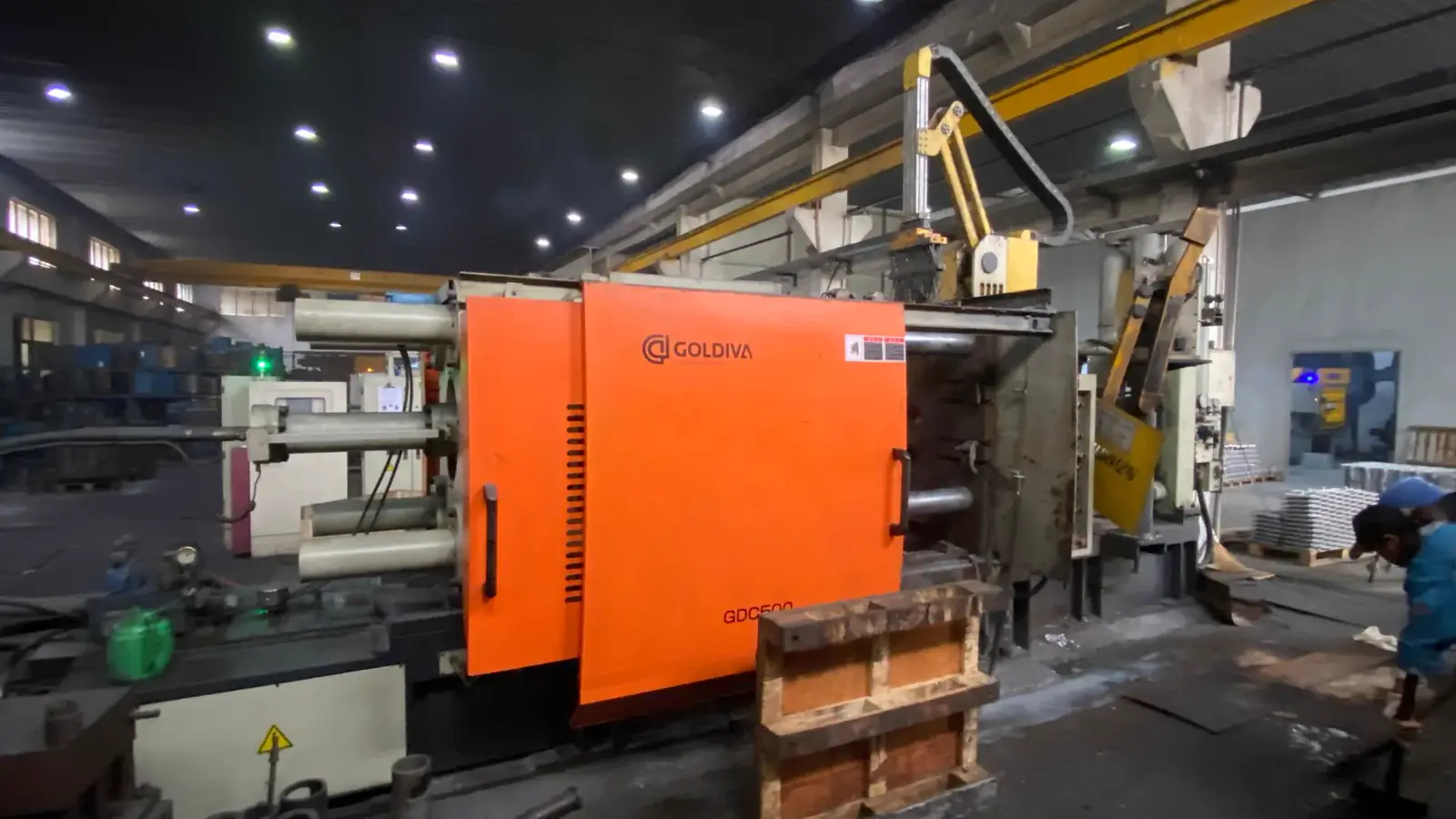
Add a hero-level manufacturing, tooling, or component image that reinforces the article topic above the body copy.
Comparison or Detail Image
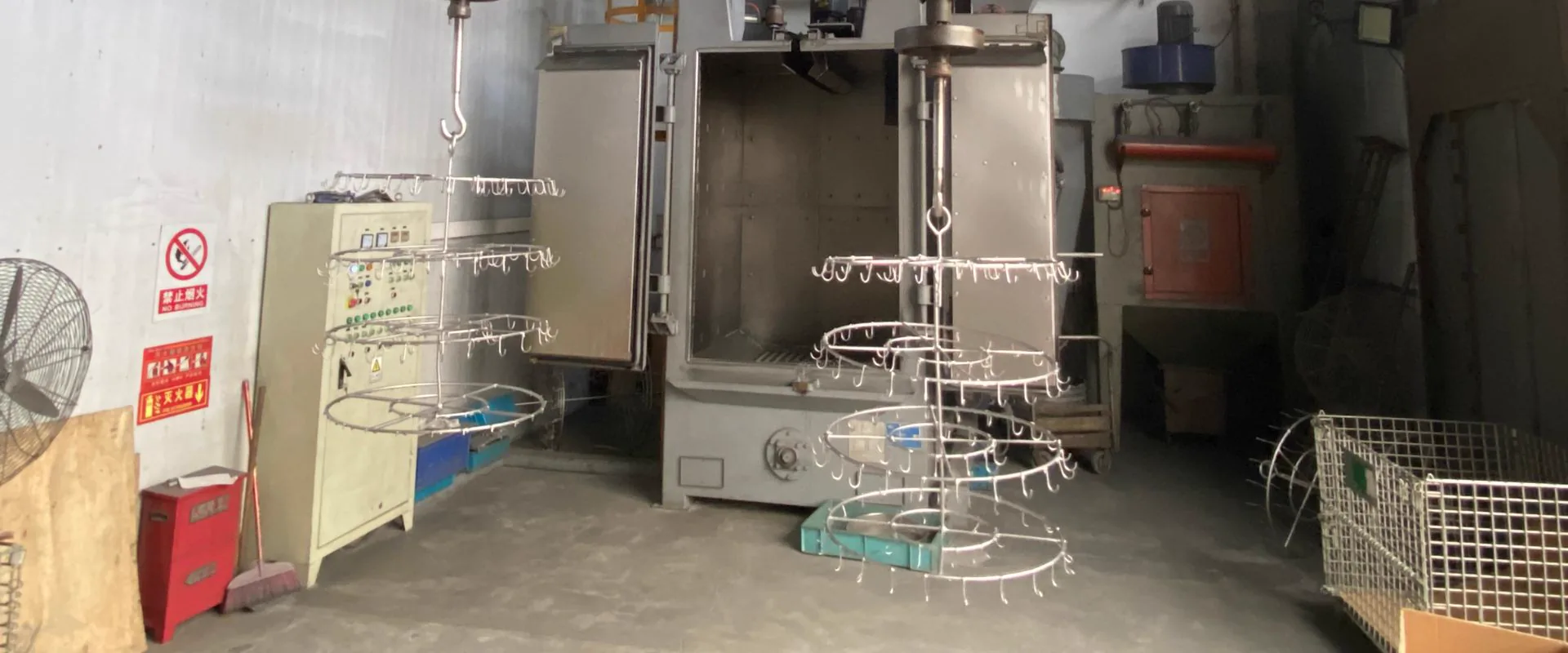
Reserve a second image for an alloy comparison, defect example, tooling detail, or application close-up deeper in the article.
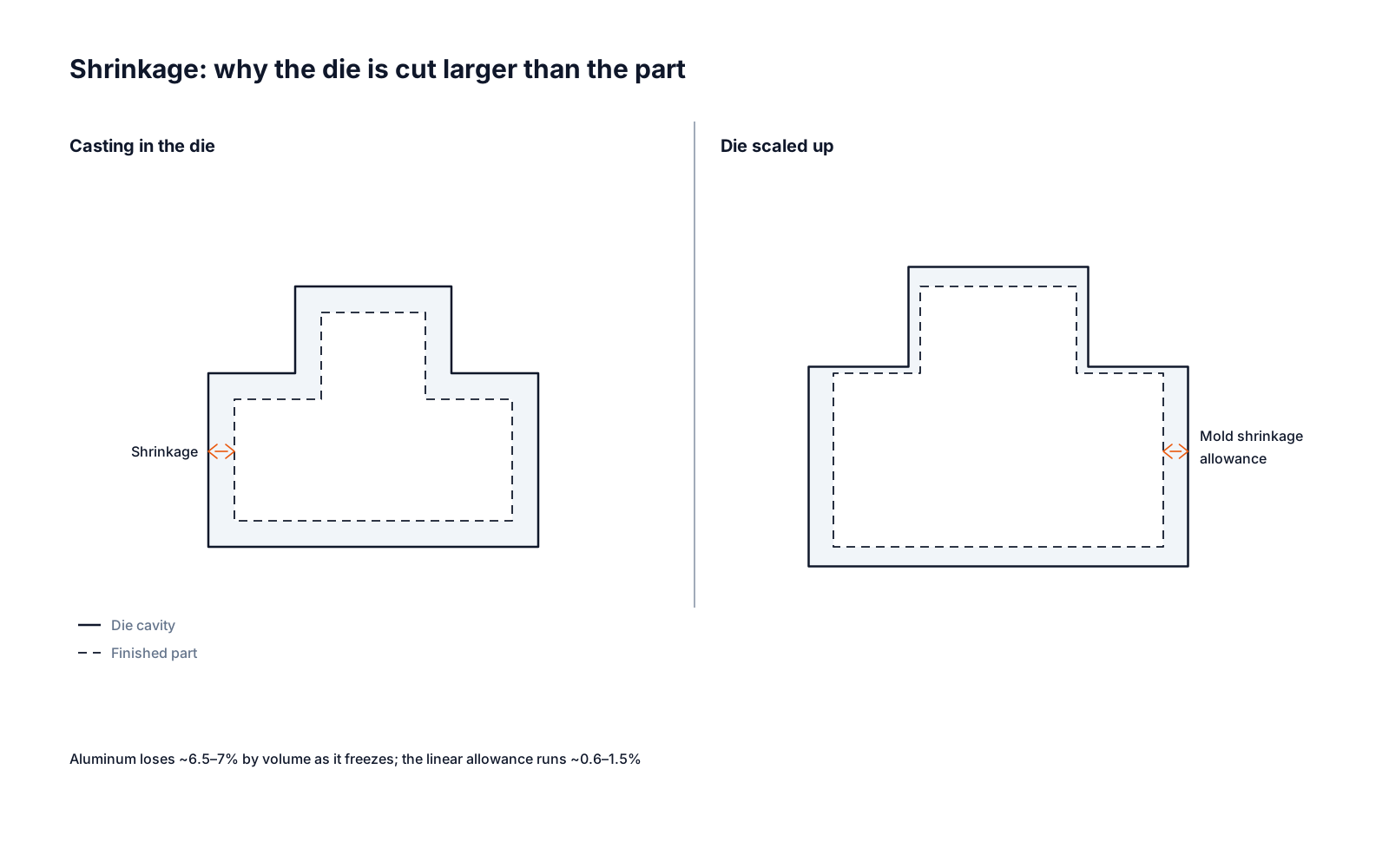
"Casting shrinkage" is two different numbers wearing one name. Aluminum contracts by roughly 6.5-7% in volume as it freezes from liquid to solid - that number governs feeding, porosity and gate design. The shrinkage allowance a toolmaker builds into the mold is a different and much smaller figure: for aluminum casting alloys the reference range is wide, running up to roughly 0.6-1.5% linear, depending on alloy and process. Confuse the two and a tooling conversation goes sideways in the first five minutes - which is exactly what this page exists to prevent.
Below: the two concepts separated, a shrinkage allowance chart for the common casting metals, why the mold is bigger than the part, and what a purchase drawing should say.
Two Numbers Called Shrinkage: Volumetric vs Linear
The ambiguity between buyers and mold shops has a simple root: one word, two physical events.
Volumetric solidification shrinkage is the density jump at freezing. Liquid aluminum is less dense than solid aluminum; when the metal freezes, the same mass occupies less space and the casting pulls inward on itself. For aluminum the contraction is on the order of 6.5-7% by volume. This is the foundry engineer's number: it decides how much feed metal the gating system must supply and where shrinkage porosity will try to form. It barely appears on a drawing.
Linear shrinkage allowance is the tooling number. A casting continues to contract as it cools from solidification down to room temperature, and the mold cavity has to be cut larger than the part so the cold, finished part lands on nominal dimensions. For aluminum alloys, published reference values span a wide range - up to roughly 0.6-1.5% linear - because the actual figure depends on the specific alloy, the casting process, and the geometry at hand. This is the number a toolmaker bakes into cavity dimensions.
| Volumetric solidification shrinkage | Linear shrinkage (tooling allowance) | |
|---|---|---|
| What it is | Volume lost as the metal freezes | Dimensional change from hot part to cold part |
| Question it answers | "Will the casting be sound, or porous?" | "Will the molded part land on print?" |
| Who owns it | Casting engineer - gating, feeding, intensification | Tooling engineer - cavity scaling and correction |
| Aluminum value | ~6.5-7% by volume | Wide reference range, up to ~0.6-1.5%, alloy- and process-specific |
Neither number is a materials constant to three decimals: both shift with alloy family and with process details like die temperature - which is why the aluminum linear range is wide and every die caster validates its own allowance values on its own tooling.
The Shrinkage Allowance Chart: Aluminum, Zinc, Magnesium, Steel
Linear mold shrinkage reference values for the common casting metals (typical/approximate, alloy- and process-dependent):
| Metal / alloy family | Linear shrinkage allowance | Notes |
|---|---|---|
| Aluminum casting alloys | up to ~0.6-1.5% | Wide reference range - specific value depends on alloy and process; validated per tool |
| Zinc (Zamak die casting) | ~1.1-1.3% | Tight family, consistent across the Zamak grades |
| Magnesium AZ91D (die casting) | ~1.1-1.3% | Similar allowance to zinc in die casting |
| Steel (castings) | ~1.8-2.5% | The largest of the group |
Two reading notes. First, the aluminum row is deliberately a range, not a number: within one alloy family, silicon content, section thickness and process all pull the value around, and a die caster's validated figure for their die and process supersedes any table. Second, the chart is linear only. The volumetric solidification contraction for aluminum (~6.5-7%) sits in the table above because it belongs to a different conversation - soundness, not size. For the thermal properties that drive how fast that freezing happens, see the specific heat of aluminum and thermal conductivity of aluminum charts.
Why the Mold Is Bigger Than the Part
Two effects stack to make a mold cavity larger than the part drawn on the print.
Cavity scaling for contraction. The toolmaker scales the cavity up by the expected linear shrinkage so the casting contracts onto nominal dimensions after cooling. The scale-up is not applied uniformly - features boxed in by cores and die steel are locally restrained and behave differently from free spans.
Mold thermal expansion. The die itself runs hot in operation, and hot tool steel expands - so the cavity in the running mold is larger than the cavity in the cold die on the bench. The working shrinkage value a die caster uses therefore folds in the mold's operating temperature, not just the alloy's contraction. Both effects are process-specific: change the die temperature, the cycle, or the alloy, and the effective number moves.
Because the combined value can only be confirmed on real first articles, tooling corrections are planned for. A well-run tool shop cuts first trials steel-safe - leaving metal that can be removed to open dimensions if the part measures oversize, since adding metal to a finished cavity is far harder than removing it. First-article measurement then closes the loop and locks the validated allowance for the life of the tool. The economics of those correction loops belong to the die casting tooling conversation.
Shrinkage, Tolerances and the Dimensional Chain
Shrinkage does not consume tolerance evenly, and that is where it meets the drawing.
A casting does not contract uniformly. Sections restrained by die steel or cores shrink less in the restrained directions; heavy sections cool slower and contract more; long spans between fixed features accumulate the allowance over their whole length. The practical consequences for a buyer:
- The allowance eats part of the tolerance budget before anything else does. A dimension spanning a long distance inherits the accumulated contraction uncertainty, so long-span dimensions deserve looser callouts than short ones - the detailed reasoning lives in the die casting tolerances guide.
- Datum strategy matters. Dimensions chained from a datum that sits in a heavily constrained region behave differently from those chained across free-spanning walls. Critical-to-function features should be dimensioned where the shrinkage behavior is most predictable.
- Part size follows the process. Because the allowance is validated per tool and process, the same part cast in a different process lands on slightly different dimensions - one more reason mold shrinkage and part size belong in the same conversation, and one of the practical differences weighed in die casting vs sand casting, where a rigid steel die and a compliant sand mold constrain contraction very differently.
None of this is a reason to tolerance defensively everywhere - it is a reason to put tight callouts only where they earn their cost.
What a Purchase Drawing Should Specify
Most shrinkage friction is avoidable at the drawing stage. Four habits prevent the rest:
Send the part print, not a pre-scaled one. The most common and most expensive buyer mistake is scaling the CAD model up by an assumed shrinkage percentage before sending it out. The die caster applies its own validated allowance for its alloy, die and process; a pre-scaled model double-counts the correction. Drawings should define the finished part - nominal dimensions of the cold part as delivered.
Name the alloy and the process family. The allowance, the freezing behavior and the feeding strategy all follow from the alloy - the materials overview and the aluminum die casting pages cover the common ground. Let the shop pair the alloy with its process data.
Call out critical dimensions and datums explicitly. Tell the die caster which dimensions make or break the assembly, so steel-safe planning and first-article measurement concentrate on what matters instead of averaging across everything.
Flag porosity-sensitive regions. Volumetric shrinkage concentrates in last-to-freeze sections - heavy bosses, rib junctions. If those regions will be machined, sealed, or pressure-tight, say so on the drawing; feeding strategy and any porosity expectations belong upstream of tooling, not after first articles.
Frequently Asked Questions
What is the shrinkage percentage of aluminum?
It depends which shrinkage you mean. Aluminum contracts roughly 6.5-7% by volume as it solidifies - the number behind feeding and porosity. The linear tooling allowance for aluminum casting alloys is much smaller and wider-ranging: up to roughly 0.6-1.5%, depending on alloy and process, validated by the die caster on each tool.
What shrinkage allowance does die casting use?
Reference values: aluminum die casting alloys up to roughly 0.6-1.5% linear, zinc (Zamak) roughly 1.1-1.3%, and magnesium AZ91D roughly 1.1-1.3% in die casting. Steel castings run higher at roughly 1.8-2.5%. All are typical/approximate and process-specific - a die caster's validated value for a given tool supersedes any chart.
What is the difference between linear and volumetric shrinkage?
Volumetric shrinkage is the volume lost at freezing (aluminum ~6.5-7%) - it drives soundness: feeding, gates, and where shrinkage porosity forms. Linear shrinkage is the dimensional contraction the mold must compensate by cutting the cavity oversize (aluminum alloys up to ~0.6-1.5% linear). One is a metallurgy problem, the other a tooling problem, and only the second appears as a size on your part.
Related
- die casting tolerances - how shrinkage meets the tolerance budget
- die casting tooling - where the allowance is actually applied
- specific heat of aluminum - the heat that has to leave before freezing ends
- thermal conductivity of aluminum - how fast it leaves
- density of aluminum - porosity and the as-cast reality
- die casting vs sand casting - process changes the shrinkage story
- materials overview - the alloy landscape
- request a quote
Ready to send a part print? Send your package through the request a quote page or email casting@kastdiecast.com:
- CAD or PDF drawing of the final part - not pre-scaled for shrinkage
- Alloy, or let the alloy conversation start from your duty requirements
- Annual volume and expected program life
- Key dimensions and datums that make or break the assembly
- Surface treatment, if any
- Test requirements, including porosity or pressure-tightness expectations
- Destination country and delivery term
KastMfg Manufacturing Co., Ltd. Email: casting@kastdiecast.com | Phone: +86 138 1403 4409 No.6, Rungu Road, Nanjing, China
About The Author
Mike Yao on casting shrinkage
Technical Director, Die Casting Engineering
Technical Director at KastMfg with 20+ years in high-pressure die casting, leading engineering and program management across aluminum, zinc, and magnesium programs for automotive, EV, electronics, and medical OEMs worldwide.
View author profileRelated Reading
Keep exploring the blog
Die Casting vs Permanent Mold Casting: Which to Choose?
Die Casting vs Permanent Mold Casting: How to Choose Die casting and permanent mold casting are both metal mold processes - both use reusable steel or iron dies rather than expe...
Mike Yao
8 min read
Can Steel Be Die Cast? Why Conventional HPDC Says No
Can Steel Be Die Cast? Why Conventional HPDC Says No No - steel cannot be made by conventional high-pressure die casting. The commercial process is limited to zinc, magnesium an...
Mike Yao
6 min read
Aluminum vs Zinc Die Casting - How to Choose
Aluminum vs Zinc Die Casting — Choosing the Right Material for Your Part Aluminum and zinc are the two dominant die casting metals globally, together accounting for over 90% of...
Mike Yao
5 min read
Die Casting Die Explained - Anatomy, Steel, Life, and Cost
Die Casting Die - What It Is, How It's Built, and What It Costs A die casting die is a precision steel mold - typically two machined halves of H13 hot-work tool steel - that sha...
Mike Yao
5 min read