Specific Heat of Aluminum: Values and Alloy Chart
Specific heat of aluminum: 0.90 J/g·K (900 J/kg·K) for the pure metal, near 0.96 for Al-Si casting alloys, with zinc, magnesium and copper in one chart - and what heat capacity means for die casting and heat sink design.

Technical Director, Die Casting Engineering
Blog Visual Plan
Article visuals for specific heat of aluminum
These visuals use your current KastMfg image library now, and they will automatically switch to article-specific images when you add them later.
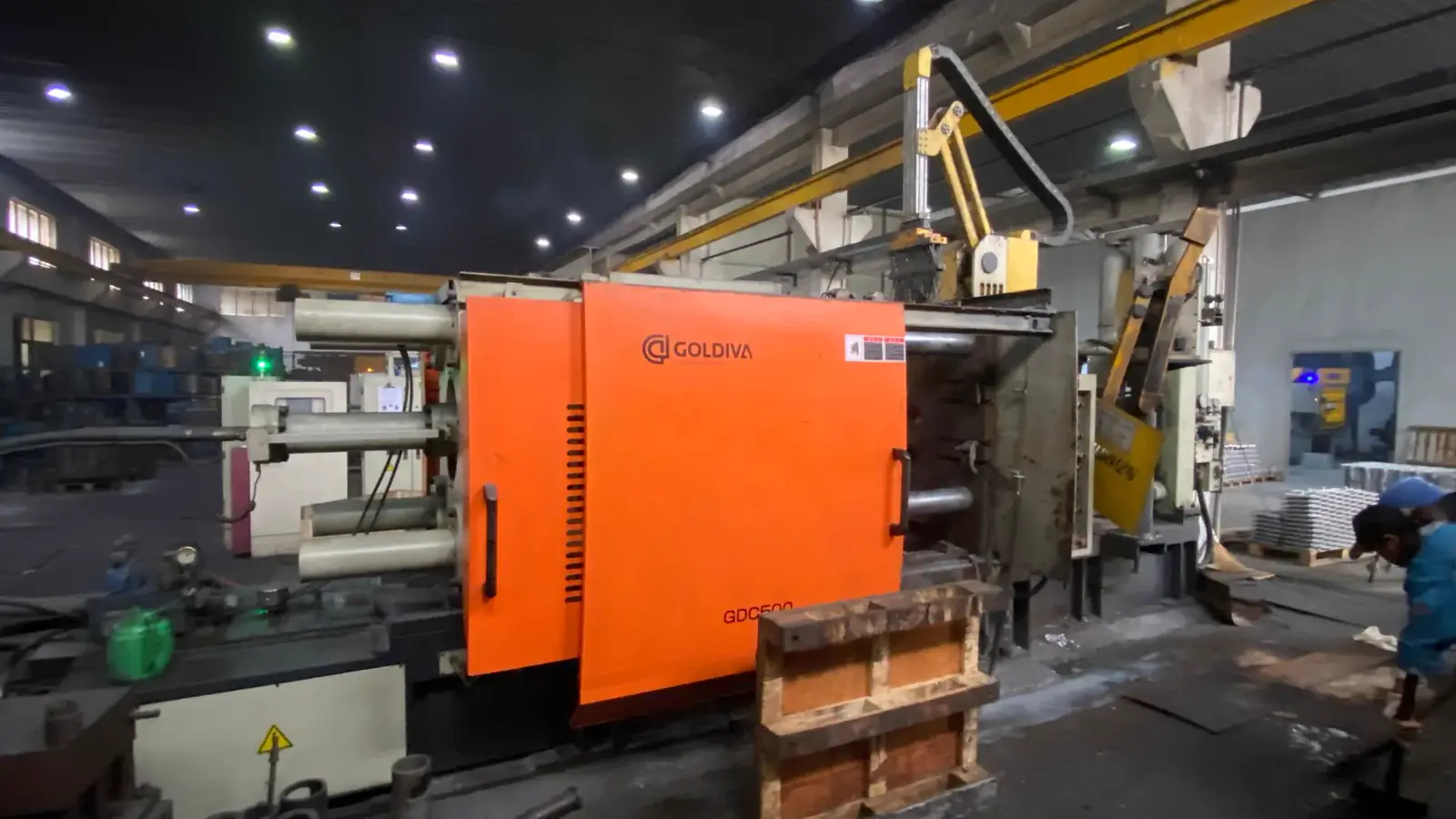
Lead Technical Image
Add a hero-level manufacturing, tooling, or component image that reinforces the article topic above the body copy.
Comparison or Detail Image
Reserve a second image for an alloy comparison, defect example, tooling detail, or application close-up deeper in the article.
The specific heat of aluminum is approximately 0.90 J/g·K - 900 J/kg·K in the units many datasheets prefer. From there the honest story is short: alloy values move with composition, not with alloy brand. The Al-Si family that dominates die casting typically sits near 0.96 J/g·K, zinc stores less than half as much heat per gram, and magnesium slightly more than aluminum. The interesting engineering is not in the digits - it is in what heat capacity does inside a die, and inside a finished enclosure.
This page is the quick reference: typical specific heat values for pure aluminum, the die casting alloy family and the comparison metals, plus the three places the number actually earns its keep - solidification behavior, die thermal balance, and the thermal design of the casting itself.
Why Specific Heat Matters in Die Casting
Specific heat capacity answers one question: how much energy does a gram of a material absorb for each degree of temperature rise? A die caster meets that number in three separate jobs.
Solidification and hot spots. Every gram of alloy entering the die carries sensible heat that has to leave before the part ejects, and heat capacity sets how much that is for any given temperature drop. A rough feel for the scale: a 300 g Al-Si die casting cooling 100 K sheds somewhere near 300 x 0.96 x 100 = about 29,000 J of sensible heat - before counting the latent heat released by freezing, which is a separate and larger line in the budget. Thick sections - bosses, rib junctions, thermal joints - store the most heat per volume and freeze last. Where heat leaves last, solidification contraction concentrates, and that is where shrinkage porosity tries to form. Heat capacity, together with the latent heat and the alloy's melting point, shapes the solidification pattern that gating and cooling design have to manage. What that frozen contraction does to part dimensions is a separate topic with its own numbers - see casting shrinkage.
Cycle time and die thermal balance. Thermally, a die casting cell is a heat-moving machine: energy enters as molten metal, transfers into the die, and leaves through cooling channels and lubricant spray. The heat delivered per shot scales with shot weight, specific heat and the temperature drop from pouring to ejection - so an alloy with a higher heat capacity per gram pumps more energy into the die every cycle, and the die has to reject it again before the next shot. Heat capacity is one of the quiet inputs behind cycle-time and die-temperature discussions with a supplier, sitting under decisions buyers usually attribute purely to machine capability.
Thermal design of the casting itself. Electronics housings, motor controllers, LED fixtures - a large share of die castings are also heat management parts. Heat capacity is the transient term: it decides how much the part's temperature rises when a load spikes. For steady-state performance the question switches to thermal conductivity - how fast heat moves out, not how much fits in. That distinction gets its own section below, because confusing the two is the most common thermal mistake on a sourcing call.
The Specific Heat Chart: Pure Aluminum, Casting Alloys, Comparison Metals
| Material | Specific heat (J/g·K) | Specific heat (J/kg·K) | Notes |
|---|---|---|---|
| Pure aluminum | ~0.90 | ~900 | Room-temperature reference value; approximate |
| Al-Si / Al-Si-Mg casting alloys (A360, A380, A383, A413, ADC12, A356 family) | ~0.96 typical | ~960 | Composition-dependent - a typical value for the Al-Si type, not a per-alloy constant |
| Zinc (Zamak die casting family) | 0.38-0.39 | 380-390 | Less than half of aluminum per gram |
| Magnesium | ~1.02 | ~1020 | Highest of the common die casting metals per gram |
| Copper | 0.385 | 385 | Per gram, close to zinc; per volume, a different story |
Three cautions belong under this table. First, all values are typical/approximate and condition-dependent: they are room-temperature figures, and they move with temperature. Second, there is no honest single "alloy" value. The specific heat capacity of aluminum alloys varies with composition, and the Al-Si casting family runs near 0.96 J/g·K - a table that prints a different second decimal for every alloy code is implying precision the physics does not have. Third, per-gram comparisons flatter the light metals. Multiply by density and copper pulls ahead per unit volume: 0.385 J/g·K at 8.96 g/cm3 stores more heat per cubic centimeter than aluminum at 0.90 J/g·K and 2.70 g/cm3, while magnesium - the champion per gram - carries the least per volume. Whether your design should care about per-gram or per-volume capacity depends on which budget is fixed: weight or envelope.
Temperature Dependence: the Value Is a Curve, Not a Number
Datasheet specific heats are room-temperature values. Real heat capacity rises as temperature rises, and die casting lives hundreds of degrees above room temperature - from melt temperature down through solidification to ejection. Serious thermal calculations over that span do not use the room-temperature figure; they use a mean value over the actual temperature interval, and the freezing metal additionally releases its latent heat, which for a die caster is a bigger energy item than sensible heat alone.
The practical takeaway for a buyer: treat published room-temperature values as ranking tools for comparing materials, and let the die caster's process engineers own the interval-averaged numbers they actually compute with. The chart above ranks materials correctly; it is not a cycle-time calculator.
Heat Capacity vs Thermal Conductivity: Storage Is Not Transfer
The two thermal properties answer different questions and get confused constantly:
- Specific heat (J/g·K) - how much heat a gram of the material stores per degree. The storage tank.
- Thermal conductivity (W/m·K) - how fast heat moves through the material. The pipe.
Pure aluminum is strong on both counts: roughly 237 W/m·K alongside the 0.90 J/g·K. But the Al-Si die casting alloys keep the heat capacity (near 0.96 J/g·K) while conducting far less - A380 and ADC12 run around 96 W/m·K, and the casting-alloy family spans roughly 96-160 W/m·K depending on grade. That asymmetry is why heat capacity and conductivity deserve separate charts: an alloy that soaks heat well does not necessarily move it well, and vice versa.
For design, the split is practical. A die cast electronics enclosure absorbs a short power spike with its mass and heat capacity - temperature rise is the spike divided by the thermal mass. Moving that heat out of the box over minutes is a conductivity-and-surface-area problem, the territory of the die casting heat sink design guide. A part can be excellent at one job and mediocre at the other; the alloy table on the thermal conductivity page is where the second half of the pairing gets checked. The electrical side of the same alloy-sensitivity story is covered in is aluminum conductive.
Frequently Asked Questions
What is the specific heat of aluminum in J/kg·K?
Approximately 900 J/kg·K for pure aluminum, which is the same statement as 0.90 J/g·K. The Al-Si casting alloy family typically runs near 960 J/kg·K (0.96 J/g·K), with the exact value dependent on composition and temperature.
How does the specific heat of aluminum compare with zinc, magnesium and copper?
Per gram: magnesium at ~1.02 J/g·K is the highest of the group, aluminum at ~0.90 J/g·K follows, and zinc (0.38-0.39 J/g·K) and copper (0.385 J/g·K) store less than half of what aluminum stores. Per unit volume the ranking changes - copper's high density moves it ahead of aluminum, which matters when envelope size rather than weight is the constraint.
Do die casting alloys have the same specific heat as pure aluminum?
Not exactly, and the difference is a composition effect rather than a brand effect: the specific heat capacity of aluminum alloys varies with composition, and the Al-Si family used for die casting typically sits near 0.96 J/g·K, slightly above pure aluminum. For alloy selection the difference barely moves the needle; for solidification and thermal calculations it belongs on the correct side of the ledger - which is why this page refuses to print a per-alloy column of made-up precision.
Related
- thermal conductivity of aluminum - the transfer side of this story
- casting shrinkage - where solidification heat goes and what it costs
- density of aluminum - the per-volume half of heat capacity
- melting point of aluminum - the rest of the thermal datasheet
- die casting heat sink design - where capacity meets conductivity
- is aluminum conductive - the electrical sibling of this discussion
- request a quote
Have a part whose thermal behavior matters? Send your package through the request a quote page or email casting@kastdiecast.com:
- CAD or PDF drawing of the final part
- Alloy - or describe the thermal duty and let the alloy conversation happen with data
- Annual volume and expected program life
- Key dimensions, including the sections that run hottest
- Surface treatment, if any
- Test requirements, including any thermal or temperature-cycling validation
- Destination country and delivery term
KastMfg Manufacturing Co., Ltd. Email: casting@kastdiecast.com | Phone: +86 138 1403 4409 No.6, Rungu Road, Nanjing, China
About The Author
Mike Yao on specific heat of aluminum
Technical Director, Die Casting Engineering
Technical Director at KastMfg with 20+ years in high-pressure die casting, leading engineering and program management across aluminum, zinc, and magnesium programs for automotive, EV, electronics, and medical OEMs worldwide.
View author profileRelated Reading
Keep exploring the blog
Thermal Conductivity of Aluminum: Alloy Chart
Thermal Conductivity of Aluminum: Alloy Chart The thermal conductivity of aluminum is approximately 237 W/m·K for the pure metal - and almost nothing ships as pure aluminum. The...
Mike Yao
7 min read
Aluminum Die Casting Heat Sinks: Design & Alloys
Aluminum Die Casting for Heat Sinks: Design Rules, Alloys and Fin Geometry An aluminum die casting heat sink is a cast aluminum component that transfers heat away from electroni...
Mike Yao
11 min read
Die Casting Design Guide: Rules, Tolerances & DFM
Die Casting Design Guide: Rules That Cut Cost and Improve Quality Good die casting design is the single biggest lever on part cost and quality - more than the alloy, more than t...
Mike Yao
5 min read
Die Casting vs Permanent Mold Casting: Which to Choose?
Die Casting vs Permanent Mold Casting: How to Choose Die casting and permanent mold casting are both metal mold processes - both use reusable steel or iron dies rather than expe...
Mike Yao
8 min read